Bottom Line: A masterclass in tactical design that surgically removes roguelike tedium to reveal a brutal, rewarding heart of pure strategy. This isn't just a game; it's a genre-defining accomplishment.
The Death of Attrition
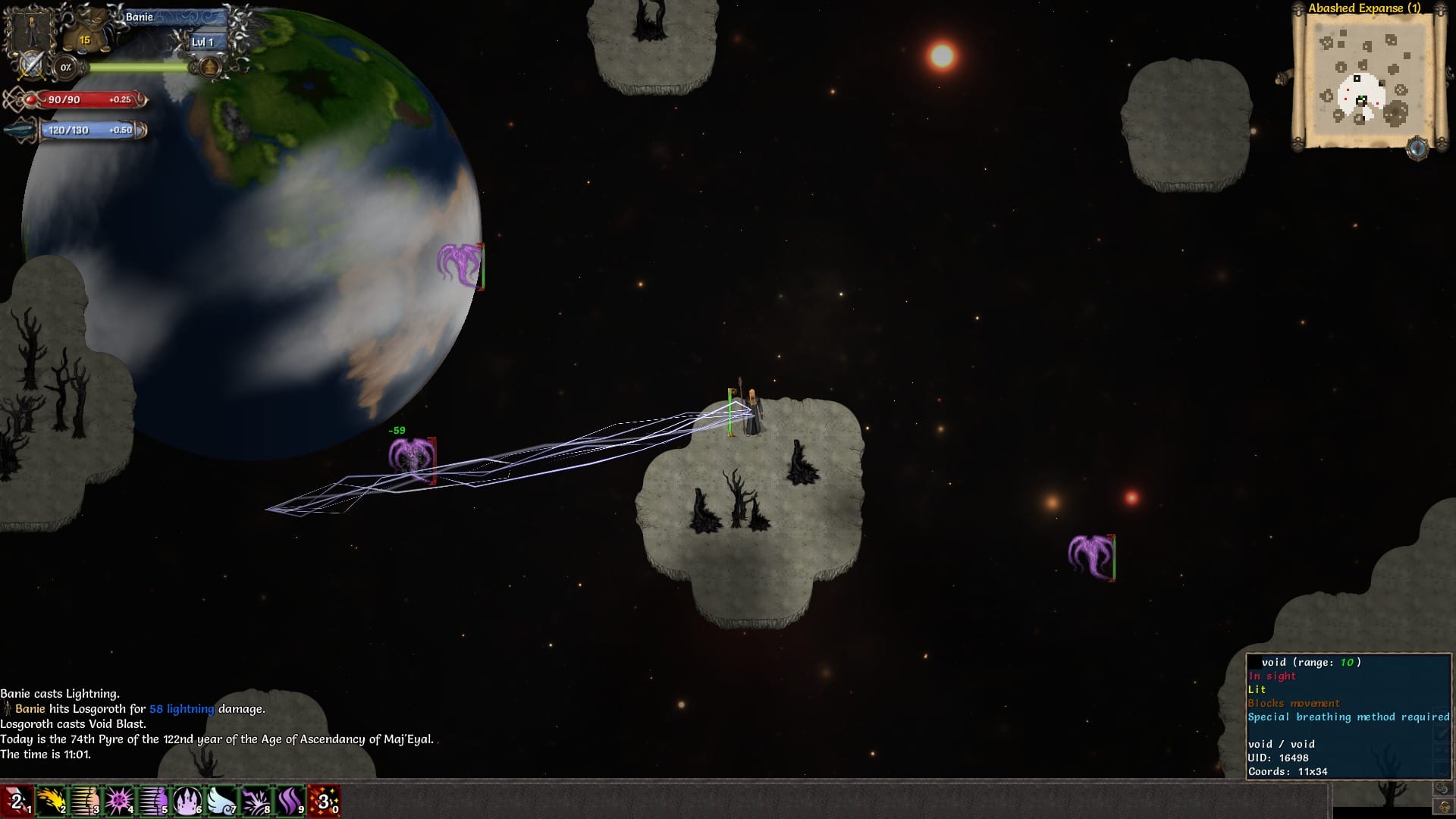
Traditional roguelikes often feel like a slow crawl toward an inevitable mistake. You die because you ran out of food, or because you were too stingy to use your last potion of "don't die yet." ToME kills this paradigm. By replacing consumables with a cooldown-based system, the game forces you to engage with its mechanics every single turn. You can’t save your way out of a bad situation with a lucky drop; you have to play your way out. This creates a rhythmic, high-velocity combat loop. If a critical survival skill is on cooldown, you have to find another way to survive for three turns. It shifts the player's focus from the inventory screen to the battlefield, emphasizing positioning, crowd control, and synergy.
A Masterclass in Class Design
The 25+ classes aren't mere stat-blocks. Each one feels like a different game entirely. Playing a Cursed requires managing a literal bar of hate that fuels your powers but degrades your sanity, while a Paradox Mage must balance the stability of the space-time continuum—fail, and you might accidentally summon a future version of yourself to try and kill you. This variety ensures that the game avoids the "solved" feel of lesser RPGs. You aren't just learning "the game"; you're learning "the Oozemancer," or "the Necromancer." Each class has its own resource system, its own tactical priorities, and its own unique failure states. The talent trees are deep and interconnected, rewarding players who can spot the subtle overlaps between defensive buffs and offensive triggers.
The Communal Dungeon
Roguelikes are historically lonely experiences. You die in a dark hole, and nobody cares. ToME fixes this with an integrated online component that feels surprisingly essential. The in-game chat allows you to ask for advice from veterans while you’re staring down a boss, and the global ticker of player deaths provides a morbid sense of camaraderie. Watching a notification pop up that "PlayerX was disintegrated by a skeleton" reminds you that the game is fair—it hates everyone equally. This connectivity extends to the Steam Workshop, where a decade of modding has produced everything from UI overhauls to entirely new continents.
Lore as a Mechanical Anchor
Eyal isn't just a backdrop; it's a character. The history of the Spellblaze informs everything from the way NPCs react to you to the types of enemies you face. The game doesn't shy away from being text-heavy, but it rewards those who read. Finding a lore scrap isn't just flavor; it often provides clues to the weaknesses of regional bosses or unlocks new classes. This narrative density gives the "perm-death" stakes a sense of meaning. You aren't just losing a character; you're losing a specific story you were writing in a very old, very broken world.