Bottom Line: A breathtakingly weird exercise in biological survival that proves innovation in the survival genre isn't dead—it's just mutated. While mechanical friction occasionally slows the pace, the sheer imaginative force on display is undeniable.
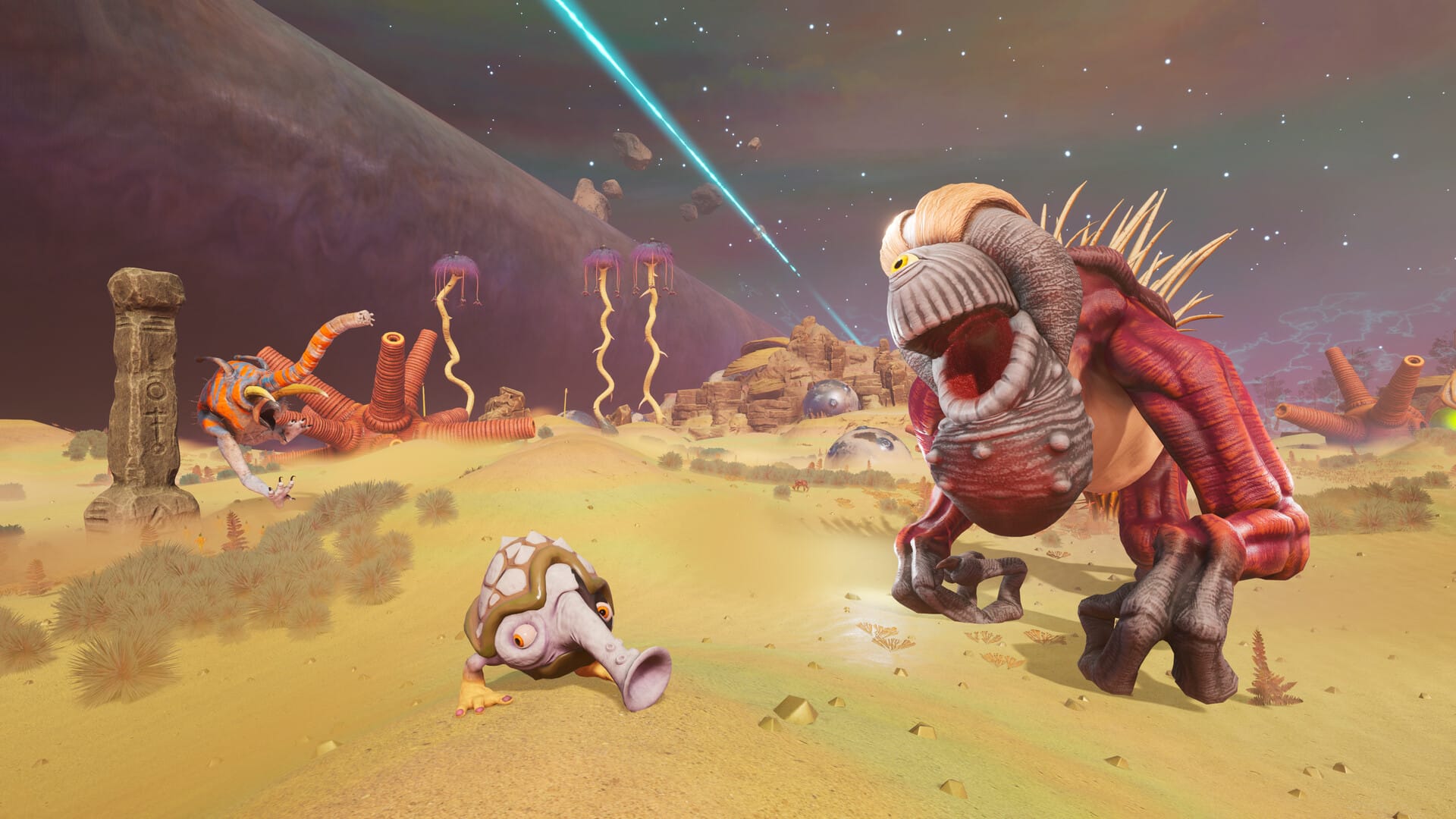
The core of The Eternal Cylinder is a constant, Darwinian gamble. The game doesn't just ask you to survive; it asks you to engineer survival. The gameplay loop is built on the ingestion of diverse flora and fauna, which triggers near-instantaneous physical mutations. This isn't just cosmetic. If you need to reach a high ledge to escape a predator, you must find the specific resource that grants your Trebhums long, spring-loaded legs. If the air becomes toxic, you must evolve filters.
The Darwinian Slot Machine
This mutation system is where the game finds its soul. Unlike traditional skill trees, these changes are tactical and reversible. You are constantly managing a herd with diverse capabilities—one Trebhum might be your dedicated resource-crusher (metal skin), while another is a scout with high-jump abilities. Managing this "living toolbox" requires a level of micro-management that is surprisingly engaging, though it occasionally bumps into mechanical friction. Selecting the right Trebhum in the heat of a Cylinder-roll can feel frantic, and not always in a way that feels intended.
The Rolling Apocalypse
The Cylinder itself is a masterstroke of environmental design. It provides a literal and metaphorical "push" to the gameplay. When the Cylinder is active, the sky glows with a sickly red light, and the world begins to crumble. This creates a high-stakes onboarding friction for new players, but once you understand the rhythm—using "towers" to temporarily halt the Cylinder’s progress—the game opens up into a surprisingly meditative exploration of a truly alien world. The threat of the Cylinder ensures that you never stay in one place long enough for the survival mechanics to grow stale, though the mid-to-late game does fall into a recognizable pattern of "find tower, upgrade herd, repeat."
Existential Narration
Guiding you through this chaos is a mysterious, philosophical narrator. The voice-over provides much-needed context to the Trebhums' existence, elevating the experience from a mere "creature feature" to something more akin to a digital fable. It’s a risky choice—narration in games often feels intrusive—but here it provides a grounding force in a world that otherwise defies logic. It frames your struggle not as a series of levels, but as the history of a species.