
Overview
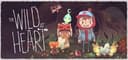
Every so often a small studio swings for something bigger than its budget. Moonlight Kids — an Atlanta-based indie outfit making its debut — swung hard with The Wild at Heart, and the bruise is as visible as the bullseye. This is an action-adventure game about two kids, Wake and Kirby, who run away from broken homes and stumble into the Deep Woods, a magical realm that operates on the logic of childhood fear and wonder. It is unmistakably a game about trauma, told through the safest, softest visual language imaginable: a hand-drawn pop-up book you half expect to smell of glue and construction paper.
The pitch is easy to summarize because it’s easy to recognize. Take the creature-command loop from Nintendo’s Pikmin, borrow the vacuum from Luigi’s Mansion, and pour both into a Saturday-morning-cartoon world with a genuinely melancholy story underneath. Players gather and command Spritelings — little forest spirits — to tear down obstacles, fight beasts, haul resources, and solve puzzles, while a jury-rigged vacuum called the Gustbuster does the grabbing, sucking, and blowing.
That derivative DNA isn’t a knock by itself. Plenty of great games are built from recognizable parts. The question is whether Moonlight Kids assembled those parts into something with its own pulse, or just cloned a beloved formula and reskinned it in watercolor. The answer, frustratingly, is both — and it shifts from section to section. When the game leans on its art, its voice acting, and its quiet moments, it’s special. When it leans on its systems, it reveals a studio reaching for Nintendo’s polish without Nintendo’s decades of iteration. This is a first game, and it shows — in the ambition and in the seams.
Positioned as a cozy-adjacent adventure rather than a strategy grinder, it earned a generally favorable critical reception (a Metacritic score of 76). But warm is not the same as flawless, and the flaws here are the kind that wear people down.
Key features
- Spriteling Command System: Summon, grow, and direct an army of forest spirits across color-coded types. Throw them at obstacles, enemies, and resource nodes in real time — the Pikmin loop, transplanted and slightly slowed down.
- The Gustbuster: A homemade vacuum device that sucks up loose items, blows away debris, ferries Spritelings, and doubles as the primary interaction tool. It’s the game’s most tactile idea and its most consistently satisfying.
- Day/Night Cycle & The Never: After dusk, shadowy creatures called the Never emerge, forcing retreat, campsite fortification, and risk management. A survival-lite pressure valve layered over the exploration.
- Crafting & Progression: Build tools, upgrade the Gustbuster, and construct pathways to gate-and-open new areas. Standard-issue but functional.
- Storybook Presentation: A hand-drawn, pop-up-book art style paired with fully voiced characters and an atmospheric, restrained score.
Analysis
The Gameplay Loop
Strip away the paper-craft veneer and this is a resource-management adventure with a real-time crowd-control problem at its center. The Deep Woods are full of things that are blocked, broken, or hostile, and the game solves them by hurling little creatures at the problem until it goes away. It’s Pikmin’s core loop, and Moonlight Kids knows it — the influence is stated, not hidden.
Here’s where it diverges, and where it matters. Nintendo’s Pikmin games are strategy games with a stopwatch. Every day is a puzzle of routing and prioritization, and the tension comes from losing squadmates to bad planning. The Wild at Heart files most of those sharp edges off. It’s gentler, more forgiving, more interested in vibe than optimization. Spritelings feel less like a fragile workforce to ration and more like a loyal, slightly chaotic pet horde. For the audience this game actually wants — players who found Pikmin too stressful — that softening is a feature, not a bug.
The trouble is that softening the strategy exposes the busywork underneath. Commanding a crowd of creatures with a single cursor is inherently fiddly, and the game asks for it constantly, over terrain that’s often already been cleared. Which brings us to the game’s central sin.
Backtracking and the Pacing Problem
The Wild at Heart has a backtracking habit, and it’s the thing most likely to cool affection for it. The Deep Woods are built as interlocking zones meant to be re-crossed repeatedly as new tools unlock old shortcuts — a Metroidvania instinct grafted onto a Pikmin body. In theory, elegant. In practice, that means long stretches herding spirits back through familiar screens to reach one newly openable door. The early hours are especially slow, front-loading tutorials and drip-feeding mechanics with a patience that borders on hesitation. The toolkit does eventually open up. But a game shouldn’t have to ask for faith before it earns attention.
Inventory management is the other recurring friction point. The game asks players to gather a lot, the storage doesn’t always keep pace, and the menus that mediate all this hauling are more chore than craft. None of it is broken. All of it adds a low hum of tedium under an otherwise charming experience.
What Actually Works
And yet. The design of a dusk run — vacuuming a trail of glowing bits across a paper meadow while racing the light before the Never wake up — is where the game’s ideas click. The day/night cycle does real work here, converting exploration into a gentle stopwatch that gives wandering a spine. The Never aren’t a deep combat system, but they’re an effective mood: they turn a safe playground threatening in a way that mirrors the story’s anxieties without ever spelling it out.
The narrative is the quiet triumph. A game about two kids fleeing difficult homes could have been mawkish or exploitative. Instead it’s tender and specific, using the fantasy of the Deep Woods as a coping mechanism made literal. It respects that childhood fear is real fear. That the surrounding mechanics don’t always rise to meet that emotional intelligence is the game’s defining tension — a heart bigger than its systems.
Visuals & performance
The art is the reason to be here, full stop. The pop-up-book aesthetic isn’t a gimmick applied on top; it’s the whole identity. Foreground elements stand like cardboard cutouts, layers slide with a tactile paper-craft depth, and the hand-drawn character work has a warmth that most higher-budget productions can’t buy. It’s one of the better-looking indie games of its moment, and it achieves that on style, not horsepower.
Sound design matches. The score stays restrained and atmospheric rather than showy, ceding space to ambient woods and voice acting strong enough to carry the emotional freight. This is a game confident enough to be quiet.
As a modest production not chasing fidelity, it’s light on hardware by design. The UI is the weak link — the menus and inventory screens feel more utilitarian than the world they serve, and the Spriteling-command interface never gets as crisp as it needs to be for the amount of herding it demands.
Platform nuances
On Steam, the input choice matters. Mouse-and-keyboard turns Spriteling-throwing into something close to precise — the cursor acts as an aiming reticle, and crowd control tightens up considerably. It’s the better fit for the fiddly bits. A controller works fine and feels natural for the cozy exploration, but the imprecision shows when a fight gets busy.
On Nintendo Switch, the fit is thematically perfect but the hardware is the constraint. A gentle, portable storybook about running away to the woods is exactly the kind of thing handheld mode was made for — arguably its ideal emotional home. But the paper-craft layers and busy on-screen crowds are demanding for the Switch’s specs, and the smaller screen makes an already-fiddly command scheme fiddlier. Pick Switch for the vibe, Steam for the control.
Final verdict
The Wild at Heart is a beautiful, big-hearted first swing that connects about as often as it whiffs. Moonlight Kids built a world worth getting lost in and a story worth staying for, then hung it on borrowed mechanics they hadn’t quite tuned. The backtracking drags, the opening dawdles, and the menus fight the player the whole way. None of it is fatal, and none of it erases the game’s genuine emotional pull — but for most people, the friction will outweigh the payoff. Only those who come for the art and the heart, and are willing to forgive the busywork, will come out the other side glad they made the trip. Just don’t expect Nintendo’s precision behind Nintendo’s ideas.
Reviewed by the Rankeno Strategy & Sim Desk. Scores are out of 10; the overall score is the desk’s editorial judgement, informed by the four sub-scores above. How we review