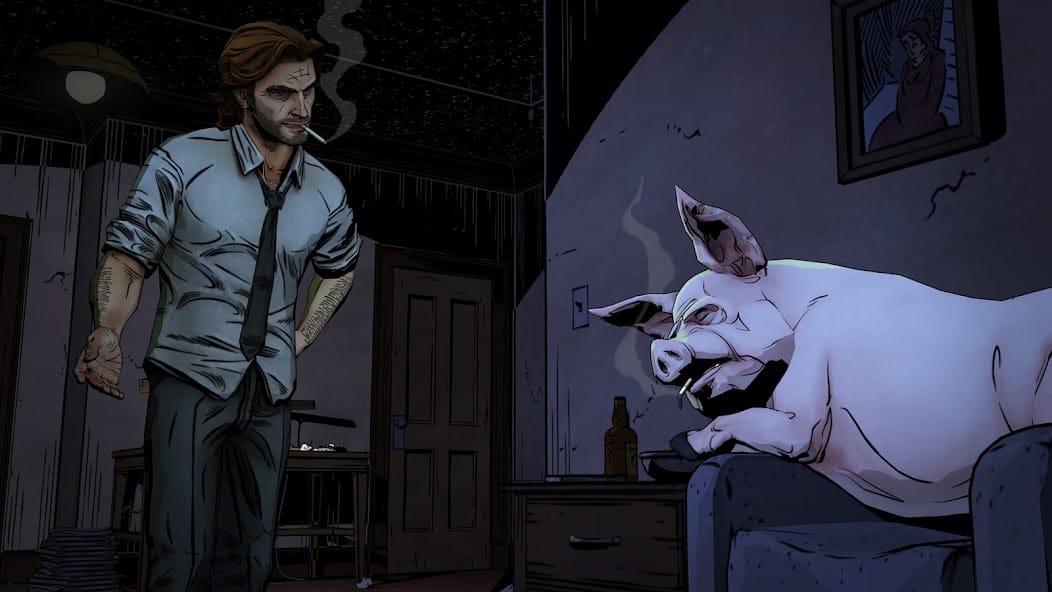
Bottom Line: Telltale's neo-noir fairy-tale detective story is one of the most atmospheric, best-written adventure games ever made—right up until you realize your choices barely bent the road it was always going to walk.
The Gameplay Loop
Let's be blunt about what you actually do here. The Wolf Among Us is a narrative adventure, which means the mechanical surface is thin by design. You walk Bigby through a scene, examine objects, talk to people, and occasionally mash a button when someone throws a punch. If you came for systems, depth, or mastery, you came to the wrong precinct.
The loop breaks into three modes, and they don't hold equal weight. Investigation sequences are the strongest of the interactive bits—poke around a crime scene, connect physical evidence to testimony, then confront a suspect with what you've assembled. There's a real detective's satisfaction when a found object recontextualizes a lie. The game lets you sequence questions and choose your posture: patient, aggressive, deceptive. For a few minutes at a time, you feel like Bigby actually solves things.
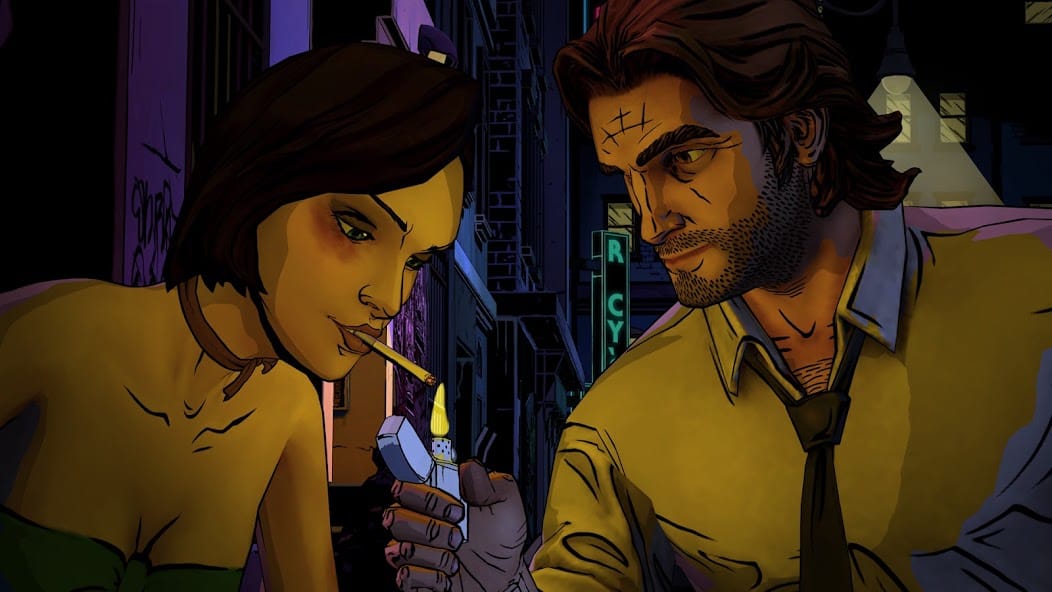
Dialogue is the core, and it's where the game lives or dies. Conversations run on a timer, and that clock is the single best design decision in the whole package. It denies you the luxury of the min-maxer's pause. You blurt, you hesitate, you say the wrong thing because a real cornered person would—and the silence of a non-answer becomes its own choice. This is where Telltale's writing earns its reputation.
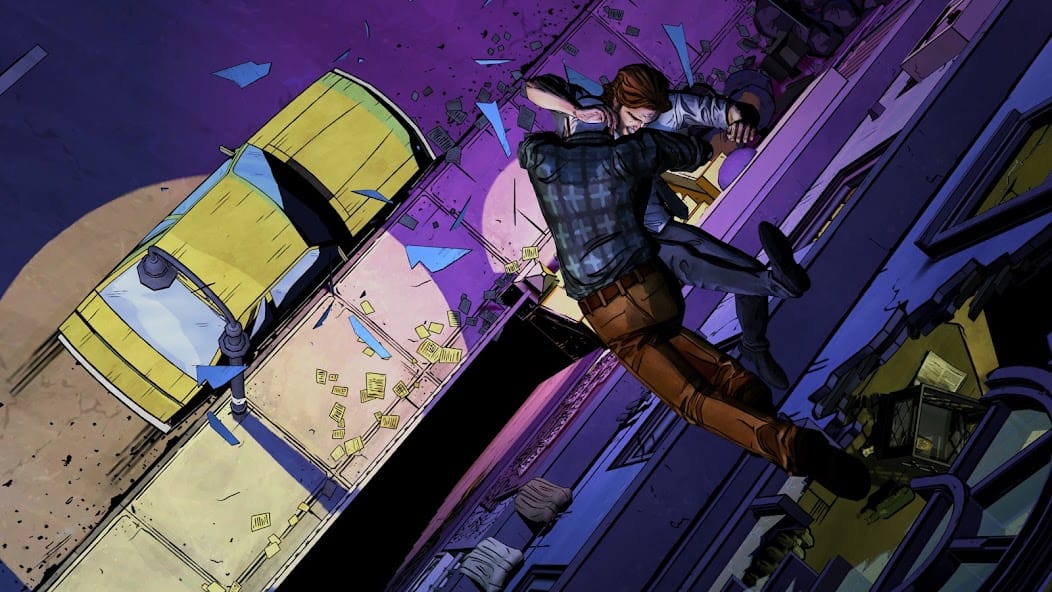
Action is the weakest leg. The quick-time events are cinematic and occasionally thrilling—the opening brawl is a genuine statement of intent—but they're reaction tests, not combat. You don't get better at them. You just watch, tap, and hope you read the prompt in time.
The Choice Problem
Here's the tension at the center of this review. The Wolf Among Us markets itself on player agency. Every episode reminds you that your decisions ripple outward. And in the moment, they feel like they do. Snow's disapproval stings. A Fable's fear registers on their face. You second-guess yourself.
Then you compare notes with another player and discover the river always empties into the same sea. Kill a character or spare them, side with one faction or another, and the plot's major beats hold firm. What changes is flavor and framing—who trusts you, what a line of dialogue implies, which shade of guilt you carry into the finale. That's not nothing. Reputation as a resource is a legitimate design idea, and the game is emotionally honest even when it's mechanically deterministic.
But calling it choice oversells it. This is authored drama with interactive texture, and you'll enjoy it far more if you accept that framing going in. Play it for the performance, not the puzzle box. Judged as a branching narrative engine, it's smoke and mirrors. Judged as a piece of storytelling you participate in, it's remarkable.
Pacing Across Episodes
The serialized structure is a double-edged sword. Episode one, "Faith," is a masterclass—economical, shocking, and confident enough to end on a gut-punch that reframes everything. The finale delivers. But the middle chapters sag. A couple of them run short and feel like connective tissue rather than complete arcs, a symptom of the episodic release model straining under its own deadlines. Played today, back-to-back, the dip is less painful than it was for players who waited months between installments.