
Overview
The cozy genre has a curdling problem. For every Stardew Valley there are a hundred pastel-colored clones that mistake “relaxing” for “empty,” padding an hour of ideas across twenty hours of busywork. So when a game shows up promising a cozy narrative management sim about a second-hand bookshop, the reflex is skepticism. Another wholesome placebo.
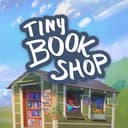
Tiny Bookshop earns its charm the hard way. Developed by the Munich-based Neoludic Games and published by Skystone Games, it drops you into Bookstonbury-by-the-Sea, a fictional seaside town rendered in a soft, hand-drawn palette that looks like a children’s book illustrator had a very good decade. You’ve quit the city. You’ve bought a trailer. You sell books. That’s the whole pitch, and it’s enough.
What separates this from the cozy chaff is a genuinely clever core hook: you don’t just sell books, you recommend real-world titles to fictional readers. A retiree wants something like Le Carré. A teenager is quietly asking for queer romance without quite saying so. Matching the right book to the right person is the entire mechanical spine, and it’s a smarter idea than most triple-A studios stumble onto in a decade.
The commercial positioning is refreshingly honest, too. This is a premium, ad-free, microtransaction-free product in a mobile market rotted through with predatory monetization. The mobile edition ships with full feature parity to PC and console, gated behind a three-day trial and a single one-time unlock. No energy timers. No gacha. Just a game that wants you to buy it once and be left alone. In 2026, that’s practically a political statement.
Key features
- Book-Matching as Core Loop: You stock and recommend actual, real-world books to a rotating cast of customers based on their moods, hints, and personalities. Nail the match and you make the sale—and deepen a relationship.
- Mobile Shop Customization: Your trailer is your storefront. Decorate it, arrange your shelves, and haul it to different scenic pitches around town, each with its own foot traffic and clientele.
- Relationship-Driven Progression: Sales double as story keys. They unlock character arcs, town missions, new districts, and fresh mechanics, tying the economy directly to the narrative.
- Zero Predatory Monetization: One purchase. No ads, no microtransactions, no live-service hooks. Full parity across all four platforms.
Analysis
The Gameplay Loop
Here’s how a day runs. You pick a location—the harbor, the park, a spot near the lighthouse—park your trailer, and open shop. Customers arrive with a request that’s rarely literal. They don’t say “I want ISBN 978-anything.” They gesture. “Something to forget a bad week.” “A book my late husband would have loved.” You scan your inventory, weigh genres, tones, and the small biographical breadcrumbs the game feeds you, and make your pick.
Get it right and coins are only part of the reward. It’s the little flicker of a person feeling seen. That emotional payload is what keeps the loop from feeling like spreadsheet-sim tedium. You’re not optimizing throughput; you’re playing a low-stakes empathy game dressed up as retail.
Between shifts, the second layer kicks in. You restock at wholesale, manage a modest budget, invest in shelf upgrades, and choose where to set up next. There’s light strategy here—real decisions about inventory mix and location—but “light” is the operative word. This is not Capitalism Lab. Anyone expecting supply-chain crunch or brutal margin management will find the numbers gentle to the point of decorative.
The narrative connective tissue is where the game reveals its ambitions. Bookstonbury’s residents are drawn with genuine specificity—the grieving widower, the anxious teen, the town gossip with a soft center. Serving them repeatedly unfolds their stories, and those stories, in turn, unlock new areas and mechanics. Progression is relationship-gated, not grind-gated, which is a smarter design choice than it first appears. It means the game’s growth always feels narratively motivated rather than arbitrarily paced.
Where the Loop Frays
Now the honest part. The core loop is built for short, delightful bursts, but its structure points toward repetition over long sessions. The book-matching, so magical early, is destined to become pattern recognition once the genre taxonomy is internalized. The strategic layer is too shallow to carry the slack, and the endgame thins out—the town runs out of new stories faster than a dedicated player runs out of appetite.
This isn’t a fatal flaw. It’s a format flaw. Tiny Bookshop is a game best consumed in short, deliberate sittings—thirty minutes with tea—rather than binged. Played that way, its shallowness never surfaces. Played in four-hour marathons, the seams show. The developers built a meditative object and some players will insist on treating it like a content firehose. The friction that follows is real, but it’s a mismatch of expectations as much as a design failure.
Onboarding and Friction
The onboarding design is close to exemplary. The game teaches through play, not tooltips, and the mechanical complexity ramps at a pace built not to overwhelm—meaningful matches should be within reach within minutes. The inventory interface, however, is built for small catalogs and starts to strain as one grows; sorting and filtering a large stock could use more muscle. It’s a UI problem, not a design one, but it nags.
Visuals & performance
The hand-drawn art direction is the game’s quiet flex. Warm, textured, and consistent, it avoids the flat vector blandness that plagues the cozy space. Bookstonbury feels lived-in. Light shifts across the day, the trailer’s clutter reads as yours, and the character portraits carry real personality in a few economical strokes. This is skeuomorphism done with taste—cozy without being cloying.
On paper, performance should be a non-issue, which is exactly what you want. A 2D game of this scope is light on hardware across all four platforms. The UI design is clean and legible, and the animations are unhurried by design. The only technical soft spot is the aforementioned inventory management at scale—a friction of information density, not raw performance.
Platform nuances
Tiny Bookshop is fundamentally a pointing game, and that shapes how it feels everywhere.
- iOS / Android: This is arguably its natural home. The touch interface maps neatly to the tap-to-recommend loop, and the short-session structure fits mobile play like a glove. The no-ads, no-IAP, one-purchase model is a genuine standout in the mobile marketplace. Full parity means you lose nothing going portable.
- Steam (PC): Mouse-and-keyboard is precise and comfortable, and the larger screen flatters the art. The trade-off is that a low-intensity sim can feel under-utilized at a desk built for heavier games—it almost begs to be windowed alongside something else.
- Nintendo Switch: The sweet spot for many. Handheld mode gets you the intimacy of mobile with physical controls, and it’s the platform where “cozy game on the couch” is a native, uncontested use case.
There’s no meaningful mechanical divergence between versions—a credit to the port work—so platform choice comes down to where you want your quiet thirty minutes.
Final verdict
Tiny Bookshop is what happens when a small studio picks one good idea and executes it with discipline instead of padding it into a bloated live-service husk. It won’t reinvent management sims, and it doesn’t try to. What it does—the empathetic, book-matching heart of it—it does with more care than its budget would suggest. The repetition is real and the depth is thin, and while both are forgivable in a game this honest about what it wants to be, they keep it from greatness. We recommend it as what it is: a warm, meditative, thirty-minutes-at-a-time refuge that respects your wallet and your attention. Buy it once. Let it sit on your phone or your Switch. Return to it when the world gets loud. That’s the whole point, and it works.
Reviewed by the Rankeno Strategy & Sim Desk. Scores are out of 10; the overall score is the desk’s editorial judgement, informed by the four sub-scores above. How we review