


Bottom Line: Turing Complete isn't merely a game; it's a rigorous, profoundly satisfying masterclass in computer architecture, challenging players to build a functional CPU from raw logic gates. Prepare to have your understanding of silicon fundamentally rewired.
Turing Complete's primary genius lies in its pedagogical efficacy. It doesn't just present information; it engineers an environment where learning is inextricable from progress. The challenge curve is steep, yes, but crucially, it's also meticulously designed. Concepts are introduced incrementally, building upon prior knowledge in a way that feels organic and logical. Players are not merely memorizing truth tables; they are actively wiring them, observing their behavior, and understanding their practical implications. This hands-on approach to digital logic, CPU design, and assembly language programming is unparalleled in an interactive format. The "aha!" moments, when a complex system finally clicks into place, are genuinely earned and intensely rewarding.
The simulation environment is where Turing Complete truly flexes its muscles. It's a remarkably versatile sandbox that not only validates solutions but encourages experimentation. The freedom to design and implement custom components, to see a vision for a system come to fruition, is intoxicating. Building a fully functional computer from first principles—defining its instruction set, crafting its memory controller, and then writing programs for it—is an experience that transcends typical gaming. It's akin to an engineer's ultimate design project, condensed into an elegant, interactive package. The ability to integrate external devices like screens and keyboards further blurs the line between game and practical engineering tool, offering a glimpse into the tangible applications of these abstract concepts.
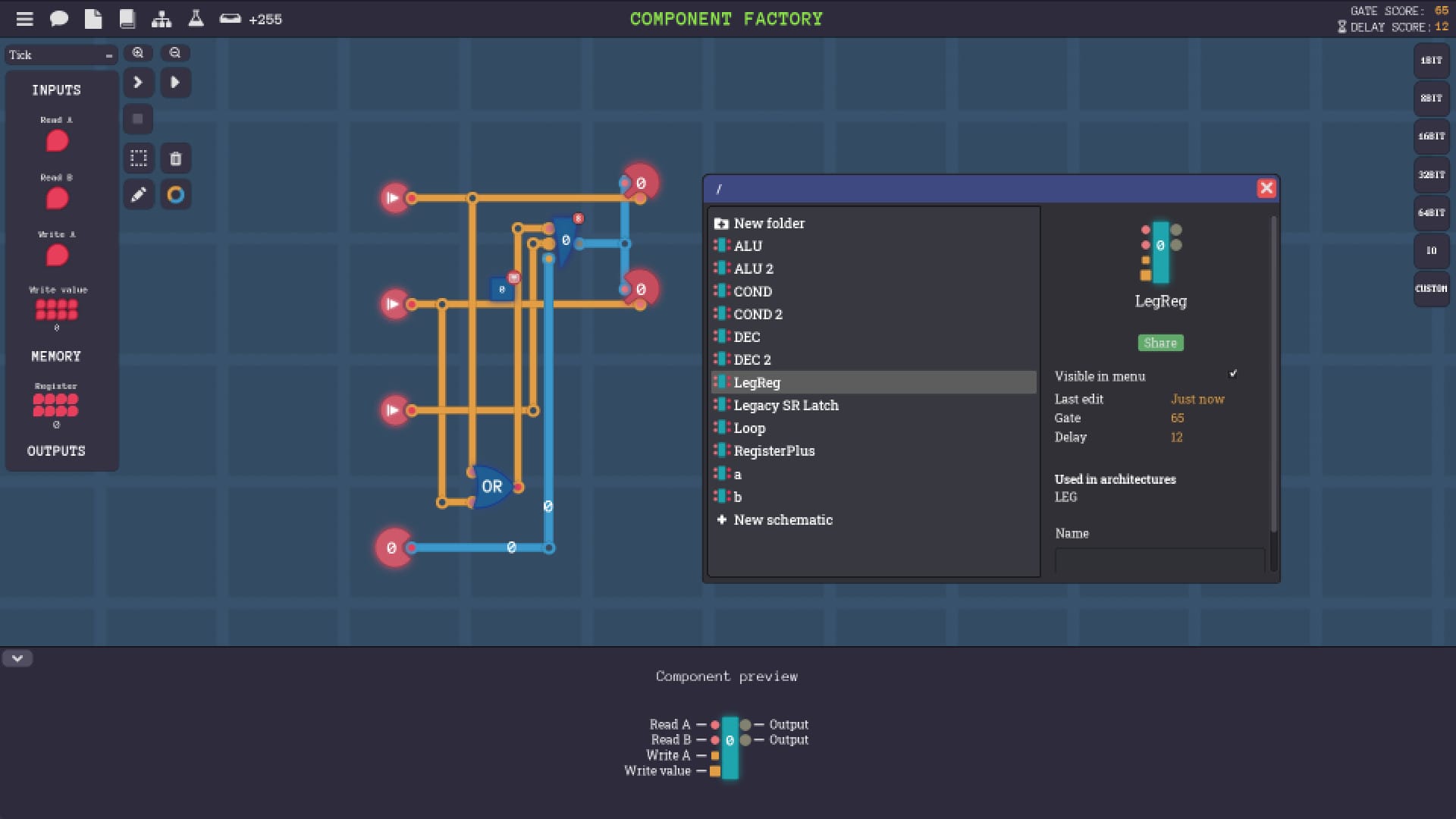
However, the game is not without its minor imperfections. While the overall design is stellar, the user interface can occasionally exhibit subtle friction. As noted by some users, navigating incredibly complex designs within the 'component factory' can sometimes feel less smooth than the underlying logic it represents. These are rarely showstoppers, but they occasionally pull one away from the immersive intellectual challenge. Similarly, the "lighthearted sci-fi narrative," while providing a charming backdrop, ultimately takes a back seat to the relentless technical demands. It serves its purpose, but players are unlikely to be drawn in by its story; the core hook remains the intellectual puzzle.
Turing Complete excels in translating abstract computer science concepts into concrete, manipulable elements. The demystification of if statements, loops, and functions from high-level programming constructs into tangible hardware operations is perhaps its most profound achievement. One doesn't simply learn that a CPU executes instructions; one builds the very circuitry that decodes and performs those instructions. This deep dive into the mechanisms that power our digital world isn't just academic; it fosters a practical, intuitive understanding that will resonate with anyone involved in software or hardware development. The satisfaction derived from seeing a custom-built program run successfully on a custom-built processor is immense, making the often-challenging journey incredibly worthwhile.