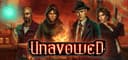

Overview
Start here: Unavowed is not trying to be nostalgic. That’s the first thing worth understanding about it. Point-and-click adventures have spent the last twenty years chasing the ghost of LucasArts and Sierra, mistaking pixel hunts and moon-logic inventory puzzles for the genre’s soul. Wadjet Eye Games—a boutique New York studio run by Dave Gilbert that has quietly become one of the most reliable names in modern adventure gaming—looked at that legacy and asked a better question: what if the point-and-click framework could carry a real RPG?
The setup is pure noir-fantasy. You’ve spent a year as a puppet. A demon wore your body like a coat, and it used your hands to do terrible things across New York City. When the ancient secret society known as the Unavowed finally exorcises you, the freedom is a trap of its own—your old life is rubble, the police want you for crimes you don’t remember committing, and the only people who believe you are the same ones who pulled the demon out. So you join them. You become a soldier in a hidden war between the mundane world and the supernatural forces that prey on it.
What makes this more than a well-told ghost story is the architecture underneath. Before the mystery begins, three decisions ripple through the entire game: your gender, and a class-style origin—Actor, Bartender, or Cop. These aren’t cosmetic. A former cop walks into a crime scene and reads it differently. A bartender knows people. The game remembers who you decided to be, and so do its characters.
Released on August 8, 2018 and available on Steam and Nintendo Switch for $14.99, Unavowed holds an 87 on Metacritic. That acclaim looks earned on paper. This is a studio operating at a high level of craft.
Key features
- Choose-your-origin protagonist: Three distinct backstories—Actor, Bartender, or Cop—plus gender selection, reshaping dialogue, NPC reactions, and how the world reads you. This is RPG-grade role-play grafted onto a point-and-click.
- Party-based puzzle solving: You recruit a roster of supernatural allies—a half-jinn fire-warrior, a spirit medium who talks to the dead, and more—then pick two to bring on each mission. Their abilities open different, genuinely non-linear paths through every problem.
- Consequential branching narrative: Fully-voiced dialogue, hard moral choices, and multiple endings. Decisions close doors permanently. The story bends around who you save, who you trust, and who you leave behind.
Analysis
The Gameplay Loop
Unavowed runs on a loop that feels closer to a tactical RPG than a traditional adventure. You return to the Unavowed’s headquarters—a bar, naturally—between missions. You take the subway to a borough. You investigate a supernatural incident, solve it, make choices, and come home changed. The subway rides are the connective tissue, and they’re one of the game’s quiet strengths: your two chosen companions banter, argue, and reveal themselves during the commute. It’s characterization smuggled inside a loading screen, and it’s a smarter use of downtime than most adventures manage.
The companion system is the real innovation, and it deserves specific praise. Most adventure games hand you a single protagonist and a single correct solution. Unavowed hands you a two-person toolkit that changes every mission. Bring Eli, the half-jinn, and you can melt a lock or torch an obstacle. Bring Mandana, the immortal warrior, and brute force becomes an option. Bring a spirit medium and you can interrogate a corpse for information the living won’t give up. Because you choose your pair before each mission, the same scenario has multiple valid resolutions—and the design never punishes you for bringing the “wrong” team. It simply adapts.
That design philosophy—multiple paths, no dead ends—is where Unavowed quietly reinvents what a point-and-click can be. The old genre trained players to hoard every item and try every combination out of paranoia. Wadjet Eye trusts you instead. Solutions flow from who you brought and who you are, not from pixel-hunting a screen for a hidden rusty key.
The Writing
Let’s be direct: the writing is the reason to play this. The dialogue is sharp, the characters are specific, and the moral dilemmas refuse easy answers. You will make a call that saves one person and dooms another, and the game will not tell you whether you were right. Companions have full arcs. NPCs remember your origin. A conversation you have as a Cop plays out differently than the same beat as an Actor. This is branching done with intent, not spectacle.
Where It Softens
Here’s the honest knock. The puzzles are easy. If you come to adventure games hungry for the throat-grabbing difficulty of a Monkey Island or a Myst, Unavowed’s obstacles look gentle—more narrative speed bumps than genuine walls. The party system creates flexibility, not challenge. The design keeps you guided rather than stuck. For some players that’s a feature. For puzzle purists, it’s the one place the game trades depth for flow. The overall difficulty curve stays low throughout, and the mystery, while compelling, never asks you to sweat.
That’s a deliberate choice, and it’s the right one for the story Wadjet Eye is telling. But it’s worth naming plainly: this is an adventure game built around characters and consequences, not brain-teasers.
Visuals & performance
The pixel art is gorgeous, and more importantly, it’s purposeful. Wadjet Eye renders New York as a lived-in place of grimy subway platforms, rain-slicked streets, and cramped apartments, all lit with a moody, atmospheric palette that sells the supernatural undertone without ever tipping into kitsch. This isn’t retro for retro’s sake. The low resolution is a deliberate aesthetic that hides nothing and evokes everything.
The full voice acting is a genuine budget-buster for a studio this size, and it pays off. Performances are strong across the roster, and the writing gives the actors real material to chew. A 2D game of this scope is light on hardware by design, and the UI is clean, unobtrusive, and built to get out of the way. No clutter, no friction.
Platform nuances
On Steam, Unavowed is playing to its home crowd. Mouse-and-keyboard is the native language of point-and-click, and the precision of a cursor makes navigating scenes and dialogue trees effortless. This is the natural way to play it.
The Nintendo Switch port is the more interesting story. Adventure games and console D-pads have historically been an awkward marriage—translating a cursor to a gamepad invites clumsiness. Wadjet Eye’s approach looks competent on paper, and the Switch’s portability is a real argument in its favor: this is a narrative-forward, low-twitch game suited to handheld, bite-sized play. The trade-off is control precision. Pointing at hotspots with a stick or the touchscreen is inherently less crisp than a mouse, and the interface is the kind you’ll occasionally fight rather than the mystery. It’s a good port of a game that was born on PC.
Final verdict
Unavowed is the rare adventure game that understands its own genre well enough to break its rules. By marrying point-and-click exploration to RPG-style origins and a party system that makes every mission your own, Wadjet Eye built a structure the genre hasn’t seen before, and it never feels gimmicky. The easy puzzles keep it from being a first pick for the hardcore crowd, and the Switch port asks you to forgive some control friction. Neither of those is enough to sink it. What you’ll remember is the writing, the choices that stick to your ribs, and a New York you won’t want to leave. We rate it a clear recommendation: play it, then play it again as someone else.
Reviewed by the Rankeno RPG & Adventure Desk. Scores are out of 10; the overall score is the desk’s editorial judgement, informed by the four sub-scores above. How we review