Bottom Line: Vanillaware’s tactical masterpiece trades direct battlefield control for a brilliant, programmable squad-building system that elevates strategic thinking above mechanical reflexes. It is the most satisfying tactical RPG in a decade, even if its narrative plays it disappointingly safe.
At the heart of Unicorn Overlord lies a fundamental design gamble: stripping away direct control during combat to focus entirely on preparation. In lesser hands, this could render the game passive, transforming the player into a bored spectator. Instead, Vanillaware turns every collision into a brilliant showcase of player-engineered logic. The strategic depth lives in the preparation menu, where you assemble squads of up to five units from a massive roster of over 60 characters and dozens of classes—ranging from heavy hoplites and winged gryphon knights to elusive elven archers.
The Programming of War
Combat resolution operates on a priority-based programming language. Each unit possesses Active Points (AP) and Passive Points (PP). AP governs offensive skills, while PP fuels defensive reactions, heals, and counter-attacks. The magic happens when you assign conditions to these skills. You might program a Cleric to cast a quick heal, but restrict it to activate only when an ally's HP drops below 50%. You can instruct a thief to target the backline casters, or a warrior to strike only armored enemies to maximize armor-penetrating damage.
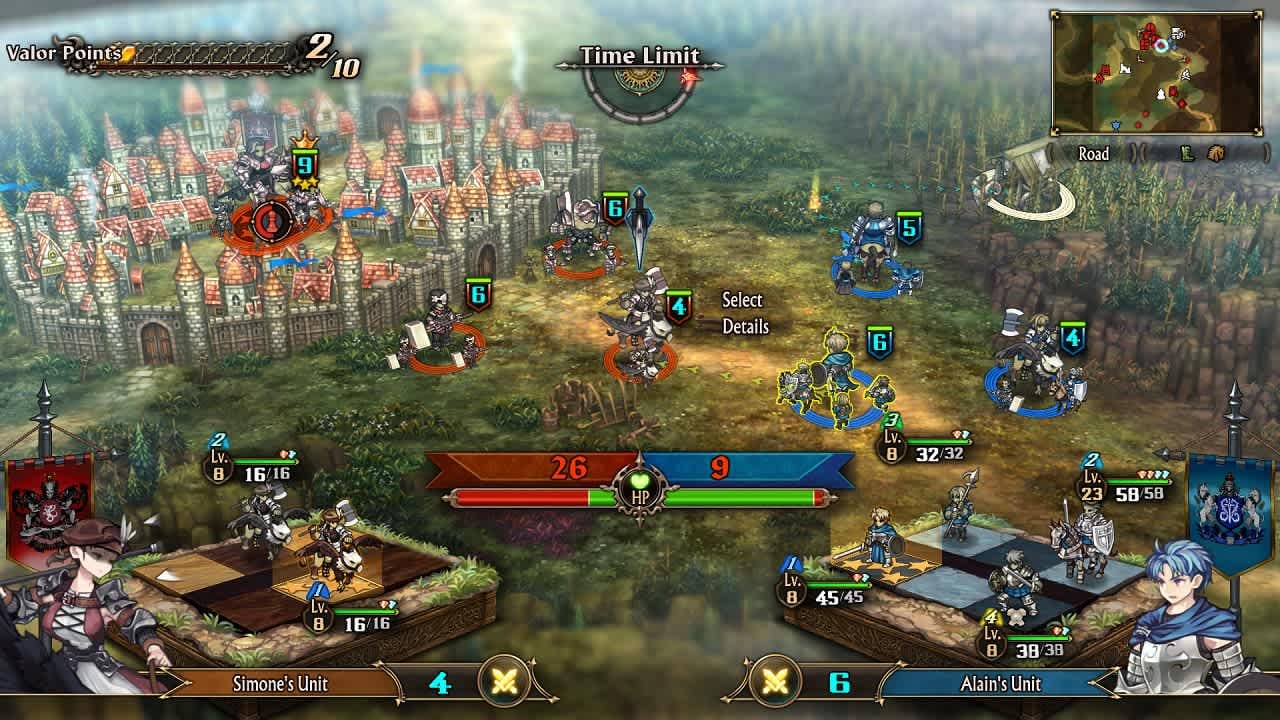
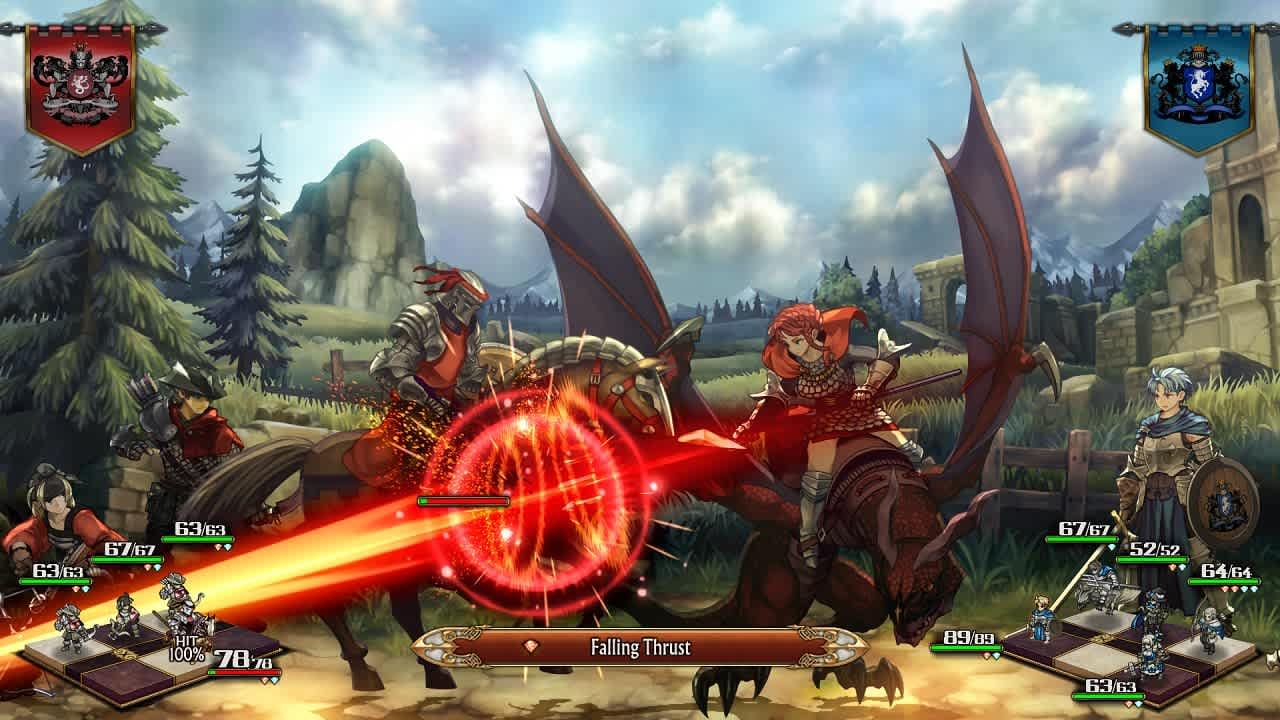
When two squads collide on the overworld map, the game executes these instructions in a flurry of gorgeous, automated animations. Because the game provides a precise, down-to-the-digit preview of the combat outcome before you commit, it removes the frustrating "black box" feeling of many auto-battlers. If the preview shows your squad taking heavy losses, you do not throw up your hands in defeat; instead, you open the tactics menu, swap a unit's position, tweak a priority rule to target a different threat, and watch the preview dynamically shift to a flawless victory. It is an incredibly rewarding loop of hypothesis, experimentation, and optimization.
Real-Time Overworld Mastery
The macro-level gameplay loop is just as compelling. Rather than navigating a sterile mission select screen, you explore Fevrith in real-time. You direct Alain and his squads across a painterly landscape, dodging roaming enemy patrols, gathering building materials, and stumbling upon side quests. The transition between exploration and combat feels entirely natural.
Liberating settlements serves as the primary engine for progression. Reclaiming a town allows you to deliver gathered resources to rebuild its infrastructure, which in turn unlocks taverns for unit bonding, expanded armories, and additional recruitment options. This creates a highly addictive feedback loop: explore, gather, optimize, liberate, and expand. The freedom to tackle regions in a non-linear fashion grants the adventure a sense of scale and agency that rigid, chapter-based strategy games lack.
The Friction of Abundance
However, this mechanical abundance eventually collides with UI limitations. With over 60 characters and hundreds of pieces of specialized gear, inventory and squad management becomes a chore by the mid-game. Every time you unlock a new unit class or acquire a powerful accessory, you must dig through nested menus, unequip benched characters, and rewrite logic rules across multiple squads. The game desperately needs more robust sorting filters and template-saving options to alleviate this cognitive load. While the depth is intoxicating, the administrative upkeep required to maintain a massive army exposes the limits of the game's menu architecture.