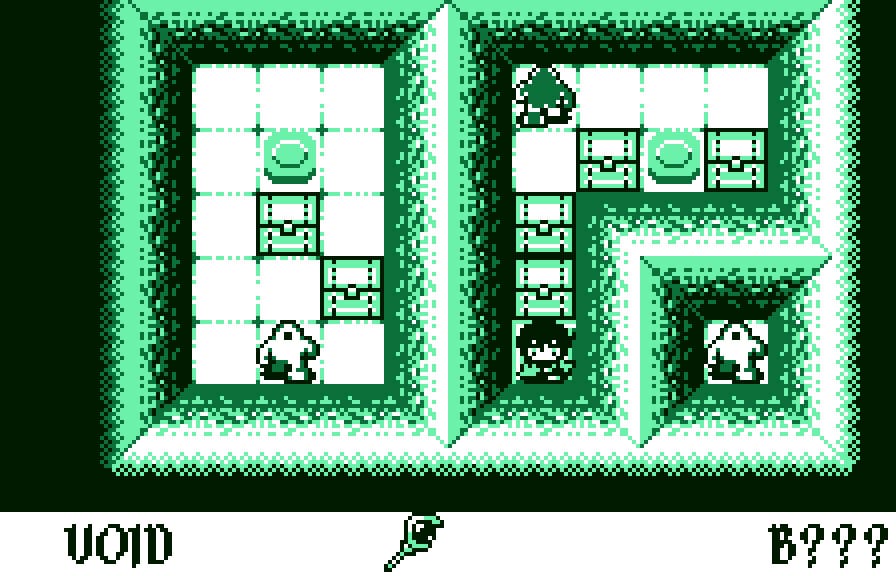

Bottom Line: System Erasure's Void Stranger isn't just another Sokoban-style puzzle game; it’s a masterclass in calculated complexity, demanding relentless intellect and rewarding only the most meticulously planned moves.
Void Stranger doesn't just play with the mechanics of a Sokoban puzzle; it dissects and reassembles them into something far more predatory. The gameplay loop is a cycle of intense observation, deliberate action, and often, frustrating failure. Players are dropped into compact, claustrophobic arenas where the objective might appear simple—reach an exit, activate a switch—but the path to success is a minefield of interacting systems. Foes aren't just obstacles; they are components of the puzzle, often requiring specific manipulation to clear a path or trigger a necessary event. Traps are ubiquitous, ranging from crumbling floors to projectile-firing automatons, each demanding a nuanced understanding of its trigger conditions and spatial impact. This constant threat elevates the stakes dramatically, transforming a genre traditionally associated with calm contemplation into one tinged with palpable tension.
The strategic depth is where Void Stranger truly distinguishes itself. Unlike many puzzle titles that offer a linear solution, this game often presents multiple viable approaches, or, more accurately, numerous pitfalls masquerading as solutions. The "every step counts" mantra articulated by its player base is not hyperbole; it is a fundamental truth. A single block pushed into the wrong position, an enemy moved one square too far, a path inadvertently blocked—any of these can render a level unsolvable, necessitating a full restart. This isn't cheap difficulty; it's a profound commitment to logical rigor. The game subtly teaches players to think several moves ahead, to anticipate the chain reactions of their actions, and to internalize the precise movement patterns and vulnerabilities of every entity in its ecosystem. It is a demanding cognitive exercise, forcing the player to build intricate mental models of the level state, pruning suboptimal branches of thought with ruthless efficiency.
From a user experience perspective, Void Stranger manages to be unforgiving without feeling unfair. The onboarding process is lean, relying on environmental cues and intuitive mechanics to teach its complex grammar. The difficulty curve ascends sharply, but solutions, once discovered, often feel elegant and earned. There’s a distinct satisfaction in untangling a particularly convoluted stage, a rush that few games outside the most challenging puzzle genres can replicate. This "demanding, yet rewarding" balance is meticulously maintained. The game never feels like it's holding your hand, nor does it ever feel entirely capricious. Failures are almost always attributable to a misjudgment or a lack of foresight on the player's part, fostering a continuous loop of learning and refinement. System Erasure’s philosophy appears to be one of pure design, stripping away extraneous elements to focus entirely on the potency and elegance of the puzzle core. This commitment to intellectual challenge ensures a high degree of longevity for those willing to engage with its complexities; each puzzle solved unveils new layers of interaction, pushing the player’s understanding of its world further. The design doesn't just present puzzles; it presents a language of puzzles, inviting players to become fluent in its intricate lexicon.
Gameplay Loop
Players enter a new labyrinth segment, immediately assessing the layout, enemy types, and environmental hazards. The core action involves pushing blocks or manipulating specific entities to create a path or trigger an event. However, every action has ripple effects. Moving a block might open one path but seal another, or expose the player to an enemy’s patrol route. Success hinges on a mental simulation of consequences, predicting how the board state will evolve over numerous turns. The joy comes not just from execution, but from the moment of insight when the complex web of interactions suddenly clarifies into a single, elegant solution. Failure is an equally integral part of the loop, prompting a quick reset and a refined approach, iteratively chipping away at the problem space until mastery is achieved.
Interface
The interface of Void Stranger is a lesson in minimalist functionality. It provides exactly what is necessary—the game world—without the slightest hint of clutter. Health indicators, inventory slots, and progress markers are subtly integrated or contextually displayed, ensuring that the primary focus remains on the puzzle at hand. This spartan design choice aligns perfectly with the game’s intellectual demands, removing any potential visual distractions from the critical analysis required for success. It’s an interface that respects the player’s cognitive load, allowing them to concentrate solely on the complex spatial and logical challenges unfolding before them.