

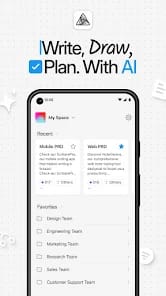

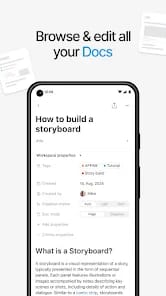
Bottom Line: Affine is a formidable, privacy-centric workspace that successfully bridges the gap between structured documentation and spatial brainstorming, though its mobile experience still feels like a work in progress.
The most striking aspect of Affine isn't its list of features, but its refusal to force a choice between formats. Most applications treat a "page" and a "canvas" as two separate file types. In Affine, these are simply different views of the same data. This is the Edgeless philosophy in action. When you’re drafting a project proposal and realize the logic requires a flow chart, you don't export a PDF or switch tabs; you click a button, and your text blocks become movable objects on a 2D plane. It’s a transition that feels intellectually honest—reflecting how our brains actually move between focused execution and high-level strategy.
The Friction of Flow
Productivity tools often fail because they introduce too much onboarding friction. Affine manages to avoid this by sticking to a minimalist aesthetic that hides its complexity until it's needed. The use of markdown as a first-class citizen means that writers can stay in the flow without hunting for formatting menus. However, the true power lies in how it handles databases. Unlike the cumbersome table implementations found in lesser apps, Affine’s data structures feel lightweight. They are functional enough to track a complex sprint but simple enough to manage a grocery list.
The local-first nature of the app provides a snappiness that cloud-dependent rivals simply cannot match. There is no "saving..." spinner. There is no latency when switching between large folders of information. This technical foundation is critical for a "Second Brain" tool; if the app feels slow, the user won't trust it with their fleeting thoughts. By keeping the processing local, Affine removes the subtle micro-hesitations that kill creative momentum.
The Open-Source Advantage
Because Affine is open-source, there is a level of transparency here that is refreshing. Security audits are community-driven, and the development roadmap is visible to anyone. This transparency mitigates the "vendor lock-in" fear that haunts users of proprietary platforms. If the developer disappeared tomorrow, the community could—and likely would—keep the lights on. This makes Affine a "future-proof" investment of your time.
However, being on the bleeding edge has its costs. While the desktop experience is remarkably stable, the underlying complexity of the CRDT (Conflict-free Replicated Data Types) used for collaboration can occasionally lead to sync quirks if you are bouncing between multiple devices too rapidly. It’s a sophisticated solution to a hard problem, but it’s not yet bulletproof.