


Bottom Line: Minishoot' Adventure is a masterclass in genre-bending, stripping away the bloat of modern gaming to deliver a pure, high-octane marriage of Zelda-style exploration and twin-stick precision.
The brilliance of Minishoot' Adventure lies in its frictionless design. In an era where "onboarding" often feels like a part-time job, this game understands that the best way to teach a player is through play. The opening minutes establish the stakes and the controls with zero fluff, and from that point on, the world is your classroom.
A Masterclass in Frictionless Discovery
The gameplay loop is a rhythmic cycle of exploration, combat, and empowerment. You enter a new biome—perhaps a sun-drenched forest or a claustrophobic, sunken city—and immediately encounter obstacles you cannot yet bypass. Rather than feeling like a chore, these roadblocks serve as mental bookmarks. When you finally defeat a screen-filling boss and unlock the Dash ability, the "click" in your brain is instantaneous. You aren't just thinking about the new area you can reach; you’re thinking about the three secrets you saw twenty minutes ago.
This sense of discovery is bolstered by the handcrafted nature of the map. Procedural generation is the trend of the week, but SoulGame Studio proves why human-designed levels still reign supreme. Every shortcut feels intentional. Every hidden cave feels earned. There is a specific geometry to the world that encourages curiosity, and more importantly, the game consistently rewards that curiosity with meaningful upgrades or shortcuts that make the world feel smaller and more manageable as you grow in power.
The Nuance of Bullet Hell
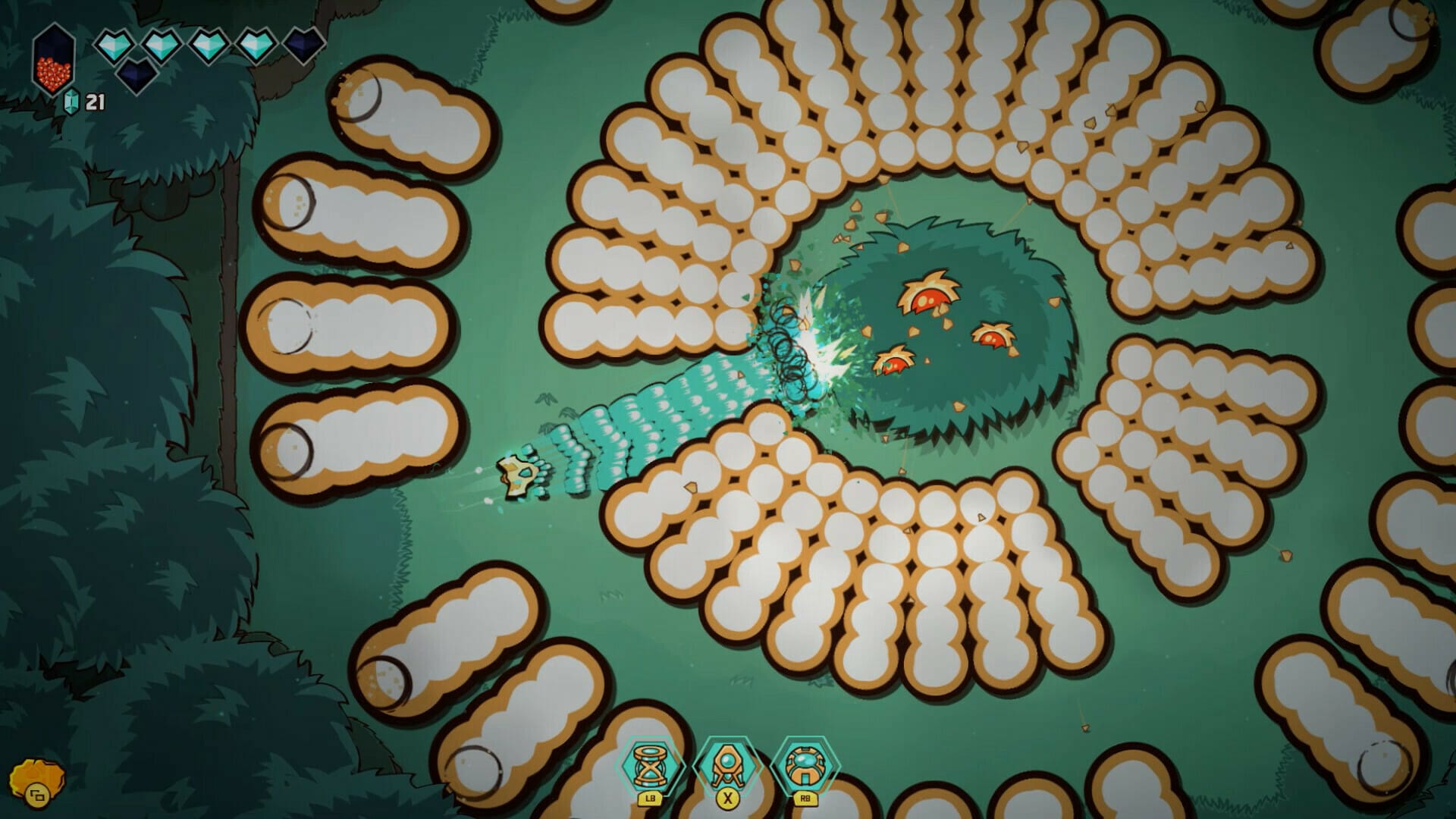
The combat encounters are where the "bullet hell" influence shines. While the term often conjures images of impossible difficulty, Minishoot' Adventure treats it more as a rhythmic puzzle. Enemies telegraph their attacks clearly, and the patterns—while intense—are always fair. The collision boxes are generous, and the ship’s "hitbox" is clearly defined, which is critical for a game that demands you weave through gaps only pixels wide.
What's truly impressive is how the game scales. The three difficulty modes aren't just health modifiers; they feel like genuine shifts in the required skill floor. Furthermore, the accessibility options are some of the best I've seen in the indie space. Features like auto-fire and aiming assistance don't "dumb down" the game; they open it up to players who might love the exploration of a Metroidvania but lack the twitch reflexes for high-level bullet hell. It’s a rare instance of a developer prioritizing the player’s enjoyment over a misguided sense of "hardcore" purity.
Interface and Flow
The UI is sparse to a fault, but in this context, it works. The map is clear and functional, and the skill tree is intuitive. You spend less than 5% of your time in menus, which keeps the momentum high. My only minor gripe is the lack of a more robust way to mark the map manually for specific types of "locked" doors, though the game is small enough that most players will remember the major landmarks.
The flow between biomes is seamless, with almost no loading screens to break the immersion. This technical polish ensures that the "just five more minutes" loop remains unbroken. You finish a dungeon, upgrade your ship, see a new path on the map, and before you know it, an hour has passed. That is the hallmark of exceptional game design.