

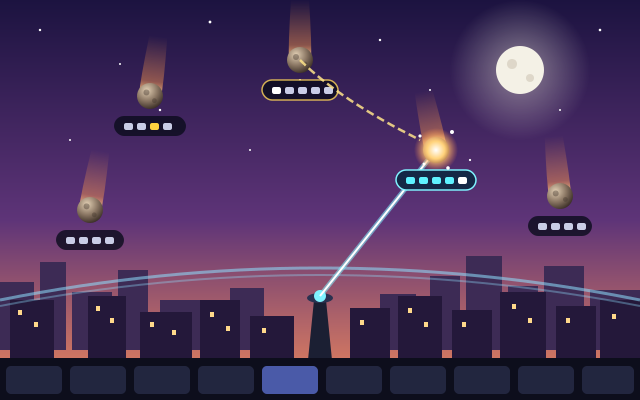
Overview
The brain-training industry has long occupied a precarious space between legitimate cognitive science and digital snake oil. We’ve seen the rise and fall of various contenders, but Peak, developed by Synaptic Labs, positions itself as the sophisticated adult in the room. It is a carefully engineered “brain gym” that leans on a pedigree of collaboration with neuroscientists from Cambridge, Yale, and NYU.
Marketed as a comprehensive cognitive development tool, Peak targets the mobile professional who is more likely to spend ten minutes on a morning commute sharpening their mental agility than scrolling through a social feed. The app arrives at a time when digital wellness is shifting from passive monitoring to active optimization. The onboarding process is intentionally clinical yet inviting, stripping away the “gamey” fluff in favor of a baseline assessment that generates a Brain Score. This number, while arbitrary in a vacuum, serves as the psychological anchor for the entire experience.
Peak appears designed to avoid the trap of being overly academic. The clean, vector-heavy aesthetic signals utility over distraction. By focusing on six core pillars—memory, focus, problem-solving, mental agility, language, and coordination—it attempts to provide a holistic workout. However, the market positioning is clear: this is a “freemium” gateway. While the entry-level experience offers a glimpse of the methodology, the real depth is locked behind the Peak Pro subscription, a move that asserts the app’s value as a long-term wellness investment rather than a disposable distraction.
Key features
- The Coach: A virtual personal trainer that monitors performance trends and curates personalized workouts, ensuring users don’t just play what they’re good at, but confront their cognitive weaknesses.
- Brain Map: A robust visual analytics suite that allows for comparative benchmarking. It answers the “how do I stack up?” question by charting skills against other users in your age group or professional demographic.
- Scientific Library: Over 45 mini-games designed in tandem with academic researchers, focusing on specific cognitive triggers like spatial recognition, memory recall, and inhibition control.
Analysis
The Gameplay Loop and Cognitive Friction
Peak is built around variable ratio reinforcement. The “workout” isn’t a slog; it’s a series of micro-challenges that rarely exceed two minutes. This brevity is its greatest strength. By the time the mental strain of a coordination task sets in, the round is over, and a satisfying progress bar appears. This loop is designed to create a sense of incremental mastery that speaks directly to the brain’s reward centers.
However, the “transfer of learning” problem must be addressed. Critics of brain training often point out that getting better at a “memory game” only makes you better at that specific game, not necessarily better at remembering where you left your keys. Peak attempts to counter this skepticism through real-time difficulty adjustment. The design doesn’t just let users plateau; it actively pushes back. When the “Coach” identifies that problem-solving speed has increased, the next module introduces higher levels of cognitive friction. This is where the app moves beyond simple entertainment and into the territory of genuine mental conditioning.
Interface and The Psychology of Data
The Brain Map is perhaps the most compelling element for the data-driven user. For the quantified-self crowd, seeing a “Language” score dip after a week of inactivity provides a powerful incentive to return. It’s a clever use of loss aversion—the feeling that you are losing your edge if you don’t engage. The interface facilitates this by hiding complex data behind elegant, readable charts. Navigation is crisp, avoiding the cluttered “menu-within-a-menu” nightmare found in many educational suites.
The Elephant in the Paywall
The friction created by the Peak Pro subscription cannot be ignored. The free version is, quite frankly, a tease. Restricting users to a handful of games per day creates a ceiling that prevents the very “long-term maintenance” the app claims to provide. While Synaptic Labs needs to monetize, the gap between the free tier and Pro feels like a chasm. The advanced training modules—those designed specifically for deep focus or advanced memory—are the meat of the experience, and locking them away makes the free app feel like an extended demo rather than a functional tool.
Furthermore, while the academic partnerships provide a veneer of scientific legitimacy, the app occasionally leans too hard on “Brain Scores” that lack real-world context. Is a score of 650 good? The app says it is, but without a clearer connection to everyday functional improvements, it risks becoming a closed-loop ecosystem of self-validation.
Visuals & performance
Visually, Peak is a strong example of functional minimalism. It avoids the skeuomorphic traps of older educational software, opting instead for a flat, modern design language suited to high-end Android hardware. The animations are fluid, and the haptic feedback—particularly during fast-paced coordination games—reads as tight and intentional. As a 2D app of this scope, it is light on hardware demands, which suits the “10-minute workout” value proposition. The UI doesn’t fight the user; it directs them.
Platform nuances
On Android, the experience is optimized for vertical one-handed use, making it well suited to the “dead time” in a user’s day. The touch targets are generous, and the design appears built to handle the fragmentation of Android screen sizes. Low input latency is vital here—in games where “mental agility” is measured in milliseconds, even a hint of input lag would undermine the credibility of the score. Peak follows standard Android navigation patterns that keep the onboarding friction to a minimum.
Final verdict
Peak is a complete, well-rounded brain-training package. It packages complex cognitive tasks into a suite designed to be genuinely engaging on a daily basis. While the “science” of brain training remains a topic of debate in the broader psychological community, the utility of the habit Peak builds is clear. It encourages focus, discipline, and self-awareness. For those who can stomach the subscription cost, it is a capable tool for sharpening the mental edge. For anyone hoping for a free ride, however, the experience will likely prove more frustrating than enlightening. We recommend it to the right audience only.
Reviewed by the Rankeno Learning & Lifestyle Desk. Scores are out of 10; the overall score is the desk’s editorial judgement, informed by the four sub-scores above. How we review