



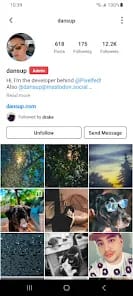
Bottom Line: Pixelfed is a soul-cleansing departure from the algorithmic rot of mainstream social media, but its current mobile execution is a minefield of technical friction that threatens to alienate the very users it aims to save.
The Philosophy of the Feed
The most striking thing about using Pixelfed isn't what's there, but what's missing. The absence of an "Explore" tab populated by thirst-traps and rage-bait is initially disorienting. You are forced to actually curate your experience. This is the core of Pixelfed's utility: it restores the intentionality of social media. When you scroll through your feed, the latency isn't just in the server response; it's in the mental shift required to realize that every image you see is there because you explicitly asked to see it.
The Fediverse Friction
However, we have to talk about the onboarding friction. For the average user, the concept of "instances" or "servers" is a massive hurdle. Unlike the monolithic sign-up of a Meta property, Pixelfed requires you to choose a home. While this is the backbone of its decentralization, it remains a significant barrier to entry. Once you're in, the experience of the "Fediverse" is fascinating. Seeing a post from a Mastodon user appear in your photo feed feels like a glimpse into a more open, interoperable future. It breaks the "walled garden" model that has defined the last decade of the internet.
Interface and User Experience Flow
The UI design leans heavily on skeuomorphism’s spiritual successor: a clean, functional minimalism that feels "stock" in a way that is actually refreshing. The multi-photo albums and ephemeral stories function exactly as you'd expect, which is a testament to the developer's understanding of current social conventions. They aren't trying to reinvent the wheel; they're trying to build a wheel that doesn't track your location and sell it to insurance companies.
But the onboarding loop on mobile is where the dream starts to fray. The "Internal Research" notes aren't lying: the mobile applications are currently the platform's Achilles' heel. Reporting a 2.6/5 on Android is a red flag in a world where users expect instant gratification. During my testing, the "login loop"—where the app fails to recognize a successful authentication from the web-based handshake—occurred twice. For a platform that wants to be an "ethical alternative," it first needs to be a "functional alternative."
Safety and Moderation
Safety is treated as a core pillar, and it shows. The ability to mute and block is standard, but the granular privacy (specifically "Unlisted" posts) allows for a level of social nuance that mainstream platforms have abandoned in favor of "Public or Private" binaries. "Unlisted" allows you to share a photo that is only visible via a direct link or on your profile, but won't appear in the global or local timelines. It’s a small detail, but it speaks to a deep understanding of how people actually want to use the internet: with nuance.