
Bottom Line: Seek is a rare masterclass in friction-free education, stripping away the complexity of citizen science to deliver a privacy-first, addictive window into biology that actually warrants your screen time.
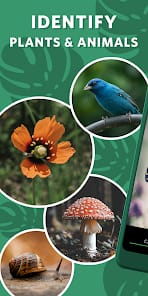
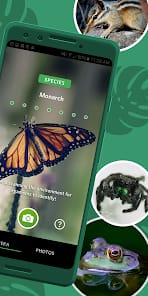
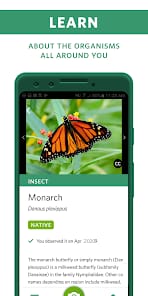
The core appeal of Seek lies in its identification loop. This isn't a static "take a photo and wait" experience. Instead, the app uses a live computer vision overlay that updates as you move the camera. You start at the broad level—say, "Dicots"—and as the software gains more visual data from different angles or better lighting, the indicator bar creeps toward the right. It ticks through "Family," then "Genus," and finally "Species." There is a genuine, visceral thrill in watching that bar hit the species mark. It transforms a common weed into Taraxacum officinale, granting the organism a name and a history.
The Gamification Loop
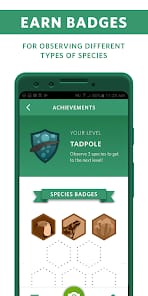
Seek succeeds where other educational apps fail because it understands incentive structures. By introducing monthly challenges—like finding five different types of fungi or observing three different pollinators—it provides a reason to return to the app beyond mere curiosity. This "scavenger hunt" mechanic effectively turns the outdoors into a level-based exploration game. For children, this is transformative; for adults, it provides a structured way to engage with surroundings that we often ignore. The badge system acts as a persistent record of your "encounters," creating a digital trophy room of the local flora and fauna.
Interface & Onboarding Friction
The UI is a study in functional minimalism. There are no ads, no pop-ups asking for "pro" subscriptions, and no social feeds to distract from the task at hand. This lack of clutter isn't just an aesthetic choice; it’s a usability win. Because the app doesn't require a login, the time-to-value is nearly instantaneous. You can go from downloading the app to identifying a backyard bird in under sixty seconds.
However, this simplicity comes with a trade-off. Power users will eventually hit a ceiling. Unlike the full iNaturalist app, Seek doesn't contribute your sightings to a global research database unless you manually choose to link the accounts. It is an isolated experience. This is great for privacy, but it means your data isn't helping a scientist track migration patterns or climate change impacts unless you take the extra step to enter the more complex iNaturalist ecosystem.
Machine Learning Constraints
While the image recognition is impressive, it is not infallible. The software relies heavily on visual clarity. If you are trying to identify a fast-moving insect in a shaded forest, the latency between the camera feed and the AI's processing can lead to some "idling" where the app gets stuck at the Genus level. It also struggles with look-alike species—those frustratingly similar plants that require a microscope or a DNA test to distinguish. Seek is honest about its limitations, often stopping at a higher taxonomic level rather than providing a false species match, which is a mark of scientific integrity over flashy marketing.