


Bottom Line: Strava is the undisputed town square for the athletic elite and weekend warriors alike, providing a peerless competitive ecosystem that is only slightly marred by an increasingly aggressive subscription paywall.
The Psychology of the Segment
The brilliance of Strava lies not in its ability to tell you how far you went, but in telling you how fast you were compared to the person living three blocks away. This is the Segment mechanic, and it is the engine of the app’s addictive nature. By carving the world into bite-sized digital race tracks, Strava turns a mundane commute into a tactical battle. You find yourself sprinting for a specific lamp post or pushing through the "red zone" on a climb just to move from 45th to 42nd place on a leaderboard. It’s a gamification of the physical world that feels visceral because the effort required to win is real. The pursuit of the King or Queen of the Mountain (KOM/QOM) title is a powerful motivator that few other apps have managed to replicate with such efficacy.
The Kudos Economy
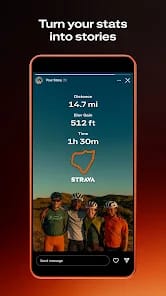
The social feed is remarkably clean, eschewing the algorithmic toxicity of traditional social media in favor of a purely meritocratic "Kudos" system. There is a distinct lack of "fluff" here; the feed is a rhythmic stream of maps, heart rate graphs, and the occasional post-ride sunset. This creates a positive feedback loop that encourages consistency. When you see your peers logging miles in the rain, the social pressure to maintain your own training streaks becomes a potent tool against lethargy. However, this transparency is a double-edged sword. The "all-eyes-on-me" nature of the app can lead to "Strava anxiety," where users feel pressured to perform every time they hit 'start' on their device.
The Subscription Squeeze
We must address the elephant in the room: the monetization friction. For years, Strava was arguably too generous with its free tier. That era has ended. Moving the ability to see where you rank on a leaderboard—beyond the top ten—behind a paywall felt like a slap in the face to the long-term community. While the premium subscription does unlock genuinely deep analytical tools, such as power curve analysis and fitness/freshness tracking, many casual users find the monthly "tax" hard to justify. The platform is increasingly bifurcating into two groups: the data-hungry "Pros" who find immense value in the detailed performance metrics, and the "Socials" who are starting to feel like second-class citizens in their own digital club.
Interface & Data Integrity
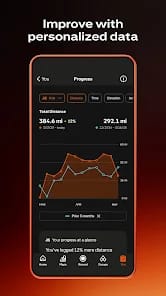
The interface is a study in utilitarian elegance. It manages to pack an incredible amount of data—cadence, elevation gain, split times, and heart rate zones—into a mobile-first design that never feels claustrophobic. The "Activities" tab is a masterclass in information density, allowing for a quick scan of the week’s efforts while providing the option to drill down into the minutiae of a single interval. Data integrity remains high, though it is inherently limited by the hardware of the phone or watch being used. Strava’s "elevation correction" algorithms are generally superior to raw GPS data, ensuring that your 2,000-foot climb isn't registered as a flat walk.