

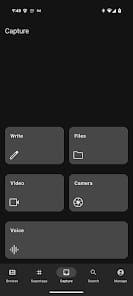

Bottom Line: Tana is a formidable, AI-native reconstruction of the digital workspace that trades user-friendly simplicity for unparalleled structural power. It is the most ambitious attempt yet to kill the "folder" and replace it with a living, breathing knowledge graph.
To understand Tana, you must first accept that the page is a lie. In Tana, there are no pages—only nodes. This is a radical departure from the skeuomorphic "notebook" metaphor that has dominated the industry. The brilliance of this approach lies in its granularity. Because every entry is a node, you can query your entire workspace with a level of precision that makes Notion’s databases look like toys.
The Power of the Supertag
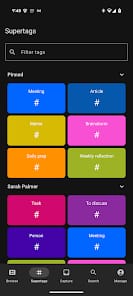
The Supertag system is the most significant innovation in the productivity space since the introduction of the backlink. In most apps, adding a tag is a way to filter. In Tana, adding a tag is an act of definition. When you tag a node as #Person, you aren't just filing it; you are telling the system that this object has a phone number, an email, and a "last contacted" date. This creates an ontology of your life. The friction of setup is undeniable—you essentially have to build your own system from the ground up—but the payoff is a workspace that understands the type of data it holds. This allows for Live Queries, where you can call up every #Task that is #HighPriority and #Overdue across your entire graph, regardless of where they were originally written.
AI as an Architect
While every developer is currently slapping an AI chatbox into their sidebar, Tana’s implementation of Compound Intelligence feels deeply structural. It isn't just about generating text; it’s about data transformation. The ability to record a disorganized 20-minute brainstorm and have Tana not only transcribe it but also identify the five distinct #Projects mentioned and create #ActionItems for each is where the "EverythingOS" promise starts to feel real. It reduces the cognitive load of manual organization, which has always been the Achilles' heel of high-power tools like Obsidian.
The Learning Wall
However, we have to talk about the friction. Tana is not an "open and play" application. The onboarding experience is a daunting gauntlet of concepts like "nodes," "fields," and "semantic search." For the average professional just looking to keep a grocery list, Tana is an absurd over-correction. It demands that the user become a knowledge architect. If you don't enjoy tweaking your workflow and defining your own data structures, Tana will feel like a chore rather than a utility. The price point also reflects this "pro-only" stance; it is a premium tool for people whose time is literally money.