
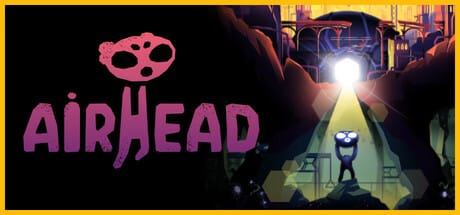



Bottom Line: "Airhead" offers an undeniably inventive premise and a striking aesthetic, but its ambition is frequently undermined by technical instability and mechanics that often frustrate more than they engage.
"Airhead" bravely confronts players with a central mechanic that is both its most compelling innovation and its most significant liability: the constant management of Head's air supply. This ticking clock, initially a source of tension and strategic thought, too often devolves into an exercise in frustration. The concept of Body and Head – one small and agile, the other spherical and capable of flight and interaction with specific environmental elements – provides fertile ground for inventive puzzle design. Indeed, many of "Airhead's" puzzles demonstrate a cleverness that hints at truly inspired design, requiring players to think laterally about how to manipulate Head's buoyancy, weight, or air pressure to activate mechanisms or reach new ledges. The progressive unlocking of abilities, a hallmark of the Metroidvania genre, feels earned, gradually expanding the toolkit for tackling increasingly elaborate challenges.
However, the precision demanded by many of these puzzles frequently clashes with the relentless pressure of Head's deflating form. What should be an engaging intellectual exercise can quickly become a frantic, repeated dash to the nearest air refill, interrupting the flow of discovery and often requiring repetitive back-tracking through already cleared sections. This isn't merely a difficulty curve; it’s a design choice that, while intended to heighten stakes, often amplifies annoyance. The delicate balance required in a puzzle-platformer between challenge and gratification is often skewed here, tipping into the realm of punitive design. When coupled with the acknowledged technical shortcomings – the glitches and bugs that plague the experience – this frustration is compounded. A poorly timed physics glitch or an unexpected collision detection error in a segment where air is already scarce can lead to exasperating restarts, shattering immersion and eroding the player's willingness to experiment.
The narrative, or rather the lack thereof in the traditional sense, is a double-edged sword. The unspoken bond between Body and Head, and the unfolding mystery of their world, can be profoundly moving for players attuned to environmental storytelling. It encourages exploration and invites personal interpretation, a welcome departure from heavily exposition-laden narratives. Yet, for some, the ambiguity might border on an emotional disconnect, particularly when the core gameplay loop feels more like a chore than an adventure. The promise of a personal and engaging experience, reminiscent of evocative platformers, is occasionally fulfilled in quiet moments of triumph over a particularly obtuse puzzle, but these moments are often hard-won against the current of the game's inherent frustrations. The vision is clearly present, but the execution, particularly in user experience flow, frequently falters under the weight of its own ambitious mechanics and technical instability.