

Overview
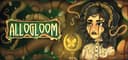
What happens to a town when its people vanish and the only clue is a note pointing somewhere nobody is allowed to go? That question drives Allogloom, a hand-painted point-and-click adventure from solo developer Galactic Ghosty, published by Iceberg Interactive. Players control Nora, who sets out to find the abducted residents of Gruesome Grove. The town has a moth-worshipping cult, which says most of what needs saying about the tone before a single puzzle appears.
The premise is lean. The scope is not. Across eight chapters, the story pushes past the town limits into six interconnected worlds, populated by moths, displaced monsters, and human and animal characters. Each holds a piece of buried history that some residents would rather keep underground. The pitch blends cozy exploration and dark humor with creeping dread, a register somewhere between bedtime story and warning label.
The positioning is clear. This game targets the adventure faithful: explore scenes, examine relics, collect and combine items, talk people into things. Galactic Ghosty does not chase genre hybrids or bolt on combat. The ambition lies in craft: art nouveau-inspired hand-drawn visuals, an original soundtrack from Kim Miller, and a world built so that puzzles grow out of its lore instead of sitting on top of it.
The reception so far is generally positive, though not unanimous. SomGeek compares it to Tim Burton’s work, and some coverage notes that its conservatism may limit its appeal beyond genre fans. The dissent is mild: the game’s distinction lies in execution and world-building, not in reinventing adventure mechanics.
Allogloom launches on October 13, 2026, for PC via Steam. It arrives with a free Steam demo covering its first two chapters, a confident move for a game whose appeal rests on atmosphere that a trailer can only hint at.
Key features
- Eight-chapter, multi-world story: Nora’s search starts in Gruesome Grove and spreads into six interconnected worlds, so the investigation widens instead of circling a single map.
- Classic point-and-click puzzling: Scene exploration, relic investigation, item collection and combination, and negotiation with characters, with puzzles tied directly to the world and its lore.
- Hand-drawn art nouveau visuals: Every scene is drawn by hand, with the organic, ornamental sensibility of art nouveau as the stylistic anchor.
- Original score by Kim Miller: A bespoke soundtrack written for the game.
- Optional Object Highlights: A toggle that marks clickable items for players who get stuck, leaving the default experience untouched.
- Free two-chapter demo: Available on Steam, covering a quarter of the game’s chapters.
Analysis
The Gameplay Loop
The loop is the genre’s oldest: look, take, combine, talk, repeat. The design choice that matters most is where the puzzles come from. Allogloom ties its puzzle logic to the world and its lore, which means solving a puzzle and learning the setting can become the same act. A relic examined in one scene becomes a clue about the cult. An item traded with a displaced monster becomes a fragment of that creature’s history.
This is the right priority for a narrative adventure. Puzzles that exist only as locks, such as slide-tile boxes and arbitrary number codes, stall pacing and break tone. Puzzles drawn from the fiction reward attention to the story, which is what the game most wants from its players.
The risk mirrors the reward. Lore-bound puzzles demand that players understand the lore, and a setting built from six interconnected worlds, hidden histories and deliberately buried secrets is dense by design. One outlet wanted more explanation of the game’s locations, and that is the predictable cost of this approach. When a world withholds context for the sake of atmosphere, the puzzle logic risks seeming withheld too. We would rather a game err toward mystery than bury players in exposition. Players who need firm signposting should weigh that trade-off before committing.
Negotiation and Character
Negotiation sits alongside inventory work as a primary puzzle verb, and that matters because the cast is the game’s connective tissue. Moths, monsters, people and animals each know something Nora needs. Dialogue-driven puzzles give the dark humor real weight: a conversation can deliver the joke and the solution in the same exchange. This is also an efficient design for a solo production. A character who serves as both a puzzle gate and a lore source does double duty, and a lean team cannot afford many single-purpose assets.
Structure and Pacing
Eight chapters spread across one town and six worlds give the game a natural cadence. Each new world can reset the visual palette and the puzzle vocabulary, while the overarching mystery of the abducted residents keeps the momentum going. The word “interconnected” carries weight here. If items and clues cross between worlds, players need to hold a wider mental map than a single-location adventure demands. That is satisfying for veterans who like long-range puzzle chains. It can punish anyone who plays in short, scattered sessions.
The demo’s scope suits this structure. Two chapters cover the town and the setup, which is enough to judge the puzzle style and tone before paying for the remaining six.
Tone
Cozy exploration, dark humor and creeping dread are three registers that pull against each other. Coziness invites players to linger, dread pushes them on edge, and humor can puncture both. The moth cult is a smart anchor for that balance. Moths are fragile, drawn to light and faintly unsettling up close, which makes them whimsical and eerie at once. SomGeek’s Tim Burton comparison points at the same blend of macabre surface and fairytale charm.
The format helps. Point-and-click adventures move at the player’s pace, which gives dread room to build without action-game pressure and lets humor land in dialogue instead of in cutscenes.
Object Highlights: Fixing the Genre’s Oldest Flaw
The Object Highlights option targets the genre’s most notorious failure: pixel-hunting, where progress stalls because a necessary hotspot blends into a busy background. Hand-painted art makes this problem worse. The more detailed and organic a scene, the harder it becomes to tell interactable objects from decoration. Keeping the feature optional is the correct call. Purists keep the full search, and stuck players get relief without reaching for a walkthrough.
Its limit is scope. As described, Object Highlights shows what can be clicked, not what to do with it. Inventory logic remains the player’s problem. That suits the core audience, but newcomers who stall on a combination puzzle gain nothing from a highlighted hotspot.
Where It Plays Safe
Allogloom does not reinvent the point-and-click. Its verbs, structure and goals would be familiar to anyone who has followed the genre for decades. AdventureGames.hu’s view that it won’t become an instant classic at a glance tracks with this: the game’s distinction lies in execution and world-building, not in mechanics. That conservatism makes Allogloom dependable, and it also caps our Innovation score.
Visuals & performance
Art direction is Allogloom’s main draw, with hand-painted art singled out in coverage. Choosing art nouveau as the reference is an apt match for the subject. The movement favored organic forms, flowing linework, and insect and plant motifs, all natural material for a story about a moth cult. Point-and-click scenes are static and get inspected at length, so hand-drawn detail earns its production cost here more than it would in a faster genre.
The interface follows genre convention: a cursor, collectible items and an inventory for combining them. The only interface feature the launch materials emphasize is Object Highlights. That restraint is sensible in a game sold on its paintings, since a busy HUD would compete with the art.
On performance, a 2D hand-drawn adventure with no real-time 3D and no timing-dependent input should be light on hardware by design. Kim Miller’s original score carries a bigger share of the atmospheric load than music does in faster games, because players spend long stretches on single screens where the soundtrack sets the mood.
Platform nuances
- Platform: Steam
- Release date: October 13, 2026
- Price: $14.99
- Demo: Free on Steam, chapters one and two
Steam is the entry point because it hosts the demo, so players can try the first quarter of the game before paying. Input is where the platform choice shows. The mouse is the native control for a point-and-click, and a desktop mouse suits hotspot-dense painted scenes. Anyone planning to play on the couch or on a portable device should use the demo to check how the cursor-driven interface works on their setup.
Final verdict
Allogloom asks for patience and pays it back in atmosphere. Galactic Ghosty has built a classic adventure without apology, skipping genre mashups and mechanical gimmicks, and put the effort where this genre rewards it most. That means a hand-drawn world with an art nouveau eye, a cast of moths and displaced monsters, and puzzles rooted in the setting’s buried history. The reception is generally positive, but the game’s appeal depends on tolerance for traditional adventure design and dense lore.
The same conservatism that makes it reliable also sets its ceiling. Players hoping to see the genre move forward will find a polished version of what it has always been, and the dense lore may lose anyone who wants clear directions. We recommend it to point-and-click devotees and as a cautious try for the curious, since the free two-chapter demo lowers the risk.
Reviewed by the Rankeno RPG & Adventure Desk. Scores are out of 10; the overall score is the desk’s editorial judgement, informed by the four sub-scores above. How we review