

Overview
Black Tabby Games, the duo of Abby Howard and Tony Howard-Arias, didn’t just set out to make another visual novel when they began Scarlet Hollow. They set out to dismantle the genre’s most frustrating tropes—the “illusion of choice” and the static protagonist. Set in a decaying Appalachian coal-mining town, the game places you in the shoes of a relative returning for an estranged aunt’s funeral. What follows is a slow-burn descent into family rot, ancient cryptids, and the suffocating weight of a town that time and industry have forgotten.
This isn’t a “waifu simulator” or a kinetic novel where you simply click to see the next beautiful backdrop. Scarlet Hollow positions itself as a narrative RPG, drawing more DNA from Disco Elysium than from traditional Japanese visual novels. The market for narrative-heavy indies is crowded, but Black Tabby Games stands apart by leaning into a specific, gritty Southern Gothic aesthetic and a mechanical depth that rewards—and punishes—the player for their personality. By eschewing voice acting in favor of a dense, rhythmic script and carefully hand-drawn art, the developers have created an experience that feels personal and uncomfortably intimate. The game’s episodic release structure has allowed the developers to refine the experience over time, resulting in a narrative that feels alive and incredibly reactive. It is a bold statement on how much weight a single line of dialogue can carry when backed by a robust system of consequences.
Key features
- Trait System: Players select two unique characteristics at the start (e.g., Talk to Animals, Mysterious, Powerful Build) that fundamentally change dialogue options and how the world reacts to the protagonist.
- Narrative Reactivity: Unlike many “choice-based” games, decisions in Scarlet Hollow have immediate and long-term mechanical impacts, often determining which characters live or die by the end of an episode.
- Hand-Drawn Aesthetic: Every frame is illustrated by Abby Howard, utilizing a striking black-and-white comic book style that captures the grime and eeriness of the Appalachian setting with surgical precision.
Analysis
The brilliance of Scarlet Hollow lies in its refusal to play fair. Most narrative games offer you the “Good” or “Bad” path, telegraphing exactly how you should feel. Black Tabby Games rejects this binary. Instead, they give you Traits. These traits are lenses through which you view the world. If you pick Talk to Animals, you are uncovering hidden plot threads from the local crow population or negotiating with a terrifying cryptid. If you choose Mysterious, you’re playing a different game entirely, one where your very presence unsettles the NPCs.
The Friction of Choice
The Gameplay Loop is simple: read, navigate, and choose. However, the internal logic is where the friction lives. The writers understand ludonarrative harmony better than most AAA studios. When the game asks you to make a choice, it often presents you with two terrible outcomes. You aren’t choosing between right and wrong; you are choosing which part of your soul you’re willing to lose to save a friend. This creates a genuine sense of Onboarding Friction for players used to “winning” games. You cannot “win” Scarlet Hollow in the traditional sense; you can only survive it, and the scars you leave on the town—and the ones it leaves on you—are permanent.
Character Depth and World Building
The cast of characters—Stella, Kaneeka, Oscar, and the others—have roles beyond quest-giving and romance. They have their own histories, biases, and breaking points. The game uses a “Relationship” system that feels organic rather than gamified. You don’t buy their love with gifts; you earn their trust through consistency or lose it through betrayal. The setting itself, the town of Scarlet Hollow, functions as a character in its own right. The Appalachian setting is handled with a nuanced hand, avoiding hillbilly caricatures in favor of a grounded look at a community struggling with the legacy of a predatory mining company.
Mechanical Integrity
The branching logic is staggeringly complex. Most games have a “Golden Path” with minor deviations. Scarlet Hollow has entirely different scenes, character fates, and lore revelations locked behind specific trait combinations. This drives high replayability, as a “Powerful Build” run reads like a gritty action-horror story, while a “Book Smart” route plays like a tense investigative thriller. The UI is designed to stay out of the way, letting the prose and the art do the heavy lifting. The lack of voice acting is a deliberate, and correct, choice; it allows the player to project their own voice onto the protagonist, heightening the sense of personal investment.
Visuals & performance
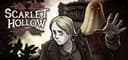
The aesthetic direction is flawless. Abby Howard’s art is scratchy, ink-heavy, and evocative. The use of high-contrast black and white (with sparse, meaningful color) creates a sense of dread that polished 3D graphics could never replicate. It looks like a living graphic novel, and the character expressions are some of the most communicative in the genre. On a technical level, a 2D game of this scope is light on hardware demands, and the save system is built for experimentation—a necessity for a game where you’ll frequently want to “what-if” your way through previous choices.
Platform nuances
On Steam, the game is a natural fit for the Steam Deck. The visual novel format translates beautifully to a handheld screen, and the text-forward design avoids the eye strain common in indie ports. Mouse and keyboard controls are standard and intuitive, but the game truly shines in a relaxed, handheld setting where you can pore over the art and text at your own pace. The inclusion of Steam Achievements that track specific, often obscure, narrative branches encourages the player to explore the extremes of the writing.
Final verdict
Scarlet Hollow is a landmark achievement in interactive fiction. It manages to be both a terrifying horror story and a poignant drama about family legacy without ever feeling disjointed. While the episodic nature means the final curtain has yet to fall, the content currently available is more substantial and more thoughtful than most completed titles in the genre. We rate it Outstanding, and consider it essential for anyone who believes that the best stories are the ones where your choices actually matter.
Reviewed by the Rankeno RPG & Adventure Desk. Scores are out of 10; the overall score is the desk’s editorial judgement, informed by the four sub-scores above. How we review