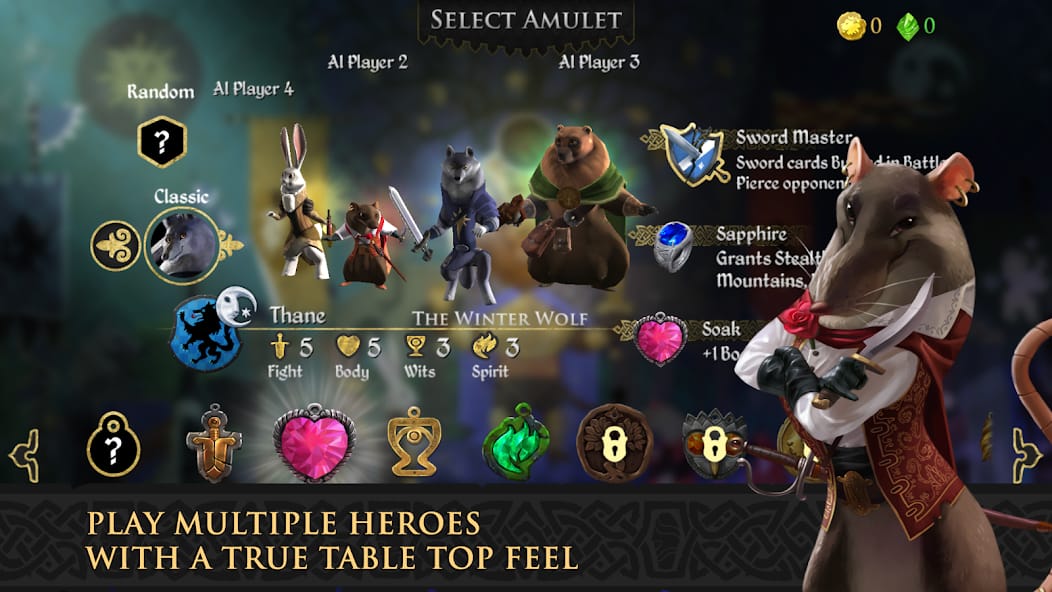
Bottom Line: Armello stands as a fascinating digital hybrid, merging the intricate decision-making of tabletop strategy with a visually rich, character-driven RPG. It’s a compelling, if occasionally demanding, quest for supremacy in a world steeped in grim fantasy.
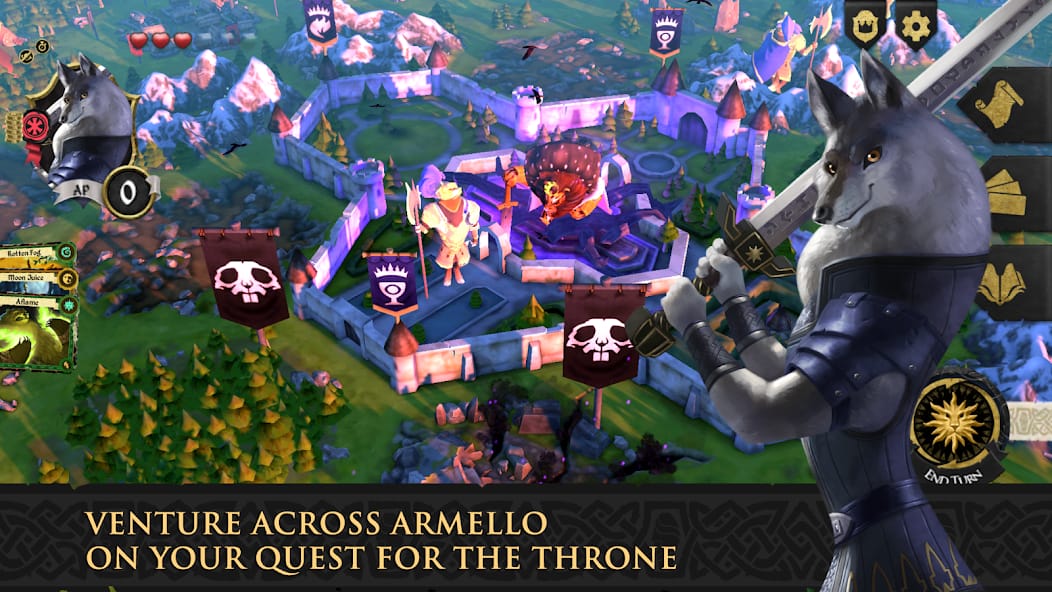
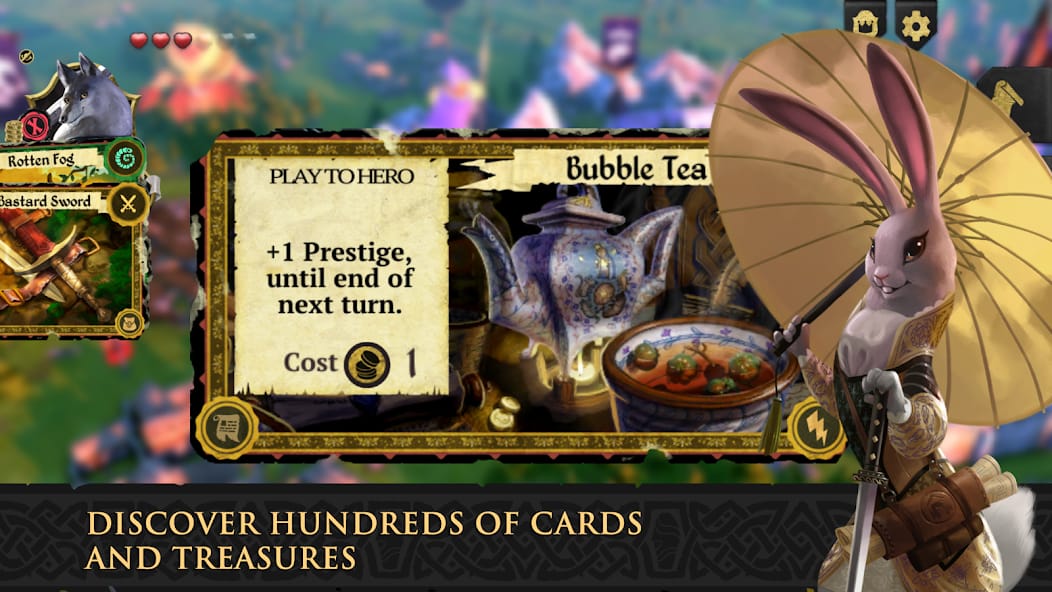
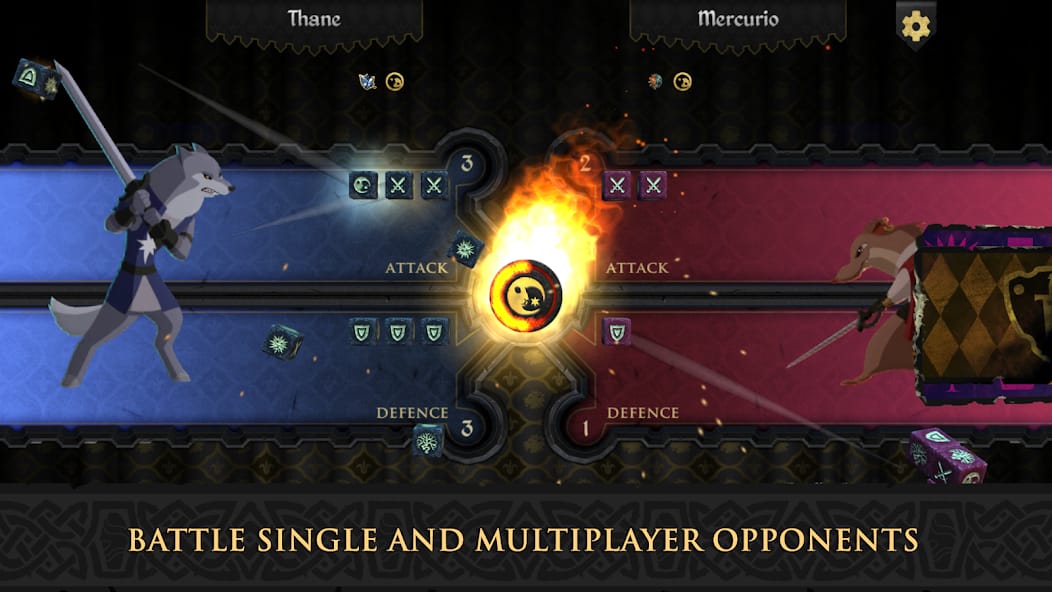
Armello's core gameplay loop is a sophisticated ballet of turn-based actions, resource management, and calculated risks. Each turn unfurls on a hexagonal board, a grid representing the diverse landscapes of Armello, from bustling settlements to treacherous Banes-infested wilds. Movement, combat, and interaction are all governed by a potent combination of strategic dice rolls and card play, a system that, at its best, feels remarkably intuitive yet offers profound tactical depth. Players aren't simply moving pawns; they are carefully constructing a narrative through their choices, leveraging a hand of cards that can be used for equipping items, casting spells, or engaging in political intrigue. The interplay between your hero's unique abilities, the cards in your hand, and the ever-present threat of the Rot-addled king creates a constant tension.
The game's initial allure often gives way to a challenging onboarding friction. Armello's mechanics are numerous and interconnected; it’s a system designed for mastery, not casual dabbling. New players will inevitably find themselves overwhelmed by the sheer volume of information—the nuances of different hero stats, the impact of various terrain types, the specific effects of dozens of cards, and, crucially, the four distinct victory conditions (eliminating the king through combat, curing him of the Rot, accumulating the most prestige, or being the last hero standing after the king's demise). This complexity, while daunting, is also Armello's greatest strength. It ensures that strategies evolve beyond simple aggression, fostering a metagame where adaptability and foresight are rewarded.
One area that often receives scrutiny, particularly in the competitive sphere, is the prevalence and occasional dominance of prestige victories. While theoretically offering a non-combat path to the throne, the mechanics can sometimes feel disproportionately weighted, leading to scenarios where a player can seemingly "run away" with the win by focusing solely on prestige accumulation, often sidelining direct confrontation or other strategic objectives. This can, for some, diminish the excitement of late-game clashes or the satisfaction of executing a meticulously planned combat-focused campaign.
The dynamic sandbox world and its procedurally generated maps are critical components of Armello's replayability. No two games unfold identically, demanding constant adaptation from the player. The cyclical day-and-night system further enriches this, altering the board's hazards, enemy movements, and even the efficacy of certain cards or hero abilities. This constant flux ensures a high degree of variability, preventing the game from devolving into predictable patterns. However, the system's richness occasionally highlights a weakness: the multiplayer experience. While a fundamentally social game at its heart, the limited in-game communication options can lead to an isolating experience, hindering the formation of alliances or the execution of complex coordinated strategies that would otherwise elevate the play. This design choice feels like a missed opportunity, particularly for a title so deeply rooted in the social dynamics of tabletop gaming. Ultimately, Armello demands dedication; those who invest the time will uncover a strategic gem, rich with tactical possibilities and narrative intrigue. Those seeking a simpler, more immediate gratification might find its steep learning curve an insurmountable barrier.