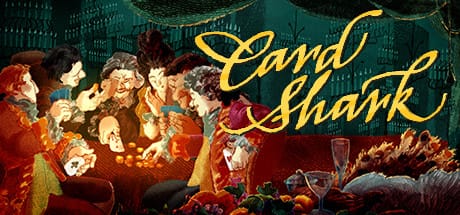
Bottom Line: Card Shark is a masterclass in thematic cohesion that trades traditional card play for the high-stakes friction of a confidence game; it is a tense, beautiful, and occasionally punishing exploration of 18th-century deception.
The core brilliance of Card Shark lies in its mechanical skeuomorphism. Most card games abstract the act of dealing or shuffling into a single button press. Nerial does the opposite. If you want to perform a false shuffle, you must manipulate the sticks or keys with a specific cadence that mirrors the physical tension of holding back a card. This creates a unique form of onboarding friction. You aren't just learning "how to play"; you are undergoing a rigorous apprenticeship under the Comte. Each new tavern or salon introduces a new layer of complexity, forcing you to stack techniques—peeking at a hand while pouring wine, then using a rhythmic shuffle to ensure those cards end up at the top of the deck.
The Gameplay Loop: Performance Under Pressure
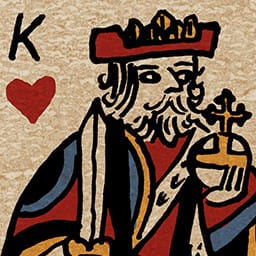
The loop is deceptively simple but psychologically exhausting. You enter a room, identify the mark, and execute the pre-determined cheat. However, the Suspicion Meter acts as a relentless antagonist. It isn't just a countdown; it is a representation of the mark's patience. If you spend too much time "thinking" about your next move, the meter ticks up. This pressure turns simple memory tasks into harrowing tests of nerves. There is a palpable sense of ludonarrative resonance here: the sweat on your brow as you try to remember if the King of Hearts was the third or fourth card in the stack perfectly mirrors the anxiety of your mute protagonist.
Interface and Cognitive Load
The UI is purposefully sparse, leaning into the game's painterly aesthetic. While this maintains immersion, it places a massive cognitive load on the player. You are expected to internalize the "logic" of 28 different tricks. By the final act, the game demands a level of precision that can feel bordering on the sadistic. When the script requires you to perform a deck-switch under the nose of a suspicious Baron, the margin for error evaporates.
Some might find the difficulty spikes in the later stages of the game to be a barrier to entry. There are moments where the controls—particularly during complex shuffles—feel slightly "mushy," leading to failures that feel more mechanical than skill-based. However, these flaws are largely offset by the sheer creativity of the encounters. One moment you're cheating at a roadside inn, the next you're using a mirror to glimpse the cards of a King. The game never lets you get comfortable; it constantly introduces new variables that force you to reconsider the tricks you thought you had mastered.