
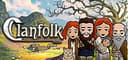

Overview
The colony-sim genre has a scale problem. Ever since RimWorld proved that emergent misery sells, every studio with a pathfinding engine has chased bigger: bigger maps, bigger threats, bigger body counts. Clanfolk goes the other way. It hands you one family, one muddy plot of land in the medieval Scottish Highlands, and one non-negotiable appointment with winter. That restraint is the whole pitch, and it’s a sound one.
The game comes from MinMax Games, the small Canadian outfit behind the Space Pirates and Zombies titles — this is essentially a passion project driven by one developer, Andrew Hume, who has shipped updates at a steady cadence. Publishing duties belong to Hooded Horse, which functions as a quality seal for the strategy crowd; the label that backed Against the Storm, Terra Invicta, and Manor Lords doesn’t pick up filler. Clanfolk fits that catalog: mechanically dense, historically grounded, and priced like an indie rather than an ambition.
Market positioning matters here. Clanfolk entered Steam Early Access on July 14, 2022, and it’s still there — no 1.0 date announced, PC-only, no console or mobile port on the roadmap. That would normally be a red flag. The reason it isn’t, on paper at least, is that the core loop was already whole at launch, and everything since has been accumulation, not repair.
Key features
- Generational simulation: Every clanfolk is an individual with traits, skills, moods, and relationships. Children grow up, marry, inherit the work, age, and die. Your settlement isn’t a base; it’s a family tree with chores.
- Organic tech discovery: There’s no research screen. Using resources reveals what those resources can become — handle enough clay and you’ll figure out pottery. Progression is earned rather than purchased from a menu.
- Survival systems with teeth: Temperature, food spoilage, light, hygiene, and animal care are all simulated. Winter isn’t a difficulty modifier; it’s a wall you spend three seasons preparing to hit.
- An economy beyond your fence: Trade with neighboring clans, run an inn for paying travelers, hire seasonal labor, and arrange marriages to bring fresh blood — and fresh skills — into the clan.
Analysis
The Loop
Clanfolk’s central idea is that it turns the calendar into the antagonist. Spring and summer are designed to feel generous — fish, forage, long days — and the game lets you get comfortable exactly long enough to make bad decisions. Then autumn arrives and the math gets loud. Do you have enough peat cut and dried? Enough food that won’t rot? Enough beds inside walls that hold heat? The first winter is a filter, and losing a grandmother to a cold snap because you built one wall too few is the kind of lesson the simulation is built to teach.
The discovery-based unlock system is what separates this from genre boilerplate. Most colony sims hand you a tech tree and let you window-shop your future. Clanfolk hides the future inside the work. Chop wood and woodworking possibilities surface. Milk a cow and dairy processing appears. It’s a small structural choice with big consequences: you stop optimizing toward a known endpoint and start paying attention to what your people are actually doing. The game rewards curiosity with capability, which is a close approximation of how pre-industrial knowledge actually spread.
The People Problem
The generational layer is where Clanfolk finds its identity. In RimWorld, colonists are assets with backstories. Here, they’re lineage. The girl who spent her childhood assigned to forage becomes the best herbalist in the glen at thirty; when she dies at sixty, the skill gap shows up in the pantry. Arranged marriages double as recruitment, diplomacy, and — bluntly — eugenics for work ethic, and the game is honest enough about medieval life to make that feel period-appropriate rather than gross. Watching a settlement’s third generation live in stone houses their grandparents’ turf-hut labor paid for delivers a payoff no scripted campaign can match.
The inn deserves special mention. Hosting paying travelers converts your survival infrastructure into a revenue stream and gives the mid-game a genuinely different rhythm — you’re no longer just feeding your family, you’re running a hospitality business at the edge of the world. It’s the rare late-game system that changes what you do rather than just what you have.
Where It Frays
The criticism that surfaces most around this game is fair: the late game thins out. Once you’ve conquered winter, mastered the inn, and built your stone homestead, the simulation keeps running but the tension drains away. There’s no external pressure — no raiders, no politics, no crisis system — to threaten a mature settlement, so the last act becomes gardening. Some players want exactly that; the cozy contingent is well served. But the early game is so tightly wound that the eventual slack feels like a broken promise. This is the problem 1.0 needs to solve, and the absence of a release date this far into Early Access is the one place where MinMax’s methodical pace wears thin.
The interface, meanwhile, is functional but dense. Work priorities, zoning, and schedules live in menus that stack deep, and onboarding friction is real in the first hour. The tooltips are good; the information architecture is merely adequate.
Visuals & performance
Clanfolk looks like a spreadsheet that learned to love. The top-down 2D art is clean and readable rather than beautiful — closer to Prison Architect’s functional clarity than to Manor Lords’ postcard ambitions. That’s a defensible choice: with this many simulated variables per person, readability is the correct priority, and the seasonal shifts (green glens fading to snow-choked grey) carry more atmosphere than the character sprites ever will. Lighting is the quiet star; hearth-glow spilling from a window on a winter night does real emotional work.
Performance-wise, a 2D game of this scope is light on hardware, and the design leans on that: every villager’s temperature, hygiene, and mood ticking simultaneously is the kind of load a modest PC should absorb without trouble. The bigger technical question for an Early Access title is cadence and care, and MinMax’s long record of frequent updates is the reassuring part.
Platform nuances
This is a Steam-only, PC-only proposition, and MinMax has been refreshingly direct about why: the menu density doesn’t translate to controllers, and the developer would rather concentrate on one excellent build than three compromised ones. The design bears that reasoning out — this is a mouse-and-keyboard game to its bones, all precision-clicking through nested work-priority panels. Steam Deck players can get it running, but the small touch targets make it a squint-and-tap experience rather than a native one. If you’re waiting for a console or mobile version, stop waiting.
The Steam integration itself is standard-issue: cloud saves, a visible and frequent update cadence, and a developer who is unusually present in the community forums — a habit that has clearly shaped the patch priorities for the better.
Final verdict
Clanfolk is a strong argument that Early Access can be a development philosophy rather than an excuse. One developer, years of steady updates, and a game whose central ideas (knowledge you discover by working, a colony that is literally a family) push the genre somewhere its bigger competitors haven’t bothered to go. The late-game slack is real, the missing 1.0 date is an irritant, and the interface will never win awards. What remains is a solid, distinctive sim that doesn’t quite reach greatness — but for players who want a colony that is a family and a winter that means it, it’s easy to recommend. Buy it, lose a winter, and understand.
Reviewed by the Rankeno Strategy & Sim Desk. Scores are out of 10; the overall score is the desk’s editorial judgement, informed by the four sub-scores above. How we review