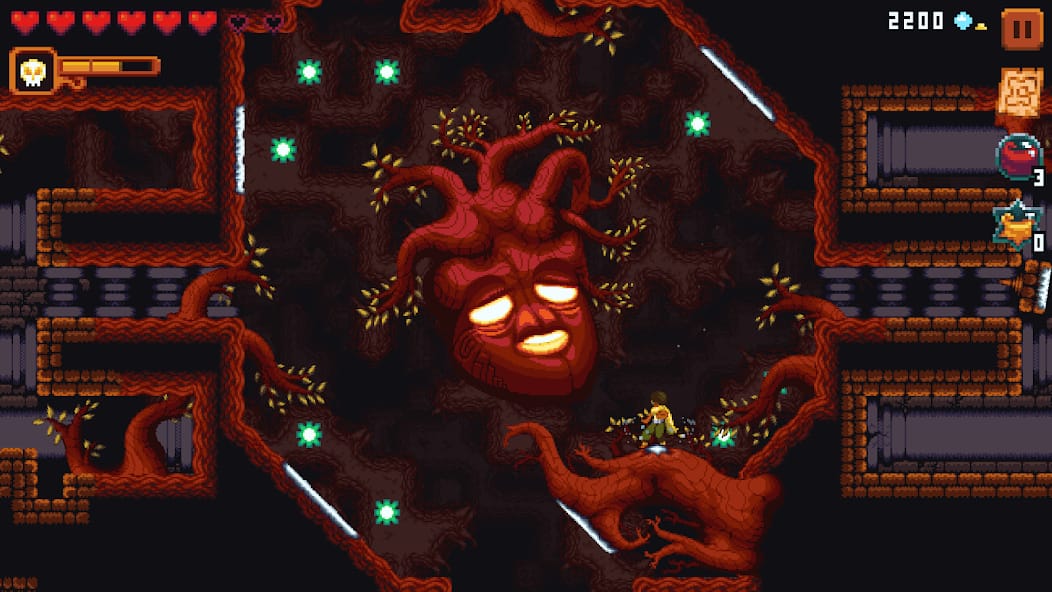

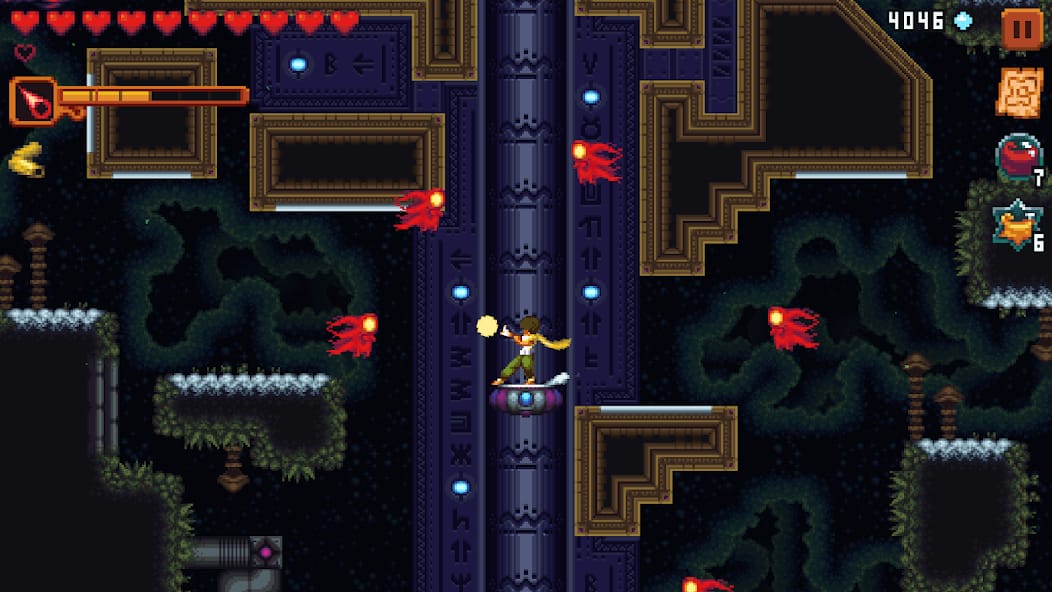
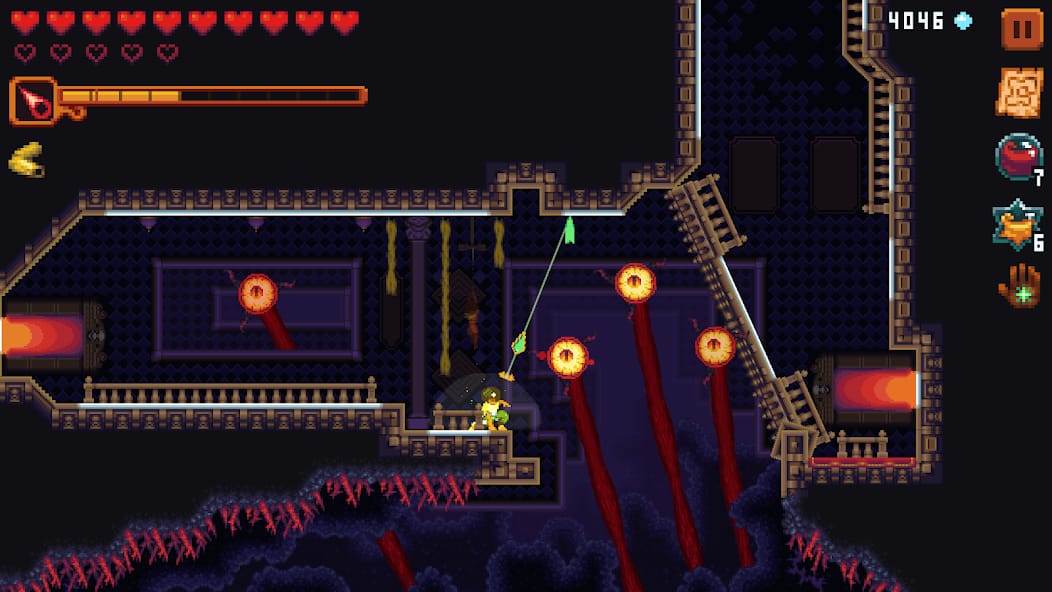
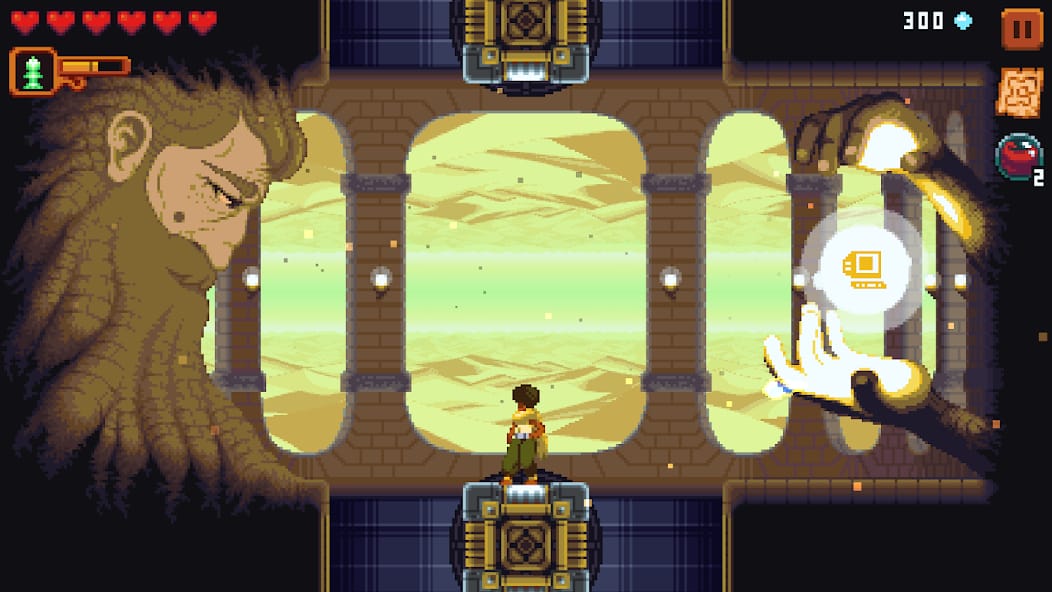
Bottom Line: By stripping away the most fundamental mechanic in gaming—the ability to walk—Dandara forces a total cognitive rewire that results in the most innovative Metroidvania in a decade. It is a brilliant, albeit punishing, masterclass in restrictive design.
The Kinetic Language of Salt
The brilliance of Dandara lies in its refusal to compromise. In most games, movement is a secondary thought—a means to get to the "actual" gameplay. Here, movement is the gameplay. When you first pick up the controller (or touch the screen), you feel crippled. You'll try to nudge the stick to adjust your position by an inch, and nothing will happen. This intentional friction is the game’s greatest strength.
Once the "click" happens—usually about forty minutes in—the world transforms. You stop seeing a room as a 2D space and start seeing it as a series of nodes. You aren't "platforming"; you are executing a sequence of ballistic trajectories. The flow state achievable in Dandara is higher than almost any other game in its class. When you are ping-ponging across a room, dodging projectiles in mid-air, and landing a precision shot on a sniper across the screen, it feels less like Metroid and more like a high-speed game of chess played in a dryer.
Combat in 360 Degrees
Combat is a natural extension of this movement. Because you are tethered to surfaces, you are often a sitting duck while charging your shots. This creates a fascinating risk-reward loop. You have to commit to a position, charge your weapon, fire, and then immediately vault away before the enemy's counter-attack lands. The Trials of Fear content ramps this up significantly. The new bosses aren't just bullet sponges; they are tests of spatial awareness. You have to track boss patterns while simultaneously scanning the environment for your next safe landing spot. It’s mentally taxing in a way that standard "jump and shoot" games rarely are.
The Friction of Difficulty
However, this innovation comes with a steep price: the learning curve is a vertical wall. There are segments in the latter half of the game—particularly in the new Trials of Fear areas—where the precision required feels slightly at odds with the input method. In the heat of a chaotic boss fight, it is remarkably easy to misaim a jump by five degrees and end up flying into a pit of spikes.
The "soulslike" elements further exacerbate this. While the tension of losing your Salt adds weight to every encounter, the trek back to a boss room can feel like a chore when the movement system is so demanding. Long Hat House has crafted a game that rewards mastery, but it doesn't suffer fools. If you aren't willing to put in the work to master the geometric navigation, the mid-game difficulty spikes will feel less like a challenge and more like a lockout.