
Bottom Line: Dome Keeper is a masterclass in tension, stripping the roguelike formula down to a brutal, rhythmic loop of greed and consequence that is impossible to put down.
The Anxiety of the Metronome
The core of Dome Keeper isn't the mining or the shooting; it's the timer. Every second spent underground is a second your dome is undefended. This creates a psychological weight that many larger survival games fail to achieve. The gameplay loop is a metronome of anxiety. You start with a basic drill and a slow jetpack, feeling the literal weight of every ore chunk you drag back to the surface.
The onboarding friction is intentional. Initially, you are weak. You move like a slug, and your drill chugs through standard rock. This makes every upgrade feel monumental. When you finally invest enough iron to double your flight speed, the shift in efficiency isn't just a stat increase—it’s a release of tension. However, the game is careful to never let you feel truly safe. As you grow stronger, the shadowy "shifters" and flying "stalkers" attacking your dome grow more numerous and resilient.
Resource Management as Risk Mitigation
Strategy in Dome Keeper is less about "winning" and more about delaying the inevitable. The decision to prioritize Cobalt—the rarest resource—is the game’s ultimate test of nerves. Do you use it to repair a cracked dome now, or do you save it for a permanent health upgrade later?
The gadget system adds a layer of mechanical variety that prevents the mining from becoming a chore. Finding the Teleporter gadget mid-run is a revelation; it removes the "commute time" from the mine to the surface, allowing you to spend more time hunting for the relic. Conversely, if you find the Stun Laser, your combat strategy shifts from aggressive eradication to crowd control. These variables ensure that while the goal remains the same, the path to it is never repetitive.
The Combat Dichotomy
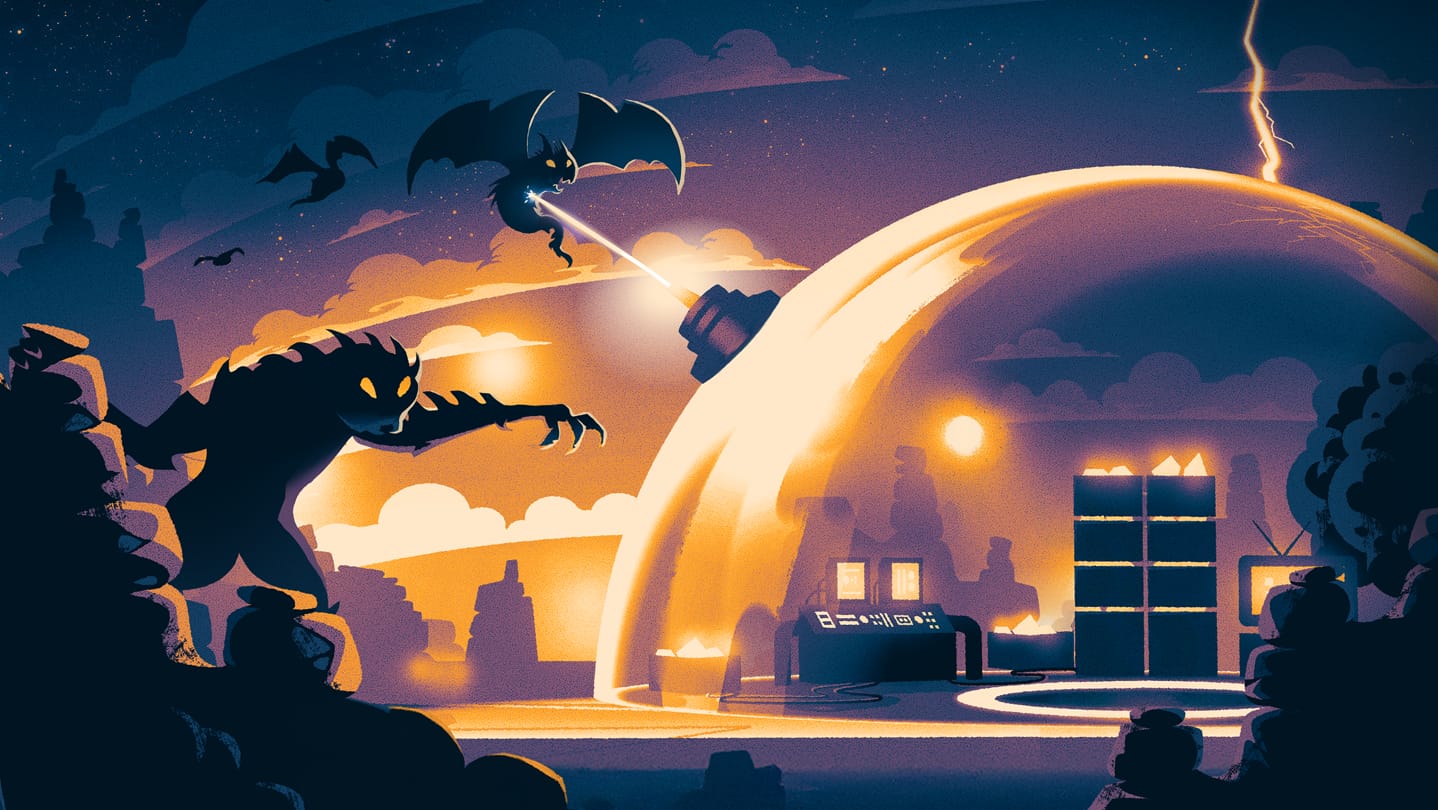
When the timer hits zero, the game shifts from a physics-based miner to a focused arcade defender. Whether you're using the Laser, which requires precise tracking, or the Sword, which demands timing and positioning, the combat feels heavy. There is a tangible sense of impact when a giant shadowy monster slams into your glass roof. The "combat" isn't an afterthought; it’s the audit of your mining efficiency. If you didn't dig well enough to afford that shield upgrade, you will feel it in the cracks forming over your head.
The UI design here is brilliant in its minimalism. Your health is the dome itself, and the feedback—from the dimming lights to the screeching of the hull—provides all the telemetry you need without cluttering the screen.