
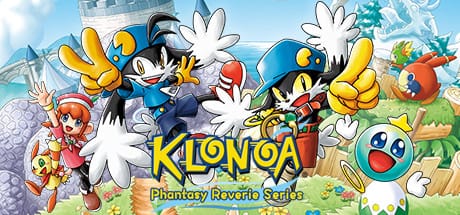



Bottom Line: Klonoa Phantasy Reverie Series meticulously revives two beloved 2.5D platformers, delivering a polished, deeply engaging experience that champions classic mechanics while gently nudging them into the present.
At the heart of the Klonoa Phantasy Reverie Series lies a fundamental design principle that many contemporary titles seem to have forgotten: focused, inventive mechanics can carry an entire experience. The "Wind Ring" is not merely a gimmick; it is the entire vocabulary of Klonoa's world. Players don't just jump and attack; they interact with their environment through enemy manipulation. Grabbing a foe, inflating it, and then launching it as a projectile or a secondary jump-pad transforms each encounter, each jump, into a miniature strategic engagement. This mechanic forces a player to constantly re-evaluate the immediate surroundings, turning obstacles into opportunities and enemies into tools. It's a remarkably elegant solution to the perennial platformer problem of varied interaction, providing layers of depth without overwhelming complexity. This singular mechanic is not just clever; it's foundational, dictating the flow of combat, the rhythm of traversal, and the cerebral satisfaction of puzzle resolution.
The transition to 2.5D was, and remains, a stroke of genius. While Klonoa himself navigates a largely linear 2D plane, the backgrounds and foregrounds are lush, intricate 3D environments that pull the eye and create a stunning sense of scale and perspective. This isn't just aesthetic window dressing; it's often integral to the puzzle design. Enemies might appear from the background, objects might rotate into view, or platforms might recede into the distance, demanding precise timing and an understanding of the subtle visual cues. This commitment to integrating visual depth into gameplay elevates Klonoa far beyond a simple side-scroller, placing it in a rarefied category of platformers that truly understand spatial manipulation and how to leverage it for both visual splendor and gameplay challenge. The intricate layering of environments ensures that each level feels far grander than its two-dimensional movement might suggest.
User Experience and Onboarding
The remaster thoughtfully addresses historical accessibility concerns. The original Klonoa titles, while beloved, could be punishing for less experienced players, particularly in their later stages, often leading to moments of genuine frustration. Reverie Series introduces adjustable difficulty settings, a crucial addition that allows players to tailor the challenge to their preference. The "Easy" mode, with its increased health and perhaps more forgiving enemy patterns, effectively lowers the onboarding friction for newcomers, inviting them into Klonoa's charming world without immediate punitive difficulty spikes. Conversely, the "Hard" mode ensures that veterans seeking the unforgiving precision and tight margins of the originals are not left wanting, preserving the challenge that defined the series for many.
Perhaps more critically, the two-player cooperative mode is a subtle yet significant quality-of-life improvement. While not a fully fleshed-out co-op campaign, the ability for a second player to provide "jump boosts" fundamentally alters the game's accessibility. This isn't just about making jumps easier; it's about transforming a potentially frustrating solo endeavor into a shared experience. It allows a parent to assist a child, or a seasoned player to guide a friend through particularly tricky sections, making the otherwise challenging later levels far more approachable. This particular design choice demonstrates a keen understanding of modern player expectations without fundamentally altering the integrity of the core single-player experience. It avoids the pitfall of many co-op implementations that feel merely tacked on, instead offering a truly additive layer of support that enhances replayability and social engagement.
However, even with these laudable improvements, one cannot escape the inherent design philosophy of games from an earlier era. The linear progression, while masterfully executed and offering a focused experience, might feel restrictive to players accustomed to the expansive freedom and emergent gameplay of contemporary open-world titles. The emphasis on tight, almost rhythmic platforming sections, while immensely satisfying for those who appreciate precision, often lacks the systemic depth or constant sense of discovery that defines many modern experiences. While the game provides substantial challenge and replayability through its intricate level design, hidden collectibles, and time trials, it doesn't offer the branching narratives, robust character progression, or constant stream of side quests that many expect from a high-budget modern release. The critical eye notes that while the varnish is new, the foundational architecture remains firmly rooted in the late 90s and early 2000s, which is both its greatest strength—preserving its unique identity—and its subtle limitation for an audience weaned on a different paradigm of game design. The charming, if somewhat simplistic, narrative structure, while effective for its time, also falls into this category, delivering emotional beats but without the intricate character arcs or moral ambiguities often found in today's storytelling.