
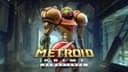
Overview
Nintendo released one of the best games of 2023 without a marketing campaign. Metroid Prime Remastered was announced during a February Nintendo Direct and went on sale on the eShop the same afternoon. That confidence was earned. The game underneath is Retro Studios’ 2002 GameCube original, the one that moved Samus Aran from 2D side-scrolling into first person. At the time, fans assumed it would become a generic shooter. Instead, the Austin-based studio proved that a Metroid game could work in first person.
The premise is unchanged. Samus answers a distress signal from a crippled Space Pirate frigate orbiting Tallon IV. She loses most of her equipment in the chaos and follows her enemies down to a planet being poisoned by Phazon, a radioactive mutagen that is corrupting its wildlife and the ruins of the Chozo civilization that once lived there. What follows is a large, interconnected Metroidvania. Its main regions are the Chozo Ruins, Phendrana Drifts, Magmoor Caverns and Phazon Mines, and each one is gated behind abilities you haven’t found yet.
The word “remaster” undersells what Retro did here. Every model, texture and light source has been rebuilt, and the soundtrack has been remastered. In presentation this is effectively a remake. The level layouts, encounter placement and progression are almost entirely the 2002 design. Retro updated the presentation and the controls and deliberately left the game design alone. That choice explains both the game’s biggest strengths and the few complaints worth taking seriously.
Nintendo priced it below a full-price release, and that made it easy to recommend. It is aimed at a large group of Switch owners who never owned a GameCube, and in hindsight it also reintroduced the series before Metroid Prime 4: Beyond. The critical response was close to unanimous, and that consensus is justified.
Key features
- Four Control Schemes: Dual-stick (the new default), Pointer (gyro aiming in the style of the Wii version), Classic (GameCube-style lock-on and tank controls) and Hybrid (stick movement with gyro fine-aiming). The dual-stick option fixes the original’s biggest problem.
- Rebuilt Visuals: New high-definition models, textures and lighting throughout. This is new art built on the old geometry, not upscaled assets.
- The Scan Visor: The original’s best idea is still the best one here. Scanning the world reveals lore entries, enemy weak points, puzzle hints and door locks, so looking closely at the environment is how you move forward.
- Ability-Gated World Design: The Morph Ball, Grapple Beam, new beams and new visors each open paths through areas you have already explored, so returning to them is rewarding.
- Multi-Phase Boss Fights: Each boss is designed to test the tool you most recently picked up.
- Casual Difficulty: A new mode that reduces damage taken, for players who want the exploration and less of the combat pressure.
- Unlockable Galleries: Concept art, music tracks and 3D character models, unlocked through play.
- Remastered Audio: Kenji Yamamoto’s score, cleaned up with more depth, including the Phendrana Drifts theme that fans still quote.
Analysis
The Loop: Scan, Unlock, Return
The structure is a tight loop. You enter an area, run into something you can’t get past, note it and move on. An hour later you have a new ability, and the dead end you passed now leads somewhere. Plenty of games use this structure. Few are as disciplined about it. Nearly every room has a purpose: a route to somewhere else, a puzzle, a hidden upgrade, or a view that tells you something about the planet.
The Scan Visor is what sets Prime apart from other games in the genre. Most games deliver their story through cutscenes. Prime makes you look for it. Chozo lore sits in wall carvings. Space Pirate research logs, scanned from terminals, describe the pirates’ Phazon experiments in cold, clinical detail, and they usually foreshadow the creature you are about to fight. Scanning a boss mid-fight often reveals its weak point. The visor turns reading into gameplay, so curiosity is the thing that moves you forward. More than two decades later, few first-person games handle environmental storytelling this well.
Controls: The Fix Twenty Years in the Making
This is the real improvement over the original. The 2002 GameCube version controlled like a vehicle: one stick for movement and turning, a trigger to hold for free-look, and a lock-on system doing most of the aiming. It was a clever workaround for early-2000s controllers, and it always felt clumsy to anyone used to a standard shooter.
The new dual-stick scheme makes the game feel current. Left stick moves, right stick looks, and the lock-on system remains for strafing around enemies. The combat, which was built around lock-on, still works because Retro kept the lock-on central instead of turning Prime into a twitch shooter. You get modern camera control and the original combat rhythm.
Hybrid adds gyro fine-aiming to the dual-stick layout, and it’s the best way to play for anyone comfortable with motion aiming. Pointer brings back the Wii Trilogy approach for anyone who played it that way. Classic is there for purists and to show how much the new default improves things. Offering four schemes isn’t clutter here. Each one has a clear audience.
Combat and Bosses
Moment-to-moment combat is functional and sometimes basic. You lock on, circle, fire, and switch beams to match enemy weaknesses. Regular enemies are mostly obstacles and scan targets, not real threats. The boss fights are where the combat pays off. They are staged in multiple phases, and each one tests an ability you recently acquired. The Morph Ball fights in particular are some of the most creative encounters Nintendo has published. They reward learning the tool, not just shooting accurately.
This structure keeps the game from dragging. Just as combat starts to feel repetitive, a boss forces you to use the new tool in a way that makes you learn it.
Where the 2002 Design Shows Its Age
This is where fans tend to go easy on the game, and the complaints deserve a straight look. The design is largely unchanged, and parts of it are more than 20 years old.
Backtracking is heavy and often slow. Tallon IV is linked by elevators and long corridors, and there is no fast travel. Crossing the map to use a new ability on an old obstacle can take several minutes of walking through rooms already cleared, and some enemies respawn along the way. The first return trip feels rewarding. By the fifth one, it’s mostly routine.
The map shows rooms but not what blocked you. Prime’s 3D map shows where rooms are, not which obstacle stopped you last time. Modern Metroidvanias let you mark or remember those gates. Here you rely on your own memory, and that is a real problem after a week away from the game.
Save stations are the only save points. There are no checkpoints and no suspend saves beyond the Switch’s own sleep mode. Dying in the wrong room can cost significant progress. The Switch’s sleep function covers some of this in practice, but the game’s own save system is from 2002.
The endgame requires you to find twelve Chozo Artifacts scattered across the planet. It’s the weakest part of the game: a scavenger hunt that turns a well-paced adventure into a checklist. The in-game hints help, but the hunt still stops the game’s momentum just before the finale.
None of these are deal-breakers. They are the minority complaints, and they are fair. Retro deliberately chose preservation over revision. One concession — a fast-travel option or map markers — would have been welcome, and most players would likely agree.
Casual Mode and Accessibility
The new Casual difficulty reduces damage taken, and it’s well aimed. For players who want the atmosphere and exploration without difficult boss attempts, it removes a real barrier. It doesn’t change the structure or the navigation, so the backtracking complaints above apply at any difficulty.
Visuals & performance
Few games on Switch look better than this. The lighting does most of the work. Phendrana Drifts, a snowbound region, has cold, diffuse light and falling snow. Magmoor Caverns glows orange with heat shimmer and harsh shadows. The Chozo Ruins show weathered stone and overgrown vegetation in far more detail than the GameCube could manage. Samus’s suit, the Space Pirates and the bosses all have new models with materials that react properly to light.
Retro kept the effects that made the original memorable: condensation and rain on the visor, steam fogging the glass, and brief reflections of Samus’s face inside the helmet during bright flashes. The HUD is drawn as part of the helmet, not as a flat overlay, and it still looks good. Twenty years on, it remains one of the best examples of in-world interface design in games.
The game is built around lock-on strafing, and the remaster’s smooth presentation suits that design. Handheld mode drops resolution, and fine detail gets noticeably softer on the smaller screen. The art direction is strong enough that this rarely matters. The remastered audio is a real upgrade: fuller, clearer and more spatial, while keeping the eerie ambient style of the original.
Platform nuances
Docked on a TV with a Pro Controller is the best way to play. Full-size sticks make dual-stick aiming precise, the Pro Controller’s gyro makes Hybrid mode work properly, and the lighting looks best on a large screen.
Handheld mode works but is weaker. The Joy-Con sticks are small and have short travel, which makes camera control imprecise. Turning on the gyro (move the whole console to adjust aim) helps a lot, and it’s the recommended setting for anyone playing mostly in handheld. The lower resolution is visible but not a problem.
Tabletop mode with detached Joy-Con is where the Pointer scheme makes the most sense. Aiming with the right Joy-Con like a Wii Remote brings back the feel of the 2009 Trilogy release, though the small kickstand screen limits how long anyone will want to play that way.
Switch 2 owners can play it through backward compatibility, and a 2D-to-3D game of this scope is light enough on hardware that there is no reason to expect trouble. Do not expect a different game on the newer console. This is the same release.
Final verdict
Metroid Prime Remastered shows what a remaster can be when the studio respects the original. Retro Studios rebuilt the visuals, fixed the controls and otherwise left one of the most carefully designed games Nintendo has published alone. The result is one of the very best games on Switch at a lower-than-usual price.
Its flaws are the original’s flaws. The backtracking, the minimal map, the save-station-only saving and the Artifact hunt were accepted in 2002, and they feel dated now. Retro could have smoothed one or two of those points without compromising anything. Still, the core design of Tallon IV holds up remarkably well. If you have never played it, this is the version to play.
Reviewed by the Rankeno Puzzle & Casual Desk. Scores are out of 10; the overall score is the desk’s editorial judgement, informed by the four sub-scores above. How we review