

Overview
Roguelikes rarely ask who is doing the imagining. Graphite does, and the answer shapes everything from its art direction to its endings.
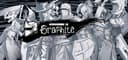
RipRed developed the game and indie.io published it. Graphite is a stylized roguelike RPG set inside a child’s imagination. Its heroes are pencil sketches on notebook paper, and they take the pen-and-paper campaign their young creator draws for them at face value. That gives the game two layers. One is the dungeon crawl the sketches believe in. The other is the kid holding the pen, whom the wider story is also about. The seven playable heroes’ journeys connect into a narrative about grief, confidence and growing up. That is heavier material than the doodled art suggests, and it is why the premise has weight.
Each run splits between two modes. Choose-your-own-adventure events come from a tarot-inspired deck, and their outcomes depend on party makeup, items and earlier choices. Tactical turn-based combat runs on a shared timeline that shows when every enemy action will land. Procedurally generated encounters, monsters that evolve mid-run and uncapped artifact stacking supply the variance a roguelike needs. Recruitable heroes, incremental progression and campfire friendships supply the reasons to come back.
The genre is crowded. Narrative roguelikes and run-based tactics games are everywhere on indie storefronts, and a hand-drawn look no longer earns attention by itself. Graphite’s case rests on two things: a combat timeline with real interrupt mechanics, and a framing device that ties seven separate character arcs to a single author.
Steam user reception is positive but too thin to call a consensus. A demo, Graphite: Act 1, lets prospective buyers judge the timeline before buying the full game.
Key features
- Shared-timeline combat: Every action takes time, and a single timeline shows when each enemy action will happen. Turns become a scheduling problem in which players can plan ahead, delay moves or reorder a fight.
- Break system: Players can interrupt enemy attacks before they resolve, which turns the timeline’s forecast into something they can act on.
- Tarot-inspired event deck: Choose-your-own-adventure encounters whose outcomes shift based on the party, the items carried and earlier decisions.
- Uncapped artifacts: Artifacts have no stack limit, which allows large synergies and sharp power spikes. Enemies can collect artifacts too.
- Evolving threats: Encounters are procedurally generated, and monsters evolve over the course of a run.
- Seven heroes, seven endings: Each playable hero has a personal story and ending, and the arcs feed into one larger narrative.
- Campfire friendships: Relationships built between runs gradually reveal more about each character.
- Granular difficulty: A detailed difficulty system lets players tune each run.
Analysis
The Timeline Does the Heavy Lifting
Many tactics games show enemy intent. What matters is how much players can do with that information, and Graphite answers by making time the currency. Because every action costs time on a shared timeline, picking a move also decides when that hero acts next. Combat becomes a question of sequencing as much as damage. A strong move used at the wrong moment can be worse than a weak one used early.
The Break system is what gives the timeline teeth. Knowing an enemy attack lands in three beats only matters if something can be done about it, and Break interrupts provide that. Combined with the option to delay, players get two ways to bend the schedule: push their own actions back to line up a combination, or cut into the enemy’s queue before a dangerous action resolves. This design rewards reading several beats ahead, and it is where the game’s tactical depth comes from.
An auto-battle option exists, but manual control is where the timing decisions live. The decisions that matter are about when to break and when to wait, and a script is poor at weighing that. Auto-battle is a convenience for grinding, not a substitute for the real game.
Artifacts Without a Ceiling
Removing the stack limit on artifacts is a bold choice. It allows the snowballing builds that roguelike players chase: multiply a passive effect enough times and a mediocre run turns into a rampage. The counterweight is smart. Enemies can collect artifacts too, so the same uncapped logic applies to the other side. Add monsters that evolve during a run, and the late game should escalate instead of going flat once a build comes online.
The weakness is in the supply. The artifact pool is narrow, and uncapped stacking makes that worse: when the same items keep appearing, the same synergies keep recurring, and the power spikes become familiar. A system built on surprise needs a deeper well than Graphite currently offers.
The Tarot Deck Underdelivers
Tying event outcomes to the party, its items and its earlier choices is good reactive design on paper. It promises that a run’s story bends around the run’s build. The tuning is less convincing: tarot events pay off less than fighting, which creates an incentive problem. When combat is the efficient path, players who optimize will treat the narrative layer as a toll to pay, not a resource to exploit. The event pool is limited, so the cards lose their surprise faster than the combat loses its challenge. The fix is a tuning question, mainly bringing event rewards up to par with combat. Until that happens, half of the game’s two-part structure carries less weight than the other.
Seven Heroes, One Author
Delivering story through campfire friendships fits a roguelike well. Character detail becomes a reward for persistence, and the slow reveal rewards repeated runs instead of front-loading the plot. Giving each of the seven heroes a personal story and ending, all connected through the kid holding the pen, gives the cast a reason to exist beyond their stat sheets.
That ambition exposes a balance problem. Hunter and Rogue are stronger than the rest of the roster, and defensive heroes struggle at higher difficulties. In a game where every hero carries a personal arc, a weak hero has a narrative cost as well as a tactical one. Players who want to follow a particular character’s story are stuck with a worse toolkit.
Progression and Difficulty
The detailed difficulty system is one of Graphite’s most player-friendly decisions. Tuning each run lets newcomers find a comfortable entry point and lets veterans set up exactly the pressure they want. Meta-progression is weaker. Advancement across runs is incremental, and long-term progression is thin. The seven arcs are finite; after they resolve, the reasons to keep playing depend on combat and artifact synergies, and the repeating pools wear those down. The difficulty settings extend the game’s life, but they cannot fully stand in for new content.
Visuals & performance
Graphite’s skeuomorphism is part of the fiction. Notebook paper and pencil sketches are what the characters literally are, which makes the texture part of the game’s fiction. That gives the art direction thematic purpose. A child’s drawings fighting through a child’s campaign looks right because it is the premise. The pencil-on-paper style supports the story’s concern with growing up better than a conventional fantasy look would.
The consistency has gaps. Some artifact art clashes with the rest of the style, which is a small but visible break in a game whose identity depends on the hand-drawn look. In the interface, the timeline carries most of the weight. A system that shows every enemy action depends on that information being easy to read, and the whole combat design is built around that bar.
The audio is uneven. The rock soundtrack fits combat, but it clashes with the whimsical tone everywhere else, which undercuts the sketchbook mood the visuals set up. The voice work is limited, with lines that repeat, a problem that grows in a genre built on repetition.
On performance, a 2D, hand-drawn, turn-based roguelike of this scope should place modest demands on hardware. Because combat is turn-based, frame pacing has no bearing on tactical execution.
Platform nuances
Graphite is a Steam release for PC, so there are no cross-platform parity questions to settle. Mouse and keyboard suit the design: timeline tactics depend on reading and deliberate selection, not reflexes, and precise pointer input fits the work of scanning enemy actions and placing interrupts. The Graphite: Act 1 demo, also on Steam, is the sensible way in. It lets players judge whether the timeline system clicks for them before buying the full game.
Final verdict
Graphite gets the hardest part right. Its timeline combat turns enemy intent into a scheduling puzzle, and the Break system gives players real control over that schedule. Uncapped artifacts, checked by enemies that collect them too, give runs the volatility the genre needs. The pencil-sketch premise gives the art and the seven-hero story a shared purpose that most roguelikes lack.
The surrounding systems lag behind. The tarot deck pays less than combat and repeats too soon, the roster is unbalanced in ways that penalize players who follow certain characters’ stories, and long-term progression runs out before the combat does. The rock soundtrack and repeating voice lines work against the sketchbook tone the visuals build.
We recommend Graphite only to tactics-minded roguelike players who value the timeline puzzle enough to tolerate the repetition. The Act 1 demo answers the key question at no cost, but the full game needs more depth around its strong combat engine.
Reviewed by the Rankeno Strategy & Sim Desk. Scores are out of 10; the overall score is the desk’s editorial judgement, informed by the four sub-scores above. How we review