


Bottom Line: Mortal Sin is a visceral, visually arresting assault on the senses that successfully translates the frenetic energy of Doom into a deeply technical melee-combat roguelike. It is a triumphant rejection of generic aesthetics in favor of raw, high-contrast violence.
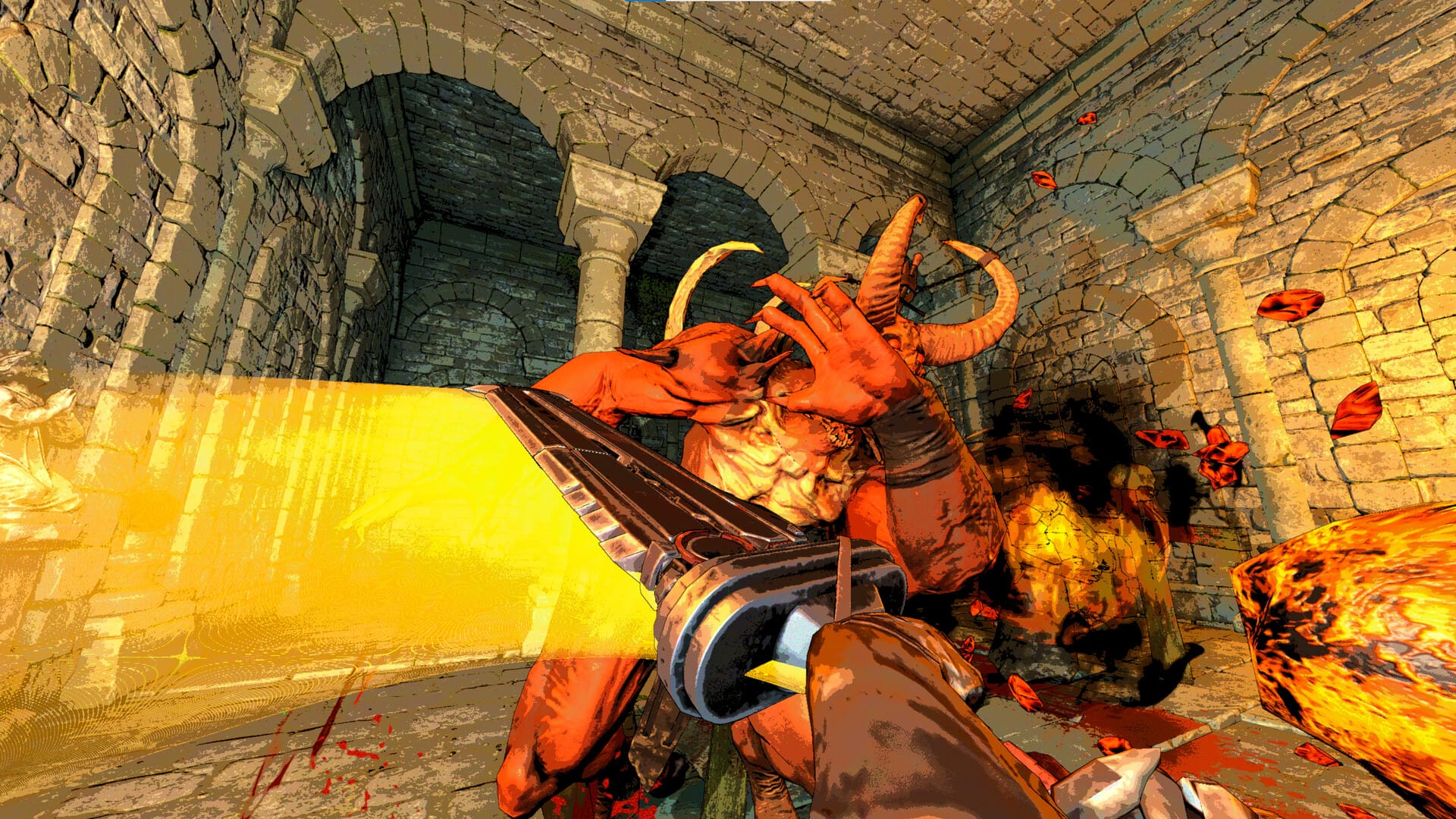
The core of Mortal Sin is its Gameplay Loop, a punishing but addictive cycle of violence that thrives on momentum. In many first-person games, melee combat feels like waving a pool noodle at a ghost; here, it feels like a car crash. The "crunchiness" mentioned in its description isn't an exaggeration—it’s the result of expert hit-stop effects, screen shake, and sound design that makes every successful parry feel like a heavy metal power chord.
The Mechanics of Aggression
Unlike slower, methodical "Souls-likes," Mortal Sin rewards relentless aggression. The combat system is a sophisticated dance of slashes, bashes, and finishers. You aren't just clicking until the enemy dies; you are managing a complex economy of posture and positioning. The Reaper class, for instance, turns the game into a high-speed execution simulator, while the Monk forces a more rhythmic, timing-based approach. The depth comes from how these classes interact with the randomized loot and permanent upgrades. You might start a run as a fragile glass cannon and end it as a tank-like juggernaut of blood and iron, provided you can survive the "Scares"—environmental hazards and jump-frights that keep the tension from ever truly dissipating.
Environmental Intentionality
A recurring flaw in the roguelike genre is the "sameness" of procedural levels. Mortal Sin mitigates this by using a modular approach. Because the 200+ rooms are handcrafted, they possess a sense of verticality and architectural logic that purely random algorithms lack. You’ll find yourself navigating cramped torture cells one moment and sprawling, vaulted cathedrals the next. This variety isn't just aesthetic; it dictates your combat strategy. A long-reaching polearm is a godsend in a wide-open hall but a liability in a tight corridor where your swings might clip the environment.
Interface & User Experience
The UI is as minimalist and sharp as the game’s art style. It stays out of the way, providing only the essential information needed to survive the chaos. The onboarding friction is surprisingly low for a game this complex; while the difficulty curve is steep, the game does an excellent job of teaching through failure. You learn the parry timing for a skeleton knight not through a tutorial prompt, but because he took your head off the last three times you mistimed it.