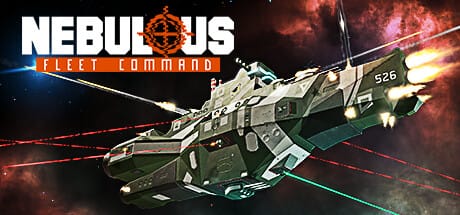
Bottom Line: An uncompromising, brilliantly executed tactical simulation that trades arcade thrills for the high-stakes friction of realistic electronic warfare and component-level damage. It is the definitive "hard" sci-fi experience for those who prefer their space battles measured in vectors and sensor signatures.
The core appeal of Nebulous: Fleet Command lies in its refusal to hold the player’s hand. Most space games operate on a 2D plane with 3D graphics; Nebulous operates in a true 3D volume, requiring a level of spatial awareness that borders on the vertigo-inducing. To succeed, you must master the Vector-Based Movement system, which accounts for momentum and orientation. You aren't just clicking where you want a ship to go; you are calculating the optimal facing to ensure your armor takes the brunt of incoming fire while your own batteries remain unmasked.
The Sensor War
The most profound achievement of the gameplay loop is the implementation of Electronic Warfare. In most titles, "Fog of War" is a binary state: you either see the enemy or you don't. In Nebulous, visibility is a spectrum of uncertainty. You might see a ghost on your scope—is it a heavy cruiser, or just a cluster of decoys launched by a nimble corvette? Managing your Radar Cross Section (RCS) becomes a tense game of cat and mouse. Turning on your active radar is a death sentence; it acts as a lighthouse, shouting your position to everyone in the theater. The tension of drifting through the void with all active emitters silenced, relying on passive sensors to pick up the faint heat bloom of an approaching missile bus, provides a psychological pressure rarely found in the genre.
Engineering as Strategy
The Fleet Editor is where the "hardcore" label is truly earned. This isn't just about picking a skin or a primary weapon. You are balancing power draw, ammunition storage, and internal layout. The Missile Programming interface is a highlight, allowing you to dictate exactly how your ordnance behaves. You can program a salvo to cruise at high altitude to avoid detection, then dive into a terminal maneuver that utilizes home-on-jam logic. This level of granular control creates a deep sense of ownership; when a plan comes together, it feels like a victory of engineering as much as a victory of tactics.
Onboarding Friction
However, we must address the Onboarding Friction. The interface is dense, bordering on the intimidating. While the tutorials are functional, they barely scratch the surface of the tactical nuances required for multiplayer success. New players will spend their first five hours simply learning how to not accidentally fly their fleet into an asteroid or lose their entire scout wing to a single unmonitored jamming burst. The UI, while thematic and efficient once mastered, lacks the modern "quality of life" shortcuts that newer players might expect. It is a toolset that demands study, not a toy that invites play.