

Overview
OpenTTD is a free, open-source titan of economic simulation, patiently refined and expanded over decades. Born from the revered classic Transport Tycoon Deluxe, OpenTTD transcends its origins, evolving into a sophisticated platform for constructing and managing vast transportation networks. It’s a game less about instant gratification and more about the slow, deliberate orchestration of a profitable logistical empire across procedurally-generated landscapes. Players are tasked not simply with moving cargo or passengers, but with designing the arterial infrastructure—roads, railways, shipping lanes, and air routes—that will funnel raw materials to factories, deliver goods to consumers, and connect distant urban centers.
This isn’t a casual endeavor; OpenTTD’s economic engine is robust, demanding keen spatial reasoning and foresight. Success hinges on optimizing routes, managing diverse vehicle fleets, and navigating a dynamic market. The game’s enduring appeal lies in its sandbox nature, offering diverse map sizes and custom AI opponents, but its true power is unleashed through extensive modding capabilities. These community-driven enhancements allow for a highly personalized experience, transforming the game from a transportation simulator into a near-infinite array of bespoke economic challenges. Furthermore, OpenTTD’s robust multiplayer component lets players share the workload, fostering cooperative megaprojects or fiercely competitive logistical battles. It represents the power of open-source development, where a dedicated community continually polishes and expands a proven formula, offering a depth that few commercial titles can match.
Key features
- Deep Logistical Simulation: Players manage complex networks across land, sea, and air, requiring intricate planning for cargo, passengers, and vehicle routing to maximize profitability.
- Expansive Modding Ecosystem: The open-source nature fosters an active community that produces a wealth of add-ons, including new vehicles, industries, graphical sets, and AI opponents, dramatically enhancing replayability.
- Robust Multiplayer Support: Accommodates large player counts in both cooperative and competitive modes, facilitating large-scale economic competition or collaborative empire-building over LAN and the Internet.
Analysis
OpenTTD operates on a principle of emergent complexity, where simple actions—laying a track, buying a train—cascade into a dense web of interlocking challenges. The game’s appeal derives from its logistical choreography. Players are presented with a blank canvas, a nascent economic landscape ripe for exploitation. The initial thrill comes from connecting two disparate points: a coal mine to a power plant, a forest to a sawmill. But the real game begins when these individual links must scale into a vast, interconnected system. Success means understanding supply and demand, managing vehicle capacities, optimizing travel times, and, crucially, mastering the notoriously deep rail signaling system.
The rail signaling system alone rewards careful study, turning track layout into a genuine design puzzle. It transforms what could be a mundane task into a puzzle of spatial logic and timing. Block signals, pre-signals, path signals—each serves a distinct purpose in allowing multiple trains to share complex track layouts without collision or congestion. Failure to grasp these nuances results in gridlock, a frustrating but highly instructive lesson in infrastructure planning. This steep learning curve, while initially daunting, is precisely what cements OpenTTD’s reputation. It rewards perseverance and experimentation, fostering a sense of genuine accomplishment when a perfectly synchronized rail network hums efficiently, ferrying cargo across the map.
Beyond the fundamental mechanics, OpenTTD’s longevity is inextricably linked to its vibrant open-source community and deep modding capabilities. This feature is the game’s lifeblood. The base game, while complete, serves as a robust framework upon which countless graphical sets, vehicle packs, new industries, and sophisticated AI personalities are built. Want a more realistic period European rail system? There’s a mod for that. Prefer a futuristic sci-fi setting? It’s likely available. This community-driven expansion ensures that the game never truly stagnates, offering an almost infinite variety of scenarios and challenges. This degree of customization transforms OpenTTD from a singular game into a platform for economic and logistical experimentation, continuously re-engaging its veteran players and providing fresh experiences for newcomers.
The multiplayer experience is another critical dimension. While single-player provides ample opportunity for solitary optimization, competing or collaborating with large groups of other players introduces an entirely new layer of strategic depth. Economic warfare, shared infrastructure projects, or simply observing diverse approaches to empire-building adds a dynamic social element rarely seen in simulation games of this pedigree. The game’s netcode and architecture are built to accommodate these massive sessions, turning individual rail lines into battlefronts for market dominance or cooperative ventures against the clock. This collective experience reinforces the game’s core tenets of planning and adaptation, as external forces – be they rival corporations or cooperative partners – continuously shift the economic landscape.
However, the game’s onboarding friction is real. Its user interface, while functional, adheres to a utilitarian design philosophy that can feel impenetrable to modern sensibilities accustomed to slick, guided tutorials. New players are often thrown into the deep end, reliant on external wikis, video guides, and community forums to understand even basic concepts. This isn’t necessarily a flaw, but a characteristic of a game that prioritizes depth over immediate accessibility. It’s a simulation that respects its players’ intelligence and their willingness to invest time in mastery, rather than spoon-feeding them information. This approach, while alienating to some, is precisely what appeals to its dedicated fanbase, fostering a sense of belonging among those who have navigated its complexities. The interface, initially overwhelming, eventually becomes second nature, its efficiency born from directness rather than aesthetic flourish.
Visuals & performance
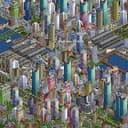
OpenTTD’s visual presentation is a direct descendant of its progenitor, Transport Tycoon Deluxe. This means a functional, isometric 2D sprite-based aesthetic. Those looking for photorealistic textures or ray-traced lighting will, understandably, be disappointed. However, to judge OpenTTD solely on its graphical fidelity is to miss the point entirely. Its visual language is one of clarity and utility; each sprite, each tile, conveys essential information without unnecessary adornment. This design choice makes the game light on hardware, and a 2D game of this scope is well suited to running on modest systems even with massive, complex networks. The game prioritizes the visual representation of information over spectacle, ensuring that the intricate details of a rail network or the flow of goods are always discernible. Furthermore, the open-source nature means that numerous graphical replacement packs exist, allowing players to upgrade the visuals to a more modern, although still 2D, aesthetic if they choose. This adaptability is a core strength, demonstrating that visual design, when integrated with community contribution, can evolve without compromising the game’s core identity or performance.
Platform nuances
OpenTTD’s availability on both Steam and Android highlights its adaptable architecture, yet each platform presents a distinct user experience. On Steam, the game thrives in its native environment: the precision of a mouse and keyboard is indispensable for the intricate menu navigation, fine-tuned track laying, and complex signal management. Crafting a multi-track junction or untangling a train jam benefits immensely from pixel-perfect cursor control. The desktop experience is, unequivocally, the definitive way to engage with its deep mechanics.
The Android version, conversely, is a remarkable feat of porting, bringing the full OpenTTD experience to mobile. However, adapting such a control-intensive simulation to touch interfaces inevitably introduces compromises. While various gestures and virtual buttons have been implemented, the inherent lack of precision compared to a mouse makes tasks like selecting specific track segments, placing signals in tight spaces, or navigating expansive menus a significantly more deliberate, and at times, frustrating affair. It’s certainly playable, and a tribute to the game’s core design that it functions at all on a mobile device, but it fundamentally alters the flow. The Android version is best suited for players already familiar with OpenTTD’s mechanics, using it for casual management or checking on existing networks, rather than intensive construction or troubleshooting. For serious empire-building, the desktop version remains the superior choice, delivering an uncompromised interaction with its demanding systems.
Final verdict
OpenTTD is a singular achievement in the simulation genre, and we rate it as one of the very best in its category. It doesn’t dazzle with cutting-edge graphics or hand-holding tutorials; instead, it offers a cerebral challenge, a profound satisfaction derived from mastering its intricate systems. Its enduring appeal reflects its fundamental excellence and the tireless dedication of its open-source community. While its initial barrier to entry is considerable, those who persevere will discover one of the most rewarding and endlessly engaging logistical simulators ever conceived. It remains a benchmark for depth, customization, and pure, unadulterated strategic gameplay.
Reviewed by the Rankeno Strategy & Sim Desk. Scores are out of 10; the overall score is the desk’s editorial judgement, informed by the four sub-scores above. How we review