
Bottom Line: Paper Trail transforms spatial reasoning into a tactile masterpiece, proving that the most profound innovations often come from a simple change in perspective.
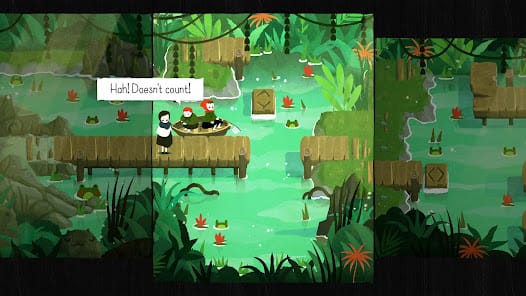
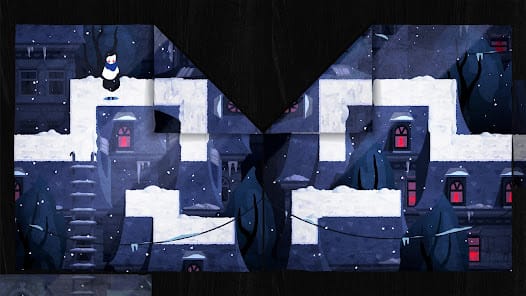
The core genius of Paper Trail lies in its friction—not the frustrating kind, but the tactile, satisfying friction of folding digital paper. Most puzzle games ask you to find a path; this game asks you to create one. The primary mechanic—grabbing a corner and dragging it across the screen—is remarkably intuitive, yet the cognitive load scales with frightening speed. You aren't just looking at a map; you are managing two layers of reality simultaneously.
The Spatial Loop
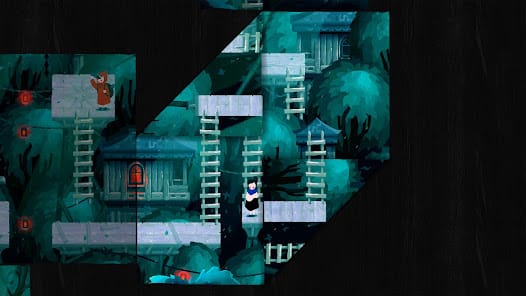
The gameplay loop is built on a simple premise: if you can’t reach an ledge, maybe the other side of the world has a bridge that fits perfectly. This requires a level of spatial visualization that few games dare to demand. In the early chapters, the puzzles serve as an elegant onboarding process, teaching you the basic vocabulary of the fold. You learn to align paths, bridge gaps, and think in terms of negative space. However, by the time you reach the treetops or the coastal cliffs, the game strips away the training wheels.
The introduction of rotating platforms and light mechanisms changes the fundamental math of the puzzles. Suddenly, a fold isn't just a static change; it’s a dynamic shift in a moving system. You find yourself folding a corner to align a light beam, then realizing that the very act of folding has obscured the exit. It’s a delicate dance of cause and effect that requires you to plan three or four folds ahead. The satisfaction of finally clicking a path into place is immense, a genuine "Eureka" moment that justifies the mental gymnastics required to get there.
Interface & Flow
From a UX perspective, Paper Trail succeeds by getting out of its own way. The interface is nearly invisible, allowing the artwork and the folding mechanic to remain the focal point. There is a visceral quality to the way the paper creases and shadows fall across the folds. It feels weighted. On a technical level, the logic governing the "reverse side" is airtight; I never encountered a situation where a fold felt "wrong" or glitched out.
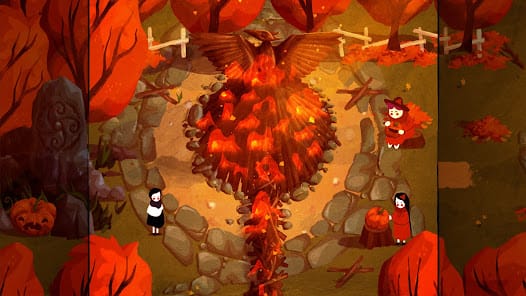
However, the game isn't without its stumbles. While the puzzle design is masterfully crafted, the narrative often feels like a passenger rather than a driver. Paige’s journey is sweet, and the dialogue is well-written, but there’s a slight tonal disconnect between the high-stakes mental exertion of the puzzles and the breezy, lighthearted story beats. Furthermore, the difficulty curve features some aggressive spikes. Late-game puzzles can feel less like a "relaxing exploration" and more like a grueling exam in multi-dimensional topology. For players seeking a purely "cozy" experience, these moments might feel like a cold shower. That said, for those who crave the "Aha!" moment, the challenge is the point. The game respects your intelligence, refusing to hold your hand when the folding gets complex.