
Bottom Line: Peglin is a brilliantly executed genre-mashup that proves physics-based chaos is the perfect partner for roguelike strategy. It’s addictive, punishing, and deeply satisfying.
The Physics of Probability
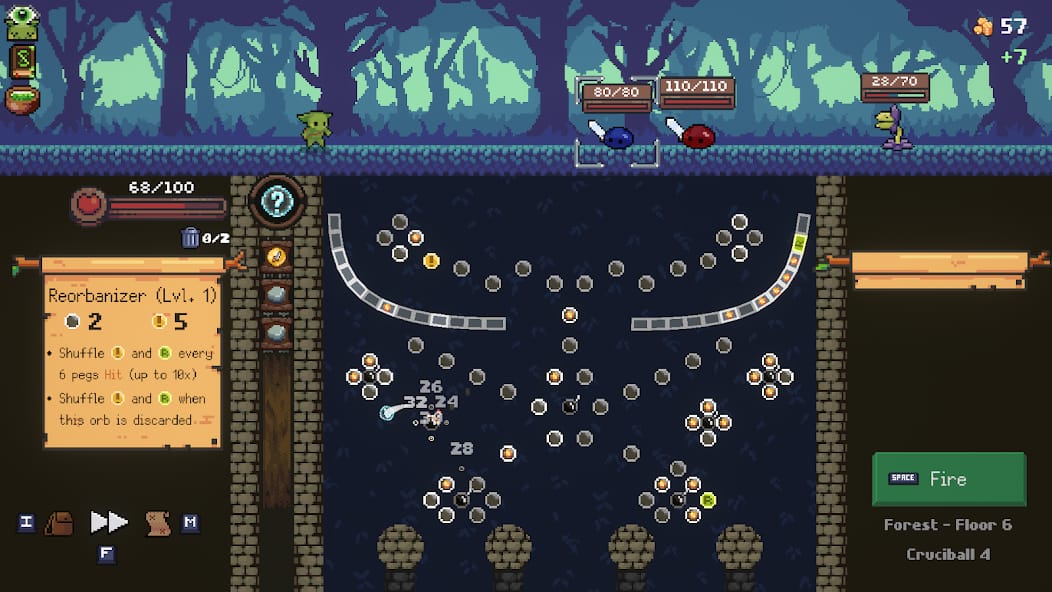
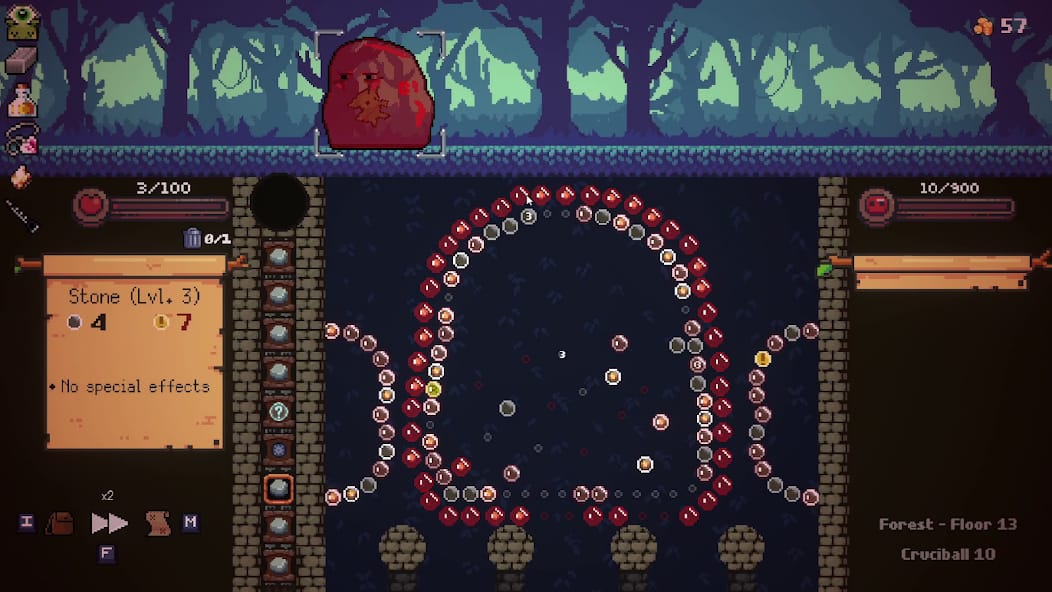
The central tension of Peglin lies in the conflict between the player’s intent and the engine’s physics. When you line up a shot, you are making a calculated bet. You see the critical hit peg buried behind a wall of standard pegs and think, "If I hit this at a forty-five-degree angle, I should bounce right into it." Then, the orb clips a pixel, flies off in the wrong direction, and you deal a pathetic two damage to a boss that is about to crush you.
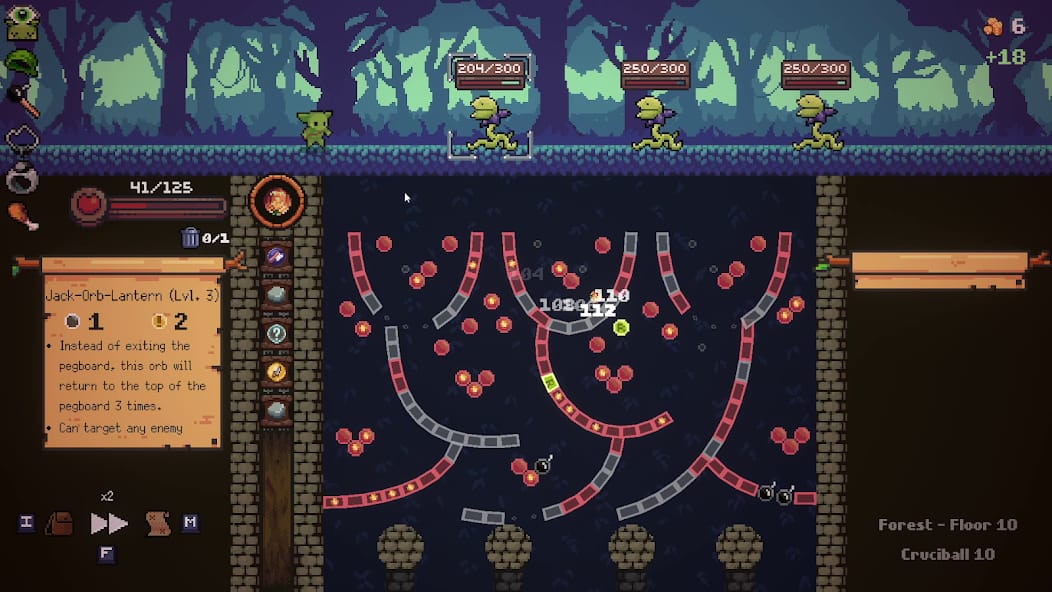
This could easily be frustrating, but Peglin avoids being "unfair" by giving the player tools to mitigate the RNG. The deck-building aspect is where the real strategy lives. You aren't just firing balls; you are curating a bag of tools. If you find yourself struggling with the physics, you pivot to orbs that have higher "bounciness" or those that can pierce through pegs. The depth of the synergy between orbs and relics is where the game truly shines. Finding a relic that turns every peg hit into a slight heal, combined with an orb that hits dozens of pegs at once, transforms you from a struggling goblin into an unkillable god of the board.
The Roguelike Loop
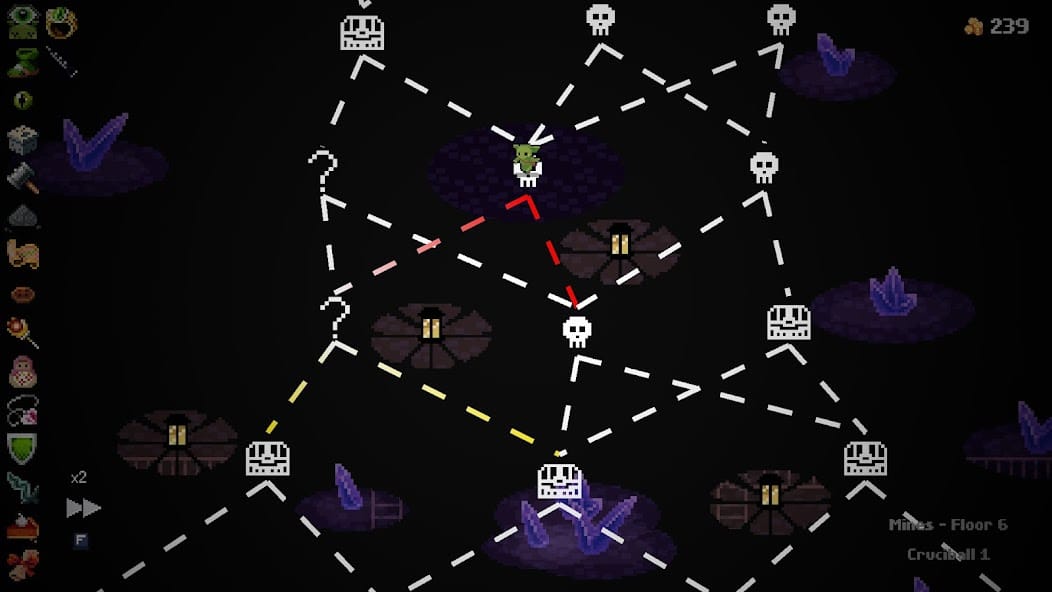
The branching map system will be familiar to anyone who has played a modern roguelike, but Peglin uses it to great effect. You must choose between the safety of a shop, the potential reward of an "Elite" encounter, or the mystery of a random event. These choices feel weighty because the game’s difficulty spikes are real. One bad encounter in the second act can bleed your health dry if you haven't built a cohesive strategy.
What makes the "one-more-run" loop so effective here is the speed of iteration. A run can last anywhere from five to forty minutes, making it perfect for both long sessions and quick breaks. The introduction of classes like the Spinventor—who focuses on manipulating the board itself rather than just hitting pegs—adds layers of complexity that keep the game from feeling repetitive. You aren't just playing the same game with a different skin; you are fundamentally changing how you interact with the board.
The Friction of Chaos
However, the game isn't without its frustrations. There are moments where the RNG-dependency feels absolute. Certain board layouts are inherently "garbage," offering little to no chance for a meaningful bounce regardless of your aim. While the game provides "refresh" pegs to reset the board, there are instances where the refresh peg is tucked into a corner that is virtually impossible to reach with your current orb. In these moments, Peglin feels less like a strategic masterpiece and more like a cruel coin flip.
The onboarding friction is also worth noting. While the basics are intuitive, the nuance of how specific orbs interact with certain relics isn't always clear until you've already committed to a build. A bit more transparency in how stats like "crit multiplier" and "overflow damage" function would go a long way in helping players make more informed decisions during the drafting phase.