Bottom Line: A masterclass in 3D movement that reminds us why we fell in love with platforming in the first place, stripping away modern bloat to reveal a lean, mechanical heart.
The core of Pseudoregalia isn't the castle, the combat, or even the cryptic lore—it is the flow state. In most games, movement is a means to an end; here, movement is the end. Sybil starts with a respectable kit, but as you unlock abilities like the Solar Wind (a momentum-preserving slide) or the Sunken Shard (a literal platform-creating strike), the world transforms. You stop looking for doors and start looking for geometry. A pillar isn't just a piece of architecture; it's a potential redirect for a wall-kick.
The Movement Loop
The brilliance lies in how these abilities interact. Most developers treat upgrades as binary switches—you can now do X, so you can now enter Y. Rittzler treats them as force multipliers. An air-slide isn't just for crossing gaps; it can be used to preserve momentum from a fall, which can then be converted into a long jump. This creates a high skill ceiling that makes simple traversal feel like a constant performance. There is a specific, tactile joy in nails-hard platforming that requires frame-perfect inputs, yet the game never feels unfair. When you fail a jump, it’s because your arc was off, not because the game's physics cheated you.
Sequence Breaking as a Feature
Modern Metroidvanias often feel like they are built by architects who hate shortcuts. Pseudoregalia feels like it was built by a designer who is actively cheering for you to skip their content. This focus on sequence breaking is the game’s greatest triumph. It turns the entire experience into a conversation between the player and the developer. You see a ledge that looks impossibly high, and instead of thinking "I need a double jump," you think "I wonder if I can slide-jump off that torch and kick off the ceiling." More often than not, the answer is yes. This creates a sense of agency that is almost entirely missing from the "Ubisoft-style" map-clearing exercises that dominate the industry.
Combat: The Necessary Friction
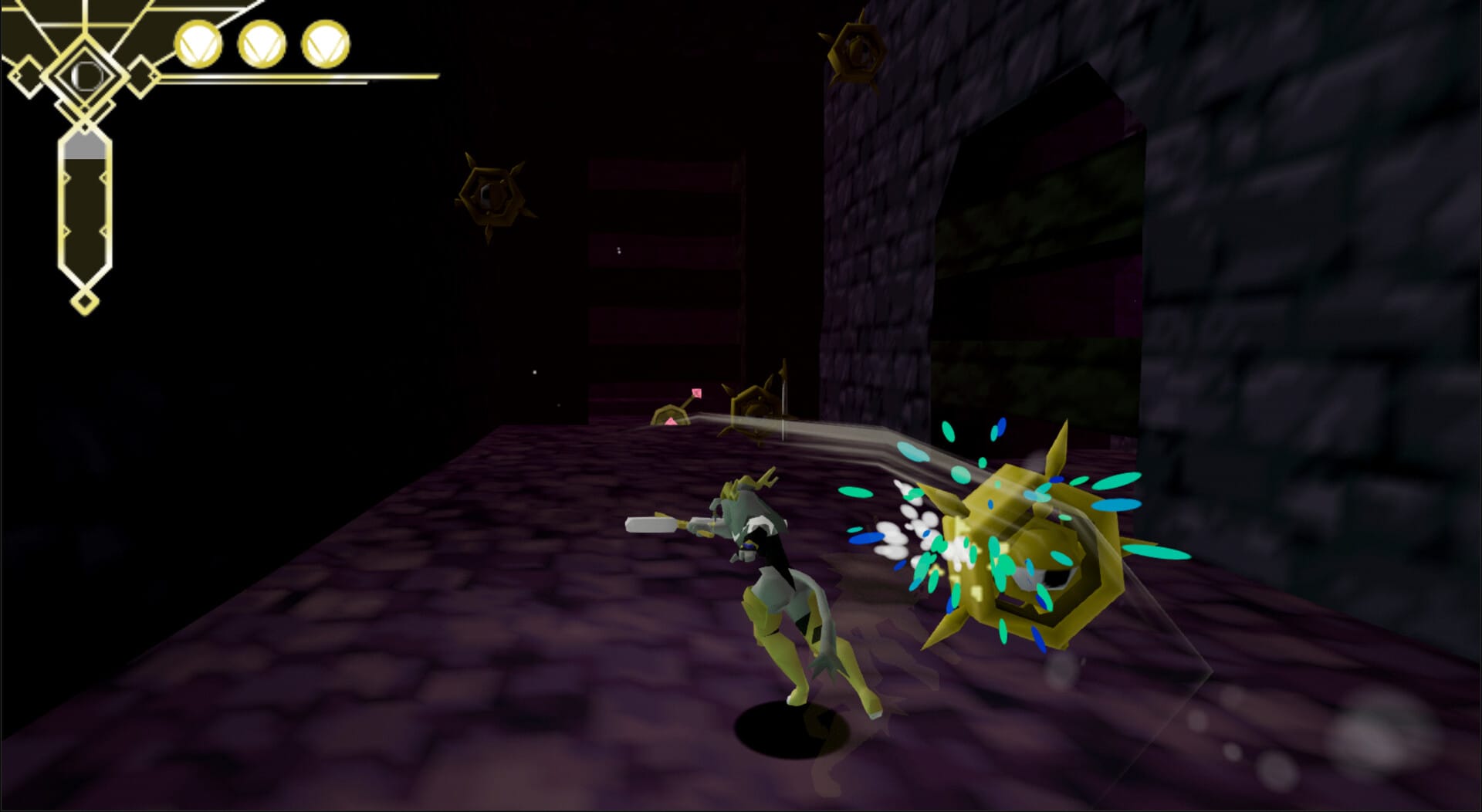
If there is a weak link in this chain, it is the combat. Using the Dream Breaker sword feels functional but lacks the surgical precision of the platforming. Enemies often feel like mobile obstacles rather than genuine threats. They exist to provide rhythmic interruptions to your movement, forcing you to slow down just long enough to deal with a threat before regaining your speed. While the combat isn't bad—it's certainly more engaging than many of its peers—it feels secondary to the "spatial gymnastics" that define the rest of the experience. The boss encounters, however, do a better job of forcing you to use your movement tech defensively, justifying their existence within the game's mechanical framework.