

Overview
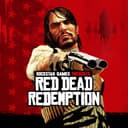
What does a Western look like when the West is already finished? Red Dead Redemption sets its story in 1911, at the twilight of the American frontier, and builds everything around that sense of an ending. Its protagonist, John Marston, is a former outlaw who has tried to leave that life behind. Federal agents drag him back, coercing him into hunting down the surviving members of the Van der Linde Gang, his old crew, with his family’s safety at stake. The revenge story is turned inside out: Marston hunts his own past on someone else’s orders, and that premise puts moral discomfort into every mission.
The game comes from Rockstar Games, with Double Eleven credited alongside, and this edition brings Rockstar’s open-world Western to iOS, Android, PC via Steam, Nintendo Switch, Xbox and PlayStation. On paper the package is generous. One purchase includes the complete single-player campaign, the Undead Nightmare zombie-horror expansion and the Game of the Year bonus content. There is no multiplayer. This is a single-player product, and it is priced like a premium one, at $49.99.
That price defines its market position. On mobile it asks far more than an impulse buy and competes on one promise: a console-quality experience on a device that fits in a pocket. On Steam and Switch it competes as a re-release, and buyers there will weigh the cost against the fact that the underlying design is unchanged.
The store rating is 4.4 out of 5 from 357 ratings. The package’s strengths are structural: Marston’s story, the open world and Undead Nightmare. The cost, missing multiplayer, uneven cloud save support and demands on older hardware are the main reasons to hesitate. Those concerns shape our verdict as much as the strengths do.
Key features
- A 1911 frontier narrative: John Marston, a former outlaw, is coerced by federal agents into hunting the surviving Van der Linde Gang members to protect his family. The late date gives the story its elegiac weight.
- Open world spanning the American West and Mexico: Story missions, side quests, bounty hunting and dynamic random encounters fill a large map that players cross mostly on horseback.
- Third-person gunplay with Dead Eye: Conventional shooting, given its identity by the Dead Eye targeting mode, which is built for deliberate, precise shots.
- Honor system: A morality system tracks Marston’s conduct and changes how NPCs react to him.
- Frontier side activities: Hunting and gambling minigames give the world texture between gunfights.
- Undead Nightmare and Game of the Year content: The zombie-horror expansion and bonus content are bundled in rather than sold separately.
- PC display options: High-resolution rendering, HDR lighting, ultrawide support, high refresh rates, and adjustable draw distance and shadow quality on Steam.
- Single-player only: No multiplayer mode of any kind.
Analysis
Narrative as the Engine
Open worlds tend to leak momentum. A map this size invites wandering, and wandering dissolves plot. Red Dead Redemption counters that with a premise that pulls in one direction: Marston has men to find and a family that depends on him finding them. Every story mission advances a hunt with a clear end point, so the campaign keeps its spine even when the player strays from it.
The 1911 setting does as much work as the script. At the frontier’s twilight, Marston’s skills are becoming obsolete, and the game frames its violence accordingly. Shootouts read as obligation rather than power fantasy. That tonal choice is the main reason the story earns its praise. The protagonist is a relic inside his own narrative, and the design lets that show.
The Open-World Loop
The structure has three layers. Story missions set the direction. Side quests and bounty hunting supply repeatable, self-contained objectives. Dynamic random encounters fill the space between them, which turns horseback travel into a gameplay system instead of a corridor between objectives.
That last layer matters most. On a map spanning the American West and Mexico, the horse holds the whole design together, and the distances between points of interest are long. Random encounters turn that distance into opportunity, since any ride can become a detour, a gunfight or a stranger’s problem. The approach has a natural limit, though. Systemic encounters draw from a finite pool, and over a long campaign some repetition is the expected cost of generating events instead of authoring each one.
Hunting and gambling minigames round out the loop. Hunting gives the wilderness a purpose beyond scenery and suits players who want a slower rhythm. The gambling minigames give towns a reason to exist beyond mission hubs, offering somewhere to spend time without firing a shot. Neither carries the game, and neither is meant to. They exist so the frontier feels inhabited rather than staged.
Gunplay and Dead Eye
Third-person gunplay is the game’s primary verb. A campaign about tracking down armed gang members will settle most of its conflicts with a gun, and the shooting takes up much of the campaign by design. Dead Eye targeting gives that shooting its identity. As a dedicated precision mode, it lets the player choose shots deliberately and turns the decisive moment of a firefight into a moment of control.
On this edition, Dead Eye has a second job. A shooter built for console controls now runs on touchscreens, and an assisted, deliberate targeting system is the kind of mechanic that narrows the gap between a thumbstick and a fingertip. For that reason we consider it the most important mechanic on the mobile versions.
The flip side is that the combat arrives exactly as designed. This is a straight port, with no reworked encounters or new mechanics for this edition. That suits a release meant to preserve the original. It is a weak point for anyone judging the game as a fresh purchase at full price.
Honor and Consequence
The Honor system makes player behavior part of Marston’s characterization. Conduct feeds a morality rating that shapes how NPCs react, so the world registers whether Marston behaves like the man he claims to have become or the outlaw he used to be. The thematic fit is excellent. A story about a man trying to outrun his past gains weight when the player can honor or betray that intent.
Its reach is social, though. The system governs how NPCs respond, so its impact depends on how much a player cares about the world’s opinion of Marston. Players hoping for morality-driven story branches should adjust expectations, because this is a reputation system. We see that as the right trade for an authored narrative, but it limits how far the Honor system works as a genuine role-playing lever.
Undead Nightmare and the Bundle
Undead Nightmare shifts the value calculation more than anything else in the package. A zombie-horror expansion set on the frontier recasts familiar ground in a different genre, and it is a clear highlight of the bundle. Together with the Game of the Year bonus content, it means this edition sells the full package instead of a base game with upsells. At this price, that completeness is the strongest answer to the cost complaint.
What’s Missing
Two absences matter. The first is multiplayer, and there is none. For a story-led Western, a single-player focus is a defensible design choice, and we would rather have a complete campaign than a thin online mode. At $49.99, though, buyers comparing value will notice.
The second is more serious. Cloud save sync is absent on some platforms, which leaves progress vulnerable after a reinstall. A campaign across a vast open world, plus an expansion, is a large time investment, and phones get replaced, reset and cleared for storage as a matter of routine. A mobile release without cloud save sync leaves a long campaign exposed to device resets and storage clears, and that flaw should weigh on any purchase decision.
Visuals & performance
The art direction relies on setting rather than spectacle. A frontier at the end of its era calls for open, sparse landscapes, and the scale of the American West and Mexico makes the visual argument: long distances and empty country that suit a world running out of room for outlaws. The visual fidelity is meant to meet a console-quality bar, which is the standard this edition has to clear.
The interface carries more risk. A UI designed around a television and a controller now has to work on a phone screen with a touch overlay, and on-screen controls compete for space with the landscapes the game is selling. That tension belongs to iOS and Android, not to Steam or Switch.
On paper, the PC version gets the most attention:
- High-resolution rendering
- HDR lighting
- Ultrawide monitor support
- High refresh rates
- Adjustable draw distance and shadow quality
That list makes Steam the version for players who want the frontier at its sharpest. The draw distance option suits a game whose identity depends on long sightlines.
Performance is the caveat. A vast open world with dynamic encounters is a demanding workload by design, so buyers on older phones or modest machines should lower their expectations.
Platform nuances
- iOS: Touch controls on a game designed for a controller are the central compromise, and Dead Eye’s assisted targeting does much of the work of narrowing that gap. Older devices fall under the hardware caveat.
- Android: Same content, same touch compromise. Android hardware varies widely, so the older-device performance warning applies to the broadest range of buyers here.
- Steam (PC): Mouse-and-keyboard input and the full set of PC display options: high-resolution rendering, HDR, ultrawide, high refresh rates, and adjustable draw distance and shadows. On specifications alone, this is the premium version.
- Nintendo Switch: Controller input, which matches the game’s original design assumptions, plus portability. For players who want the game handheld without touch controls, this is the natural pick.
- Content parity: The complete campaign, Undead Nightmare and Game of the Year content form the same package on every platform. The PC display options are the main difference. Multiplayer is absent everywhere.
- Saves: Cloud save sync is missing on some platforms. Check support on your chosen platform before committing to a long campaign.
Final verdict
The design holds up for the reasons it always did. It has a protagonist caught between his past and his family, a frontier dying around him, and an open world whose systems keep the space between missions alive: bounties, random encounters, hunting and the Honor system. Undead Nightmare and the Game of the Year content make this the complete package, and the PC version’s display options give high-end hardware something to do.
Against that, this edition charges $49.99 for a straight port, offers no multiplayer, and on some platforms cannot guarantee that a save survives a reinstall. Those shortfalls belong to this release rather than the original design, and they cost it points on value. We recommend it to players who want Marston’s story on a phone, a PC or a Switch, provided they check cloud save support and device performance before paying full price.
Reviewed by the Rankeno Action Desk. Scores are out of 10; the overall score is the desk’s editorial judgement, informed by the four sub-scores above. How we review