
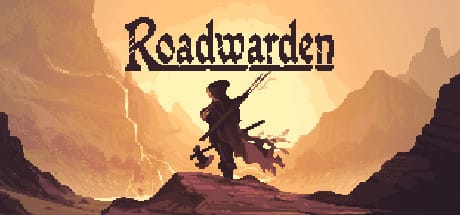

Bottom Line: A hauntingly dense, text-driven masterpiece that proves prose and pixel art remain the most potent tools for world-building in the RPG genre.
The brilliance of Roadwarden lies in its understanding of narrative friction. Most RPGs treat the world as a playground; Roadwarden treats it as a workplace where the safety regulations have been written in blood. The gameplay loop is built on a foundation of constant, low-level anxiety. You aren't just clicking through text; you are performing social and physical engineering.
The Weight of the Badge
As a Roadwarden, your primary weapon isn't a sword—it's your reputation. The settlements scattered across the peninsula are insular, suspicious, and often one bad harvest away from collapse. You have to navigate their politics with surgical precision. Do you lie to a village elder to keep the peace, or do you tell the truth and risk being barred from their only inn? The game tracks your relationships with an invisible but palpable ledger. Unlike the binary "Good/Evil" scales of the early 2000s, Roadwarden operates in a messy gray area where "correct" decisions often leave a sour taste in your mouth.
Survival as Narrative
The survival systems—often a chore in other games—are perfectly integrated here. You need to eat, you need to sleep, and you need to keep your gear clean. If you look like a mud-caked vagrant, people will treat you like one. This creates a fascinating tension: do you spend your last few peltas on a hot meal and a bath to improve your standing for tomorrow's negotiations, or do you buy a better shield?
The 40-day timer is the master stroke. It transforms the game from a leisurely stroll into a strategic puzzle. You can't see everything in one playthrough. You have to prioritize. This scarcity of time gives every encounter a sense of urgency. When you find a clue about your predecessor, you have to decide if investigating it is worth the six hours of daylight you’ll lose. The writing—dense, rhythmic, and incredibly specific—rewards this investment. It shares the DNA of Disco Elysium and Citizen Sleeper, focusing on the internal life of the protagonist and the material reality of the world around them.
Interface & Flow
The UI is a masterclass in functional minimalism. The screen is split between the evocative, sepia-toned pixel art and the text window. It feels like reading an ancient, illustrated manuscript that reacts to your touch. The inventory management is straightforward but vital; you aren't carrying 50 broadswords, but rather a carefully curated set of tools that define your capabilities. The game also includes "typing" prompts for certain puzzles, a nod to old-school text adventures that forces you to engage with the world's terminology rather than just clicking through menus.