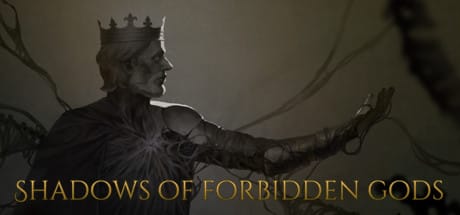

Bottom Line: A masterclass in subversive strategy that replaces the tired tropes of unit-stacking with a chillingly effective simulation of institutional rot and social collapse.
The core of Shadows of Forbidden Gods is a sophisticated loop of institutional sabotage. Most strategy games ask you to build a castle; this game asks you to find the specific loose stone that will make the castle collapse under its own weight.
The Engine of Corruption
Everything centers on the Shadow resource and the Awareness meter. This is where the game’s tension lives. As you deploy agents to bribe officials or spread "Plague," the local and global awareness grows. This isn't just a number; it changes the AI's behavior. Low awareness means the human kings are busy fighting their own petty border wars—wars you can facilitate. High awareness means they stop fighting each other and start looking for you.
The genius here is that the human factions are their own worst enemies. You don't need to destroy a kingdom if you can convince its king that his neighbor is the real "Dark God." The societal manipulation is granular. You can spend thirty turns turning a beloved hero into a paranoid wreck who eventually executes his own advisors, effectively doing your work for you. It’s a slow-burn strategy that rewards long-term planning over twitch reactions.
The Antagonist as the Protagonist
Playing as the "bad guy" is a common gimmick, but Shadows of Forbidden Gods makes it feel heavy. You aren't just a guy in a spiked helmet; you are an abstract entity. Each of the available Elder Gods changes the gameplay loop significantly. One might focus on icy stagnation and the freezing of the world, while another focuses on the spread of madness through art and culture. This variety forces you to rethink your approach to the map every time.
The Chosen One mechanic serves as a brilliant ticking clock. This hero is essentially the player character of a traditional RPG, growing in strength and gathering allies. Seeing the "Chosen One" successfully purge a city you spent an hour corrupting is genuinely frustrating in the best way possible—it creates a personal rivalry between the player and the AI that most strategy games fail to achieve.
Onboarding and Friction
We have to talk about the onboarding friction. This is not a game you "pick up and play." The UI is, frankly, utilitarian to a fault. It looks like a complex spreadsheet from 2005, and the sheer volume of icons and nested menus can be overwhelming. However, once you move past the initial wall of information, you realize the interface is dense because the simulation is dense. Every icon represents a lever you can pull.
The learning curve is steep, and the tutorial barely scratches the surface of the emergent chaos that can occur. You will lose your first few games, and you will lose them because you didn't realize that a minor hero in a distant corner of the map was slowly piecing together your identity. But that's the point. The world is supposed to be vast and difficult to snuff out.