

Overview
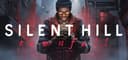
Every Silent Hill game makes the same promise: the town will know what you did. Silent Hill: Townfall keeps that promise and changes the address. Its setting is St. Amelia, a fog-covered, abandoned island town off the coast of Scotland, fixed in a pre-smartphone period. Scottish studio Screen Burn developed it, and KONAMI publishes it. A home-grown team building a Scottish nightmare is the project’s clearest asset, and the premise is specific because of it.
The protagonist, Simon Ordell, wakes on the island with no memory of how he got there and one stated purpose: he has come back to “put things right.” Across six chapters, control also passes to Zoe and Richard. All three threads lead back to the same event, a deadly fire on the SWDP oil rig. As the story advances, St. Amelia turns into a purgatory-like place crowded with monsters. That gives the psychological horror a sharper engine than generic trauma would. Guilt here has a payroll, a death toll and, through the social commentary that critics and players praised, a corporate cover-up.
Structurally, Townfall is a first-person psychological survival horror game delivered as a full-length, self-contained story on Steam. The self-contained part matters commercially. No series homework is required, so Townfall works as an entry point as much as a fan offering.
Reception splits along one fault line. Critics were generally favorable, while Steam user reviews were mixed. The gap has a clear cause. The most common Steam complaints concern PC stability, not the fiction, and a horror game depends on uninterrupted tension.
Key features
- St. Amelia: A fog-covered, abandoned Scottish island town that shifts into a purgatory-like space as the story unfolds. The period setting and remote geography carry much of the atmosphere.
- The CRTV device: Simon’s handheld CRTV works as an enemy radar that reveals nearby threats through walls. It is a modern reworking of the series’ famous static-filled radio.
- Three playable perspectives: Six chapters split control between Simon Ordell, Zoe and Richard, and each thread is tied to guilt over the SWDP rig fire.
- Hide or fight: Tense stealth and evasion sit alongside violent combat built on melee weapons, firearms and throwables.
- Unguided puzzles and environmental storytelling: Exploration pays out in clues that slowly expose the truth about St. Amelia, through puzzles that don’t hold the player’s hand.
- Five endings: Player choices determine which conclusion the story reaches.
Analysis
The Loop: Hide First, Swing Second
Townfall’s encounter design offers two answers to every monster: avoid it or break it. Stealth and evasion form the default posture, and melee weapons, firearms and throwables are held in reserve for when avoidance fails. That hierarchy suits survival horror. A game that lets combat solve everything stops being frightening once the player feels armed, and a game that forbids combat entirely becomes a chase simulator. Townfall sits between those poles. The word “violent” in its own pitch suggests fights are meant to feel costly and ugly rather than empowering, which is the right intent.
The risk lies in proportion. Steam user reviews repeatedly call the stealth tedious or overlong, and that points to a structural problem rather than a tuning one. In horror, stealth works best in short, sharp stretches where the player holds their breath. Stretched across too many rooms, it becomes routine, and routine kills fear. Once a player learns patrol rhythms, the monster stops being a threat and becomes a timer.
The CRTV: Dread Versus Information
The CRTV is the design decision that most defines Townfall, and it cuts both ways. The series’ static-filled radio worked because it was imprecise: noise meant something was near, but not what or where. Townfall’s handheld device goes further and shows nearby threats through walls. That converts dread into data.
From a stealth-design standpoint, the change is defensible. A first-person camera narrows peripheral awareness, so a first-person stealth game needs readable threat information, or players die to enemies they never saw. The CRTV solves that readability problem inside the fiction. It is a period-appropriate object in Simon’s hand rather than an abstract overlay.
The cost is uncertainty. Radar-style tools invite players to watch the screen instead of the world, and the scariest monster is the one the player can’t locate. We judge the CRTV a sound trade for a stealth game and a weaker one for a horror game. Townfall is trying to be both, and this device shows where the two goals pull apart.
Three Protagonists, Uneven Weight
Splitting six chapters among Simon, Zoe and Richard is an ambitious structure for a story about collective guilt. A rig fire with a deadly toll does not belong to one person, and rotating perspectives lets the game examine the disaster from several angles of responsibility. Conceptually, this fits the theme better than a lone protagonist would.
Multi-protagonist structures are judged by their weakest thread, though, and Steam reviews single out the Zoe sections as tedious or too long. With only six chapters to share, any stretch players resent takes up a large share of the runtime. Complaints that the pacing is slow and the characters weak compound the issue. Rotation pays off only when each character earns the screen time, and the response suggests not all three do.
Story, Satire and Endings
The strongest material is thematic. The social commentary on corporate cover-ups drew praise from critics and players alike, and it gives Townfall a grounded subject: industrial negligence in a small community, rendered as a monster-filled purgatory. That is classic Silent Hill logic applied to a real-world kind of horror, and it gives the fog something to hide beyond cheap scares.
The weakness is shape. Some players call the story predictable, which hurts a mystery-driven game more than most. If the truth about St. Amelia can be guessed early, the environmental clues confirm suspicions instead of revealing anything new. The five endings driven by player choice give the narrative stakes and a reason to replay. But replay value assumes players want more time on St. Amelia, and the pacing complaints make that a harder sell.
Puzzles and Exploration
Here Townfall earns its best design marks. Puzzles that refuse to hold the player’s hand show trust in the audience, and pairing them with environmental storytelling that rewards curiosity makes exploration the most coherent part of the loop. Examining a dead town yields both solutions and backstory, so attention to detail pays twice. That structure also supports the cover-up theme: the truth is something the player digs out of the town, not something the town volunteers.
Visuals & performance
Townfall’s art direction rests on three things: fog, period and place. The fog over St. Amelia sets the mood and limits sightlines, so threats and landmarks emerge out of it rather than sitting on the horizon. The period setting places the story before mobile phones made isolation hard to write, and the CRTV carries that period texture into the interface itself. Putting threat detection on a device Simon holds keeps the player’s attention inside the fiction, which suits a game about one man’s unreliable mind. Atmosphere and the Scottish island setting are the most consistently praised parts of the release among both critics and Steam players.
The technical picture is the release’s biggest problem. The most common complaints in Steam user reviews concern PC performance: stuttering, frame-rate drops and frequent crashes. In most genres that is an irritation. In horror it does structural damage. A stutter during a stealth approach breaks timing, and a crash erases the slow build of tension that the fog and pacing exist to create. Buyers of the paid release have judged it hard to justify given those problems. That is a pointed verdict from the release’s most committed audience.
Platform nuances
Steam carries the PC version, and the PC version holds both the release’s best critical reception and its most damaging user complaints. Critical reception is broadly favorable, yet the stuttering, frame-rate drops and crashes that Steam reviewers cite most often are PC-specific concerns.
Input method shapes the experience in predictable ways. Firearms and throwables benefit from the precision of mouse aim. The stealth layer, built on movement, patience and reading the CRTV, depends less on input fidelity. The paid release adds a timing question. Paying more to play sooner is only worthwhile if the build is stable, and the slide from Mostly Positive to Mixed suggests early adopters paid for an unpolished launch. For PC buyers, the current Steam review trend should decide when to buy.
Final verdict
Townfall has the right idea in the wrong condition. Moving Silent Hill’s guilt machinery to a Scottish island and aiming it at a rig fire and its death toll gives the series a subject with real teeth. The fog, the unguided puzzles and the environmental storytelling show a studio that understands what this series does best. The CRTV is a thoughtful update, even if its precision trades some fear for readability.
Against that sit a stealth loop that overstays its welcome, a Zoe thread that drags, a story some find predictable and, on PC, a stability record that Steam users have punished. The gap between critical praise and Steam user complaints reflects a game that reads better as a design than it runs as a product. Horror forgives technical failure less than most genres, because tension builds over time and a crash resets it to zero.
We rate it a mixed entry. We recommend it only to series fans and puzzle-minded horror players, with two conditions: check the state of the PC build before paying, and skip any early-access premium.
Reviewed by the Rankeno Action Desk. Scores are out of 10; the overall score is the desk’s editorial judgement, informed by the four sub-scores above. How we review