
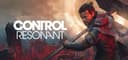

Overview
What happens when a studio famous for a shooter takes the gun away? Control Resonant is Remedy Entertainment’s answer, and it is a blunt one. The original Control was a third-person shooter confined to the Oldest House. The sequel opens the doors onto a distorted, ravaged Manhattan, gives the lead role to a different Faden, and rebuilds combat around melee.
That Faden is Dylan, Jesse’s brother, who is recovering from years held by the Federal Bureau of Control. Jesse now runs the Bureau as its Director. Dylan, with newly awakened powers, is searching for her while a cosmic threat reshapes reality across the city and the Hiss and the Mold close in. The setup has a sharp edge: the institution’s former captive now has to help contain a crisis that has spread beyond its walls.
The genre shift goes just as deep. Resonant commits fully to being an action RPG, with character stats, talent trees and customizable weapons. Its world is a set of large, connected zones rather than one open map. It is single-player only, on PC, PlayStation and Xbox.
Resonant is built to reach beyond the original’s audience, and that reach costs some of the identity that made the first game distinctive.
Key features
- The Aberrant: Dylan’s main weapon changes form, from a heavy two-handed hammer to fast dual blades, and works alongside supernatural abilities. It is the mechanical centerpiece of the sequel.
- Full RPG progression: Character stats, talent trees and customizable weapons let player choices shape how Dylan’s powers develop.
- Connected zones of a warped Manhattan: Large, interlinked areas replace a single open map and trade sprawl for authored density.
- Gravity distortions: Some areas bend gravity, which changes both puzzles and combat in those spaces.
- A new lead in a familiar universe: Dylan Faden’s search for his sister puts the Hiss, the Mold and a reality-warping cosmic threat in a new light.
Analysis
From Trigger to Blade
Taking the gun out of a Control game is a bold decision, and one with plenty to lose. A shooter loop runs on aim, cover and range. A melee loop runs on spacing, timing and commitment to a target. Those are different skills, and an audience built on the first one will not automatically follow a switch to the second.
The Aberrant answers a central risk of melee-only design, which is sameness. One weapon that moves between a heavy hammer and fast dual blades gives the player two tempos in a single kit. Slow, committed hits sit against quick, low-risk pressure, and the choice never gets spread across an inventory of separate weapons. Supernatural abilities cover what a melee kit lacks, such as reach and crowd control. The design logic is sound: a weapon that changes shape keeps the decisions inside the fight and out of a menu.
Progression: Many Dials, Short Travel
Resonant does not dabble in RPG structure. Stats, talent trees and weapon customization all feed into how Dylan’s powers grow. On paper, that is the right partner for a shape-shifting weapon. The risk is that it becomes a weak pillar: flexible but shallow.
That complaint describes a familiar failure. Action games that take on RPG scaffolding often give players many ways to rearrange a build and few ways to change how a fight actually plays. When a talent tree mostly adjusts numbers, the Aberrant’s forms end up carrying build identity on their own, and progression becomes maintenance more than expression. We see this as a calibration problem, not a structural one. The framework exists, but the choices inside it don’t diverge far enough. Players looking for a theorycrafting sandbox should lower their expectations. Players who want light customization that never stalls the action may count the shallowness as a virtue.
Connected Zones, Bent Gravity
Remedy skipped the full open world, and we think that was the right call. Large, connected zones let designers control encounter placement, pacing and landmark density, all of which a seamless map tends to dilute. The structure also fits the premise. Dylan is on a specific errand, finding his sister and containing a spreading crisis, and that goal suits directed routes better than a map covered in icons.
Gravity distortions are a notable idea in that structure. Because they change both puzzles and fights, traversal and combat share one set of rules instead of living in separate modes. The same distortion that turns a space into a navigation problem can reshape the next encounter in it. The overlap between systems is a plausible reason movement and exploration can read as purposeful.
The structure strains in the back half. A tedious late game is a common complaint, and the systems explain why that is plausible. Once a build settles and the zones lose their novelty, a melee loop backed by shallow progression has little left to refresh itself with.
Story and Tone
The original Control was defined by its strangeness, so the narrative criticism matters. Published reviews cite stiff performances in cutscenes and flashbacks that weaken the story, and a more mainstream tone than the first game.
The premise deserved better. A man held for years by the Federal Bureau of Control must now help contain the Bureau’s crisis while looking for the sister who runs it, which builds in tension between captor, captive and family. In a story about someone defined by captivity, flashbacks carry real weight, so stiff delivery there is especially costly. The broader tone probably comes from the same goal as the genre shift, a wider audience, and the game’s reach suggests it found one. Players who came to Control for its oddness will find less of it here.
Visuals & performance
Leaving the Oldest House gives Remedy a much larger canvas. A distorted, ravaged Manhattan offers something a single building cannot: familiar architecture made wrong. The uncanny works best when the audience knows what a place should look like, and a recognizable city bent by a reality-reshaping threat is a strong match for this series. The warped Manhattan is a recurring point of praise.
The interface carries more weight than in the original. Stats, talent trees and weapon customization mean more time in menus. Real-time combat that combines two weapon forms with supernatural abilities also needs clear signals for the active form, ability availability and incoming threats. A game crossing genres like this lives or dies on whether that information stays readable mid-fight, and readability in the menus matters more as the talent trees grow.
The scope is heavier than the original’s interior corridors. Large connected city zones, plus gravity effects that change combat spaces, demand more from hardware than corridor work does. Buyers with modest hardware should weigh that as a real factor in their decision.
Platform nuances
- Storefront: On Steam this is the PC release of a game that also ships on PlayStation and Xbox.
- Input: A melee action RPG built to launch on two consoles is likely tuned for a gamepad, because form switching, ability use and close-range timing map naturally to triggers and face buttons. Mouse and keyboard players should expect a layout adapted from that design rather than built around it.
- Hardware spread: PC has a broader range of hardware, so the heavier scope carries more risk for Steam buyers.
- No online layer: The game is single-player on every platform, so there is no cross-play or multiplayer feature set to compare.
Final verdict
Few sequels take this many risks at once. Control Resonant introduces a new protagonist, a new city, a new combat genre and a full RPG framework together, and the foundation holds. The Aberrant gives melee combat rhythm and range, the warped Manhattan gives the series a setting worth exploring, and gravity distortions join puzzles and fights into a single design language. The costs show up in the systems around that combat: progression that offers choice without consequence, and a late game that runs out of ways to surprise. They also show up in a story undercut by stiff delivery and a tone pulled toward the mainstream. The game is built for a broad audience, and that reach costs some of the original’s oddity. We recommend it to action RPG players and to Control fans open to change. Purists should expect a louder, broader and more conventional sequel than the game they fell for.
Reviewed by the Rankeno RPG & Adventure Desk. Scores are out of 10; the overall score is the desk’s editorial judgement, informed by the four sub-scores above. How we review