Bottom Line: Forty logic games, infinite algorithmically-generated puzzles, zero ads, zero tracking, zero dollars. It looks like a spreadsheet and plays like a masterclass — and it will outlast every puzzle app on your phone.
The Generation Engine Is the Whole Game
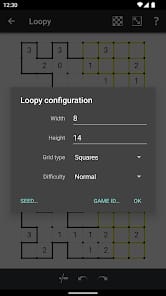
Most puzzle apps are content treadmills. Someone hand-authors (or licenses) 500 grids, gates them behind an energy meter, and sells you pack six when you finish pack five. Tatham's collection replaces that supply chain with mathematics. Each game ships with a generator and a solver; the generator proposes a puzzle, the solver proves it's solvable through deduction alone, and only then do you see it. The practical consequence is profound: the content never ends, and it never cheats. When a Loopy grid at Hard difficulty stumps you, the fault is yours — the app has already verified a logical path exists. That guarantee changes your relationship with difficulty. You stop suspecting the puzzle and start interrogating your own reasoning, which is the entire point of logic puzzles.
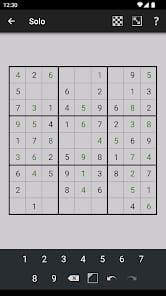
The difficulty tuning deserves specific praise. These aren't vague "easy/medium/hard" labels slapped on random grids. The generators target the deductive techniques required: an Easy Solo needs only basic scanning; an Extreme one demands chained inferences that will humble sudoku veterans. That's the difference between a difficulty slider and a curriculum. Played seriously, this collection teaches you to think in each puzzle's native logic, one technique tier at a time.
The Loop: Two Minutes or Two Hours
The session design is honest in a way modern mobile games refuse to be. There's no daily streak nagging you, no lives system rationing your attention, no push notification pretending your puzzles miss you. You open the app, you're exactly where you left off — mid-grid, mid-thought — and you leave whenever you like. A small Tents grid is a 90-second palate cleanser; a large Pattern board is a full evening. The collection scales to your attention instead of harvesting it.
The Solve button is the most philosophically interesting control here. Conventional design wisdom says never let players skip the challenge. Tatham's collection shrugs and hands you the answer, and it turns out that's the right call for this audience. Watching the solved state of a Slant or Galaxies grid you were stuck on is a legitimate learning tool — you reverse-engineer the deduction you missed. It treats you like an adult who owns their own time. More games should.
Where the Seams Show
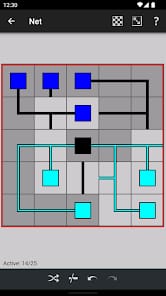
Fairness requires saying this plainly: the collection has real friction, and it's concentrated in discoverability and touch precision. There is no onboarding to speak of. Each game has documentation, but the app makes little effort to teach; your first encounter with Net or Signpost is a cold plunge, and I'd wager a meaningful share of those million downloads never got past the initial "what am I even looking at" wall on the more obscure entries. A stingy in-context hint system — not a full solver, just a nudge — would transform the on-ramp for newcomers.
And on a 6-inch phone screen, grid-dense puzzles get fiddly. A 16×16 Solo or a large Loopy board demands constant pinch-zooming, and fat-finger errors creep in at the exact moment concentration matters most. Unlimited undo blunts the pain but doesn't eliminate it. These puzzles were born on desktops with mice, and at high densities, the touch layer — capable as it is — can't fully hide that ancestry.