
Bottom Line: CGE Digital's adaptation of Vlaada Chvátil's civilization epic is the rare port that improves on its source material — a dense, brutal, brilliant strategy game wrapped in the best tutorial in the business. If you own a phone and a brain, you owe it a look.
The Engine Underneath
Through the Ages is, at its core, an action-economy game wearing a civilization costume. Each turn you spend a fixed pool of civil actions drafting cards from a shared row, building infrastructure, and researching technology. Everything is scarce: actions, food, ore, science, happiness. The genius — and the cruelty — is that every scarcity feeds another. Expand your population too fast and your people starve or riot. Build a tall culture engine and a militarized neighbor will raid it into rubble. Ignore corruption and your treasury bleeds out a coin at a time.
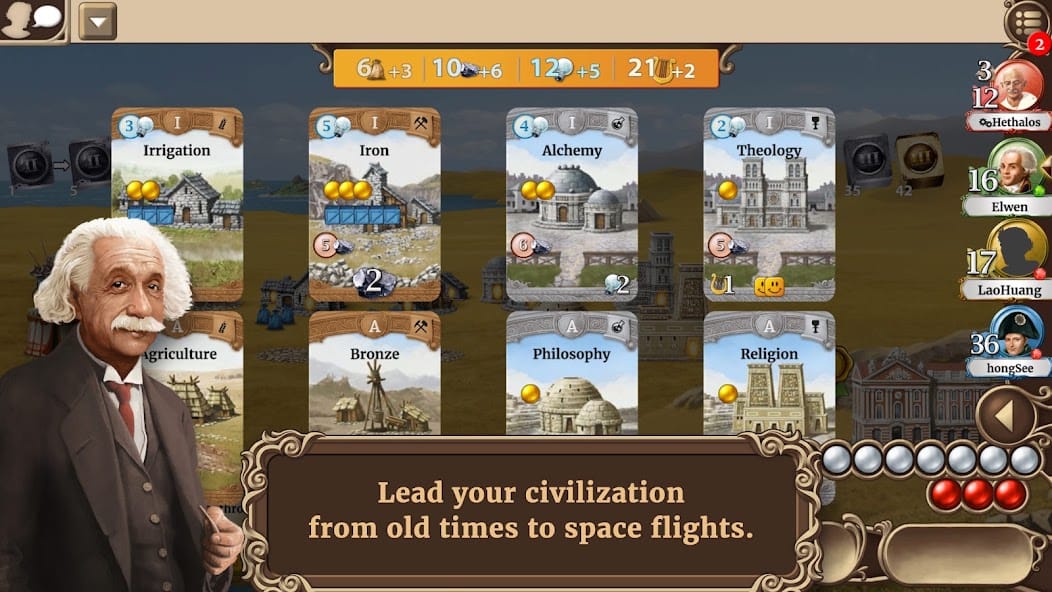
The card row is the beating heart. Hundreds of cards cycle through it — leaders from Aristotle to Napoleon, wonders, technologies, military tactics — and cards get cheaper as they age toward the end of the row. Every draft is a micro-auction against your opponents' priorities. Do you grab Michelangelo now at full price, or gamble that nobody else wants him for two more turns? This tension repeats dozens of times per game, and it never goes slack. That's why the game replays so well: the deck is the terrain, and the terrain is never the same twice.
The Adaptation Work
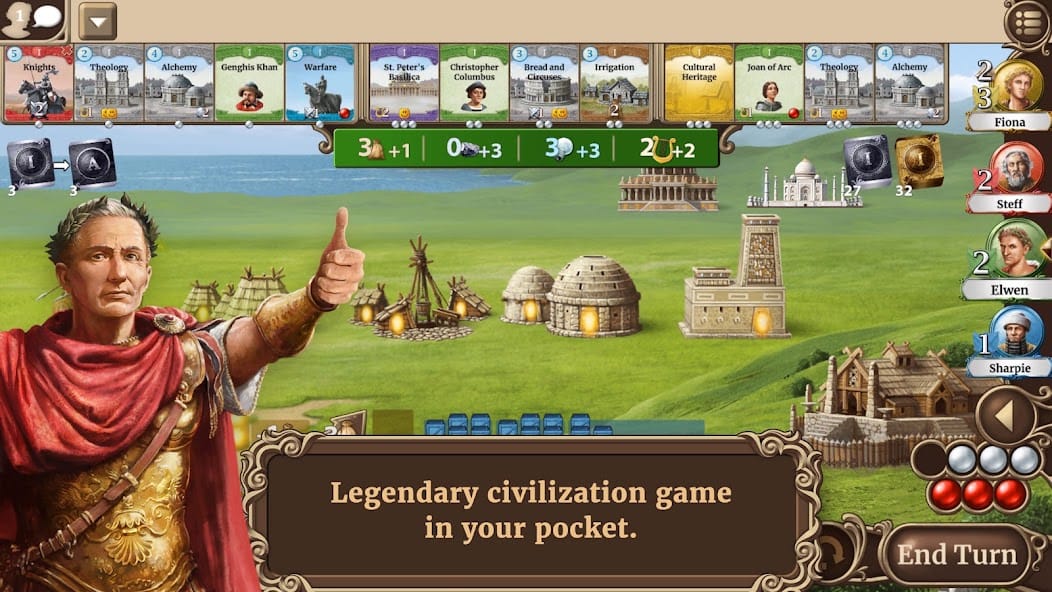
Here's where CGE Digital earns the byline. On the table, Through the Ages is notorious for bookkeeping — sliding cubes across mats every turn to track production, corruption, and consumption. Players routinely miss a food payment or forget a science tick. The app automates all of it, and the effect is transformative. What remains is pure decision-making. The digital version isn't just more convenient than the cardboard; it's arguably the better way to play the game, because the friction it removes was never where the fun lived.
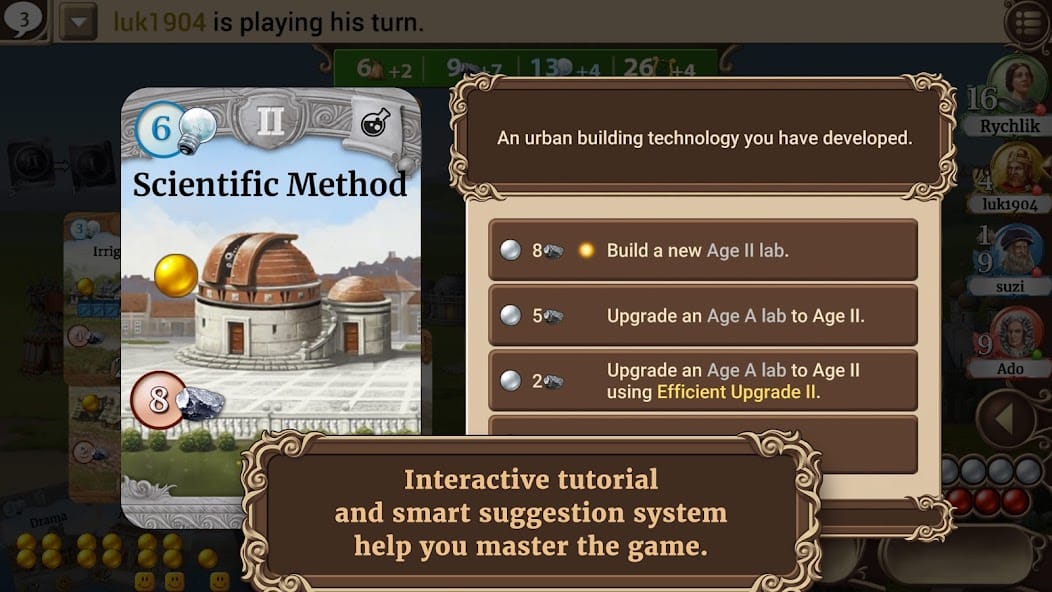
The tutorial deserves its own paragraph because it solved the genre's hardest problem: onboarding friction. Teaching Through the Ages to a human takes an experienced player about 45 minutes of monologue. The app does it in staged, interactive lessons with a narrator who cracks jokes about your incompetence — and it works. Players who bounced off the physical rulebook routinely report finishing the tutorial and immediately understanding a game that intimidated them for years. This is what "accessibility" actually means in strategy gaming, and almost nobody else does it this well.
Where It Bites
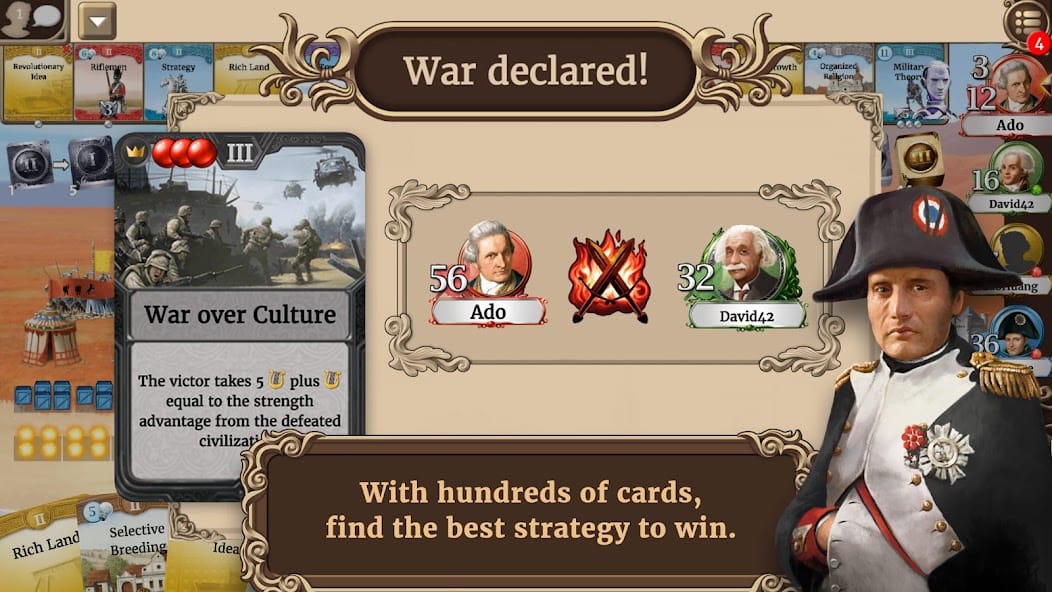
Now the firm part of fair-but-firm. The learning curve doesn't disappear; it just becomes climbable. Your first ten games, you will lose, sometimes humiliatingly, and the game will not apologize. Military in particular punishes new players — neglect your army in a multiplayer match and experienced opponents will strip-mine your civilization with aggression cards while you watch. Some players never forgive the game for this. They're wrong, but they're numerous.
Time commitment is the other honest cost. Even digitally accelerated, a full multiplayer match runs long, and live online games can stall when an opponent goes to make dinner mid-Renaissance. The asynchronous mode is the pressure valve — matches unfold over days, a few turns at a time — but if you want the sit down and finish it experience, budget a real evening. And the DLC question rankles some buyers: after paying a premium price, the New Leaders & Wonders expansion costs extra. It's consistent with board game economics (expansions always cost money), but mobile customers accustomed to all-inclusive pricing grumble, and I don't entirely blame them.