
Overview
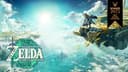
Nintendo, a company rarely accused of resting on its laurels, delivers The Legend of Zelda: Tears of the Kingdom, an open-world adventure built on construction and experimentation. This entry in a storied franchise moves open-world game design toward interactive freedom, making that freedom the main measure. Building directly upon the groundbreaking foundations of “Breath of the Wild,” this action-adventure title expands the already sprawling lands of Hyrule not just horizontally, but vertically and subterraneously. Players navigate breathtaking sky islands suspended above the clouds and descend into the foreboding darkness of the Depths, a vast, oppressive underworld that recontextualizes the familiar map.
“Tears of the Kingdom” operates with a philosophy of emergent gameplay, empowering players with a toolkit built for combining objects and testing ideas in creative problem-solving. This isn’t a game that guides you by the hand; it provides the fundamental elements and expects you to construct the solutions. From its intricate physics engine to its dramatically enhanced environmental interactivity, every system serves the singular purpose of fostering player ingenuity. Nintendo has dared to trust its audience, offering a narrative that deepens Hyrule’s lore with a more intricate and emotionally resonant tale, yet never sacrificing the core tenets of exploration and discovery. This is a game engineered for the player who revels in experimentation, who sees a chasm not as a barrier, but as an opportunity for engineering brilliance.
Key features
- Ultrahand: This revolutionary ability grants Link the power to manipulate objects, fusing them together to construct elaborate vehicles, weapons, and tools. It’s the ultimate sandbox component, transforming environmental puzzles and combat challenges into exercises in engineering and imagination.
- Fuse: An elegant counterpoint to Ultrahand, Fuse allows for the immediate combination of weapons, shields, and arrows with various items found in the world. This system not only enhances offensive and defensive capabilities but also introduces a layer of tactical depth and resource management, encouraging on-the-fly improvisation.
- Sky Islands & The Depths: The world of Hyrule is dramatically expanded by the introduction of these two vast, distinct layers. The sky islands offer verticality, exploration, and unique challenges, while the sprawling, dangerous Depths provide a stark, resource-rich counterpoint to the familiar surface, demanding new strategies for navigation and survival.
Analysis
“Tears of the Kingdom” doesn’t just offer an open world; it offers an open system. Ultrahand and Fuse are woven into every facet of gameplay, so their value comes from how often players rely on them. Where “Breath of the Wild” was about surviving in a reactive world, its successor is about shaping that world. Faced with a chasm, a lesser game would provide a bridge or a clear path. “Tears of the Kingdom” provides logs, fans, and rockets, then lets players build a makeshift aircraft, often with hilarious and unexpected results. This emergent design paradigm fuels endless exploration and discovery, ensuring that no two players will solve the same problem identically. The sheer variety of solutions, from the elegant to the absurd, speaks to Nintendo’s confidence in its design philosophy.
However, such boundless creativity comes with a critical trade-off. The freedom of Ultrahand, while exhilarating, can occasionally manifest as fiddly controls for building. Precision crafting on the fly, especially under pressure, demands a level of dexterity that can break the flow of exploration. This is particularly true when attempting complex contraptions in combat scenarios. Furthermore, the breadth of new mechanics, from crafting to environmental shifts, risks feeling overwhelming during the initial onboarding. The learning curve isn’t steep, but it’s broad, asking players to internalize a significant paradigm shift from traditional Zelda conventions.
The narrative, often a secondary concern in open-world titles, is remarkably more structured and emotionally engaging here. Link’s quest feels more personal, more urgent, and the gradual unfolding of Hyrule’s past through various echoes and memories contributes to a strong sense of wonder and investment. This is a story that, while epic in scale, retains an intimacy often missing from games of this magnitude.
User experience flow is generally excellent, benefiting from years of refinement. Traversal, even across the vastly expanded map, is designed to feel fluid, aided by ingenious new methods of ascent and descent. The combat remains largely familiar, but Fuse dramatically alters the tactical landscape. Suddenly, mundane items become potent tools: a rock fused to a sword transforms it into a hammer, a mushroom on an arrow creates a smokescreen. This constant encouragement for innovation in combat keeps encounters fresh, but it also highlights another friction point: cumbersome inventory management. With so many items to fuse and experiment with, the menu system is built for a smaller catalog and gets crowded fast, especially when the action demands quick decisions. This friction, while minor in isolation, adds up over long play sessions, pulling players momentarily out of the immersive experience.
Visuals & performance
Aesthetically, “Tears of the Kingdom” maintains the stunning, cel-shaded art style that defined its predecessor, albeit with a heightened sense of scale and detail across the new regions. The sky islands are ethereal, bathed in golden light, while the Depths are an oppressive, bioluminescent marvel, each environment contributing significantly to the game’s distinct atmosphere. The user interface, while functional, could benefit from further optimization, especially concerning the inventory system’s burgeoning complexity.
Performance is where the Switch’s aging hardware shows its limitations. A game of this scope, with elaborate physics constructions and densely layered environments, pushes the system hard, and frame rate dips are an expected consequence of that ambition — particularly in crowded areas or during complex Ultrahand builds with numerous moving parts. These constraints rarely eclipse the overall experience, but they are part of the package.
Platform nuances
As a first-party Nintendo title, “Tears of the Kingdom” is exclusively a Nintendo Switch experience. This means navigating the familiar Joy-Con or Pro Controller setup. The control scheme is largely intuitive, building on “Breath of the Wild,” but the new abilities, particularly Ultrahand, are inherently less precise with analog sticks than a mouse would be in a PC environment. Given the Switch’s portable nature, the game is well suited to both TV and handheld play, though hardware limitations are more apparent on larger displays where imperfections are magnified. The lack of touch controls for fine-tuning Ultrahand creations is a missed opportunity that could have alleviated some of the control “fiddliness.”
Final verdict
“The Legend of Zelda: Tears of the Kingdom” is a monumental achievement in interactive entertainment, and we rate it as one of the very best games in its category. It embraces player agency with a boldness rarely seen, fundamentally altering the calculus of open-world design. While its ambition occasionally strains the Switch’s hardware and its new mechanics demand a significant mental recalibration, these are minor quibbles in the face of such profound innovation. This game invites you to Hyrule and to reshape it, one ingenious contraption at a time. It is a vital, unforgettable experience that sets a new bar for what’s possible in the medium.
Reviewed by the Rankeno Puzzle & Casual Desk. Scores are out of 10; the overall score is the desk’s editorial judgement, informed by the four sub-scores above. How we review