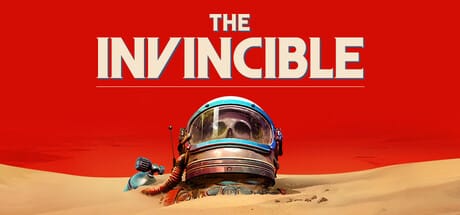

Bottom Line: A hauntingly beautiful adaptation of Stanisław Lem’s hard sci-fi that prioritizes atmosphere and existential dread over mechanical complexity.
The Weight of Science
Most "walking simulators" suffer from a lack of agency, but The Invincible counters this by making your scientific inquiry the primary driver of the plot. As Yasna, you aren't just looking for clues; you are formulating hypotheses about necroevolution—a concept that suggests evolution doesn't require organic life.
The game excels when it forces you to interact with the environment through its skeuomorphic interface. Using the telemeter to spot distant landmarks or checking the physical map tucked into your rover feels significantly more immersive than following a glowing waypoint. There is a tangible friction to the technology that mirrors the harshness of Regis III itself. You feel the weight of your suit, the limitation of your oxygen, and the agonizingly slow pace of human movement against a backdrop of geological time.
The Friction of Exploration
However, that same commitment to realism is a double-edged sword. The movement speed is, to put it bluntly, glacial. While this reinforces the feeling of being a fragile human in a hostile environment, it often leads to pacing issues during the long treks between scientific sites. The game demands patience, and in its more linear corridors, that patience can wear thin.
The "gameplay" is largely a delivery mechanism for the narrative. While there are rover-driving segments and light environmental puzzles, the core experience is the conversation between Yasna and Novik. Fortunately, the voice acting is stellar. The chemistry between the two—oscillating between professional respect, panicked desperation, and philosophical debate—is what prevents the game from feeling like a lonely lecture on xenobiology.
Narrative Stakes
The branching paths are surprisingly subtle. You aren't often told "this will have consequences," but your decisions on how to treat your fallen crew or how to approach the planet’s "mirages" ripple outward. By the time you reach the final act, the game transitions from a rescue mission into a philosophical thriller. It asks whether some things in the universe are simply beyond human comprehension—and if we have the humility to leave them alone.