
Overview
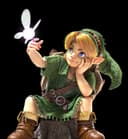
How do you remake a game with a reputation as settled as Ocarina of Time’s? The answer here is: carefully. The Legend of Zelda: Ocarina of Time is a ground-up remake of the action-adventure, released as a Nintendo exclusive. The developer is unknown.
The premise is unchanged. Link leaves Kokiri Forest, crosses Hyrule, and moves between his childhood and adult eras to awaken the Sages and stop Ganondorf from seizing the Triforce. The structure is unchanged too: an interconnected overworld, puzzle-filled dungeons, an inventory that grows with the bow, hookshot and bombs, lock-on combat, Epona, and an ocarina whose melodies alter time, weather and location.
What changes is the presentation and the handling. According to Nintendo, the remake adds completely overhauled visuals, voiced cutscenes, expanded dialogue, a symphonic orchestral soundtrack, and reworked camera and movement controls. The design brief is a faithful recreation rather than a reinvention, and that sets the terms for judging it.
That positioning matters. This is a Nintendo exclusive built on preservation, aimed at two audiences at once: players who know every room of the Water Temple and want it rebuilt with respect, and players who have only heard about the game and need a version that does not demand tolerance for older conventions. The remake bets that the design needs no correction, only a modern body. On design terms, the bet pays off.
Key features
- Ground-up visual overhaul: Hyrule is fully rebuilt for Nintendo hardware rather than upscaled, with a clearer storybook scale than the original could provide.
- Voiced cutscenes and expanded dialogue: Story scenes now carry voice acting, and the script has grown, giving more room to characters the original sketched in a few text boxes.
- Symphonic orchestral soundtrack: The score has been re-recorded with an orchestra, which matters more here than in most games because music is a mechanic as well as an atmosphere.
- Reworked camera and movement controls: The handling has been modernised, addressing the part of an older 3D game most likely to deter a new player.
- Two-era structure preserved: Travel between Link’s childhood and adulthood remains the spine of the adventure, with the original dungeons and story beats intact.
- Classic toolset and lock-on combat: Bow, hookshot, bombs, Epona and target-based swordplay all return in their established roles.
- Single-player only: There is no multiplayer or online component to dilute the focus.
Analysis
A Structure Left Alone
The most important design decision in this remake is the one it declines to make. The overworld is still an interconnected hub rather than an open sandbox. The dungeons are still the original dungeons. The story hits the same beats in the same order. For a series whose recent identity has leaned toward freedom and systemic play, shipping a tightly authored, item-gated adventure now is a statement of confidence in the older formula.
That confidence is well placed. The loop of exploring, finding a dungeon, earning an item, and using that item to reopen the world is a self-reinforcing piece of design: each new tool is both a puzzle key and a traversal upgrade. The hookshot solves rooms and also changes how the player reads every ledge in Hyrule. A remake that tampered with this pacing would risk breaking the chain of small revelations that carries the game. Leaving it intact preserves a rhythm that modern adventures rarely attempt.
The Two-Era Design
Time travel remains the structural idea that separates this game from its imitators. Hyrule exists in two states, and progress depends on understanding how actions in childhood shape what adult Link finds. This doubles the map without doubling its size, and it gives the story a weight that plot summary undersells: the player sees what Ganondorf’s victory costs because they knew the world before it.
Voiced cutscenes and expanded dialogue are the remake’s largest intervention here, and its riskiest. The original told its story through brief text and suggestion. Adding voices and more lines fills gaps that some players filled with imagination. For newcomers this is a clear gain, with clearer motivation, stronger characters and a story that meets current expectations. For veterans the result depends on taste, and taste settles whether a voiced Hyrule matches the one they remember.
Combat and Tools
Lock-on targeting returns as the basis of combat. It remains a sound solution to fighting in three dimensions: fix the camera on a threat, and movement becomes circling, dodging and striking instead of wrestling with perspective. Paired with the reworked camera and movement controls, the system should lose the stiffness that dated the original while keeping its deliberate, duel-like character.
The ocarina deserves separate mention. Playing melodies to change time, weather and location turns music into an input device, and the orchestral soundtrack gives those melodies a richer world to echo through. Few games bind their score to their mechanics this tightly, so the re-recording serves the design more than a typical soundtrack upgrade would.
The Cost of Playing Safe
The main reservation is fair and worth stating plainly: this remake adds no new idea of its own. It adds no new dungeons, restructured quests or reimagined bosses. Players hoping for a bold reinterpretation, one that questions the original the way some high-profile remakes have questioned theirs, will find a restoration instead.
Whether that is a flaw depends on what a remake is for. We judge that restraint was the correct call for this particular game. Its dungeons are its argument, and rewriting them would have produced a different game wearing a famous name. But restraint has a price. A returning player gets a prettier, better-handling, better-sounding version of an adventure they can already recite. The remake reproduces the surprise of the original without adding any of its own, and that is the one real limit on its standing.
Visuals & performance
The visual overhaul is the headline. A ground-up rebuild gives the art direction room the original never had. Kokiri Forest, Hyrule’s overworld and the dungeons can now show detail that older hardware could only imply. The design challenge is to add fidelity without losing the readable, storybook clarity that made the original’s spaces easy to navigate. The remake’s visual language is built around that balance.
The same pressure falls on character presentation. Voiced cutscenes demand faces and animation that can carry a performance, a standard the original never had to meet.
No frame rate, resolution or loading figures are published, so performance can only be framed as expectation. A single-player adventure built exclusively for one Nintendo platform, with no older hardware to support, has every structural advantage for optimisation. The visual target is ambitious, but the scope remains a known quantity.
Platform nuances
There is one platform and no ambiguity about it.
- Nintendo only: The remake is exclusive to Nintendo hardware. Owners of other platforms have no version to consider.
- No alternate versions: With a single Nintendo release, there are no versions to compare and no feature gaps to track.
- Controller-first design: Lock-on targeting, item use and ocarina play are built around physical controls, and the reworked camera and movement tune the handling for current controllers.
- Pricing: No price is listed, so value has to be judged on content and quality alone.
- Parity: With a single platform, there are no versions to compare and no feature gaps to track.
Exclusivity sharpens the purchase question. For anyone already on the Nintendo platform, this is an obvious candidate for the library. For anyone outside it, the real cost of the game includes the hardware.
Final verdict
This remake had two ways to fail: change too much and lose the game, or change too little and justify nothing. It avoids both, though it sits closer to the second edge than the first. The dungeons, the two-era structure and the tool-driven progression survive untouched. The visuals, the voiced scenes, the orchestral score and the reworked controls remove the barriers that kept new players away from the original.
The lack of invention is the one real reservation, but it does not stop the remake from being one of the very best in its category. Judged as a restoration of one of the medium’s most celebrated designs, it is outstanding, and its standing reflects that. We rate it among the essential Nintendo purchases and recommend it without hesitation to newcomers. Veterans should buy it knowing exactly what they are getting: the same adventure, rebuilt with care, with no new ideas added.
Reviewed by the Rankeno Puzzle & Casual Desk. Scores are out of 10; the overall score is the desk’s editorial judgement, informed by the four sub-scores above. How we review