
Overview
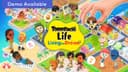
Most life sims hand you a character and a to-do list. Tomodachi Life: Living the Dream hands you a cast and withholds the script. It is a Nintendo game, and its premise is simple: fill an island with Mii characters, then watch what they do when left alone.
You define the population. Residents can be modeled on you, your friends, your family, celebrities or fictional characters, and both their appearance and personality are customizable. Personality is the setting that matters most. The game runs each resident’s daily life without direct player control, so the traits you assign decide which friendships form, which romances start and which arguments break out. You act as caretaker, not puppeteer: you answer requests, help with problems, keep residents happy and shape the island and the spaces where they live and gather.
That design puts it in an unusual corner of the market. In tone it sits with cozy life sims, but its reward is neither a paid-off house nor an optimized farm. The reward is the unscripted, often absurd scene that follows when two personalities you chose collide.
The appeal is clear, with caveats. Praise tends to focus on the surreal humor, the depth of Mii customization, the creative freedom and the unscripted interactions between residents. The repeated objections are strict limits on sharing creations, online and social features that feel limited for a modern life sim, and a daily routine that can turn repetitive and shallow over time. That tension shapes the verdict.
Key features
- Fully customizable Miis: Residents can be built from scratch or modeled on real people and fictional characters, with control over both looks and personality.
- Unscripted resident lives: Miis make friends, fall in love, argue and make up on their own, with no direct player control.
- Caretaker role: The player answers residents’ requests, helps with their problems and keeps them happy.
- Island and space customization: Players shape the island itself and the areas where residents live and gather.
- Evolving relationships: Bonds between residents change over time, so the island’s social map keeps shifting.
Analysis
Casting Is the Real Game
Removing direct control is the decision every other system answers to. In most life sims, the player acts through a character: you walk, build and buy. Here the player acts through casting. The Mii editor, where you set appearance and personality, does the job a skill tree or level editor does in other games, because the traits chosen there determine the drama that follows.
This is a smart inversion. Emergent stories hit harder when the people in them mean something to the player, and the game lets residents be modeled on friends, family, celebrities or fictional characters. An argument between two generic presets is background noise. An argument between a resident based on your sibling and one based on a movie villain comes with its own setup. The design gives back more the more you invest, because much of the writing comes from the player’s social circle and pop-culture knowledge.
The cost is a cold start. A player who fills the island with quick, low-effort Miis gives the system weak inputs and should expect weaker results. The game asks for creative effort up front, and that suits some audiences much better than others.
The Caretaker Loop
Moment to moment, the player’s actions are deliberately narrow: answer requests, help with problems, keep residents happy. That makes the core loop a maintenance loop, closer to tending a garden than clearing a level. It has little friction and fits short, frequent check-ins, and it gives an observation-first premise enough interaction to keep the player involved.
Narrow actions have a price. When most of what the player does is respond, variety has to come from what the game presents, and a repetitive daily routine is the predictable result. Requests structure each day, and relationships are meant to make each day different. When the social dynamics are moving, the routine frames the comedy. When they stall, the routine is all that’s left, and a checklist of residents’ needs is thin material for a game asking for regular check-ins.
Relationships as Progression
The long-term hook is social. Relationships between residents change over time, so the island’s network of friendships, romances and grudges keeps redrawing itself. Progress is measured in who is talking to whom, not in levels or currency. That is a fresh way to give a sim forward motion.
It also explains the depth complaint. A system built for watching gives fewer tools to players who want to plan, optimize and chase goals, and the game is shallow over the long term for players who want a deeper life sim. That reads as a deliberate trade, not an oversight: the design favors surprise over mastery. Players should know which of those they want before committing.
Comedy by Combination
The praised humor, absurd and surreal, comes from putting mismatched personalities together, not from written punchlines. Unlikely friendships and romances are the signature moments, and they work because the game lets incompatible personalities share space and react to each other. Comedy generated by a system wears off with repetition. A strange pairing is funny the first time, and the fifth version of a similar moment is less so. Adding to or reshuffling the cast is the main way to refresh it, which leads back to the casting design and the effort it demands.
Sharing: The Self-Inflicted Wound
The most serious flaw sits outside the island. The game’s appeal rests on creativity: recognizable Miis, personalized spaces and a cast drawn from your own life. Yet it places strict limits on sharing those creations, and its online and social features are limited. Creative sandboxes usually last longer when players can trade creations, because other people’s work becomes fresh material for your own island. Restricting that exchange removes one of the best fixes for the repetition problem above. The social layer feels underpowered for a modern life sim, and that undercuts the game’s best idea.
Visuals & performance
The Mii art style is a practical choice as much as an aesthetic one. Simple, rounded avatars with exaggerated expressions are easy to read at a glance, which matters in a game where the payoff is watching a reaction. Low-detail faces also turn likeness into suggestion: a Mii modeled on a celebrity or cartoon character calls up its source through a few traits. That caricature effect helps the comedy. The trade-off is a low ceiling on visual spectacle, since the style favors clarity and charm over detail.
Because the island and its shared spaces are customizable, much of the game’s look is made by the player, which fits a design built on ownership. In a caretaker game, the interface has one main job: show requests, problems and relationship changes quickly so the player can respond and go back to watching. That is the standard it should be judged against.
Performance demands should be modest. A life sim built around watching and responding to requests, not quick reflexes, is light on hardware, and frame-rate precision matters less here than in almost any other genre.
Platform nuances
- Platforms: Nintendo
The platform question is straightforward. The caretaker loop suits short check-ins, while the comedy suits group viewing. Input demands are low because the player responds rather than controls a character, so a comfortable controller is the main consideration.
Value is the bigger platform-level issue. The game leans on player creativity to carry the experience, and the limits on sharing and social features undercut that.
Final verdict
The clever part of Living the Dream is the casting hook: let players build the island, then take away direct control and let personality clashes generate the comedy. That produces absurd, unscripted moments, and personality customization gives those moments weight because the residents can be anyone the player knows. The problem is everything around that idea. The narrow caretaker loop invites repetition. The long game offers little to players who want deep systems. The strict sharing limits and limited online features cut off the community exchange that could have kept the island fresh.
Those gaps matter because the game asks for creative effort up front and gives little structure in return. We recommend it only for players who approach it as a sitcom they cast themselves and are willing to put real effort into building that cast. Players looking for a deep management sim with long-term goals will find too little here.
Reviewed by the Rankeno Puzzle & Casual Desk. Scores are out of 10; the overall score is the desk’s editorial judgement, informed by the four sub-scores above. How we review