

Overview
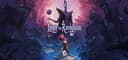
Every few years a mid-budget game shows up with an idea so specific, so unwilling to be described in a single sentence, that you have to respect the pitch meeting where someone said yes. Lost in Random is that game. Swedish studio Zoink — now folded into Thunderful — built a gothic fairy tale where a girl named Even hunts for her abducted sister across a kingdom governed entirely by chance, and where the core combat system asks you to shatter crystals with a slingshot, spend the energy on cards drawn from a deck you assembled yourself, then throw a sentient six-sided die to freeze time and determine how many of those cards you’re allowed to play.
That is not a genre. That is an argument.
It arrived under EA Originals, the publisher’s indie-adjacent label that gave us A Way Out and It Takes Two — a program that exists precisely to fund the kind of structural weirdness a mainline EA studio would sand off in pre-production. The money bought two things that matter. First, Ryan North, the Eisner-winning writer behind Squirrel Girl and Dinosaur Comics, whose dialogue is the reason this world lands instead of curdling into hot-topic gloom. Second, an art department given permission to commit fully to a stop-motion, Tim Burton-by-way-of-Scandinavia aesthetic that holds up years later.
The market received it accordingly: a 78 on Metacritic sits in respectable-but-divided territory. That number is the whole story. Judged purely as a combat loop, the game runs thin past its midpoint. Judged on its characters, its writing, and the audacity of the concept, it’s charming. Both readings are correct, and which one weighs more for a given player determines how much of this lands.
Key features
- Dice-Gated Card Combat: Even’s slingshot shatters crystals on enemies, generating energy that draws cards. Throwing Dicey freezes time entirely; the roll dictates how many card-pips you can spend on weapons, traps, buffs, or summons before the world unpauses. It is a tactical pause layered inside an action game, and the core of it works.
- A Deck You Actually Build: Cards are bought, earned, and quested for. You curate a compact deck that shapes your entire approach — cheap weapon-spam, expensive summon-and-hide, or a trap-heavy control build. Dicey’s faces are upgradable, letting you skew the randomness in your favor.
- Six Realms, Six Rulesets: The kingdom of Random is carved into distinct zones, each with its own visual identity, social order, and relationship to chance — from a slum where nothing is decided by dice to a gleaming capital where everything is.
- Ryan North’s Script: A large cast of NPCs who are all someone, delivered with genuinely strong voice direction. The narrator alone is worth the price of entry.
Analysis
The Gameplay Loop
Combat is where the design thesis lives, so it’s worth being precise about how the loop is built.
Fights take place in board-game arenas — the game literally frames them as tabletop dioramas, tiles and all — and begin with zero cards in hand. Even is nearly defenseless. Her only tool is the slingshot, and the only job is to find the glowing crystals studding each enemy and pop them. Each crystal yields energy. Energy fills the hand. When there are cards worth playing, Dicey gets thrown, time stops, and the roll comes up: one through six, spend that many pips, close the menu, and watch the decisions resolve in real time.
The dodge-and-harvest phase is the best part of the system, and it deserves more credit than it gets. It inverts the usual action-game rhythm. The player is not looking for openings to attack; they are looking for openings to earn the right to attack. It makes Even feel appropriately small — a kid with a rock and a slingshot against clockwork horrors — and it makes the moment the deck comes online feel like a genuine turn of fortune rather than a cooldown expiring.
The problem is the back half.
Where It Thins
The system has a ceiling, and the game reaches it fast. Enemy variety is the culprit. Once the handful of archetypes are internalized — the shielded one, the ranged one, the swarm, the big one with crystals on its back — the crystal-harvesting phase stops being a read and starts being a chore. The crystals are always where you expect. The dodge timing never changes. Every fight becomes executing a known sequence to unlock a card draw planned three fights earlier.
The deckbuilding is supposed to be the answer to that, and it partly is. Committing to a summon-heavy build changes positioning priorities; a trap build turns arenas into puzzles. But the card pool isn’t deep enough to sustain repeated reinvention, and the game never applies real pressure to make you rebuild. A system with this much theoretical expressiveness needed encounter design that punished a stale deck, and it doesn’t have one. The build settled on by the midpoint will carry through the credits.
Difficulty compounds this. The back half spikes unevenly — a mid-realm fight that walls players, followed by a set piece that folds immediately — which reads less as an intentional curve than as a team running out of tuning time. Combined with a mostly linear critical path and almost no replay incentive, the tail end of the campaign is where enthusiasm goes to cool.
The Parts That Carry It
What saves the runtime is everything around the fighting. Exploration is light — chat with eccentrics, solve a modest puzzle, hunt a collectible — but the writing is dense enough that talking to a random townsperson is reliably a better use of five minutes than most open-world side content. North writes children’s-adventure dialogue with actual teeth: jokes that assume you’re paying attention, grief handled without a sermon, and a central relationship between Even and Dicey that earns its ending.
Dicey is the achievement here. A silent die, animated with enough personality to sell a friendship, functioning simultaneously as narrative device, combat resource, and randomness metaphor. That’s tight design. The game’s central theme — that chance is a system the powerful rig and the poor live under — is baked directly into the mechanic a button press invokes. Very few games get their theme and their verb to agree this completely.
Onboarding and Friction
The opening asks a lot. It teaches a slingshot, a card economy, a dice-pip budget, and a time-stop UI simultaneously, and the tutorial pacing is generous to the point of drag. The system is built to click around the second realm, and the design never asks the player to juggle more concepts after that.
Visuals & performance
The art direction is the least arguable thing about this game. Hand-crafted, slightly wrong proportions; a stop-motion stutter in the character animation that suggests puppetry without ever being annoying; a palette that shifts hard between realms so that arriving somewhere new registers instantly. It looks like a Laika film that got funding for a video game, and the six-realm structure gives the artists an excuse to swing between charcoal-grey slum and neon casino excess.
The UI mostly earns its keep. Freezing time to open a card hand is a hard interface problem — switching from twitch input to deliberate reading — and the pip-budget display makes the constraint legible at a glance. Where it stumbles is card text density. Reading four effect descriptions under self-imposed time pressure is a lot on any screen, and tiring on a small one.
Technically, a stylized game of this scope is light on hardware, and the art carries the presentation on any platform. The Switch version is the compromised one: crowded arenas are exactly the kind of scene that stresses modest handheld silicon, and the card-text density becomes a squint in handheld mode. Not a dealbreaker in a game where combat pauses on command, but a cost in exactly the fights where it’s felt most.
Platform nuances
Steam is the version to buy if you have the choice. Desktop resolutions make card text trivially readable, and the crystal-harvesting phase — the one part of combat that demands real precision — benefits from the headroom a higher framerate provides. A controller is the right input regardless; mouse-and-keyboard is supported but the slingshot’s targeting is tuned for stick aim and the card menu is built for a d-pad. Nothing here is demanding on modern hardware, and the game’s stylized geometry means it scales down gracefully on handheld PCs.
Nintendo Switch is the more thematically appropriate home and the more compromised one. A storybook adventure with heavy dialogue and a pause-driven combat system is close to ideal handheld material — it’s built for short sessions, which is roughly how the realms are structured anyway. The trade is real, though: crowded arenas are the Switch’s weak spot, and that card-text density becomes an actual squint in handheld mode. Docked, treated as a couch game, most of the objection evaporates.
Final verdict
Lost in Random is the kind of ambitious near-miss that’s easier to admire than to recommend outright. It gambled on a hybrid nobody asked for, executed the first half of that hybrid brilliantly, and then discovered it didn’t have the enemy variety or card depth to sustain the second half. That’s a content problem, not a design problem — and content problems are what happen to studios working at this budget with this much ambition.
The divided critical reception isn’t a mystery. A 78 on Metacritic reflects a game that is brilliant on its own terms and uneven on the terms most action games are judged by. Go in for Even, Dicey, and a kingdom where the poor live at the mercy of a rich woman’s dice, and the game delivers everything it promises — with fights that overstay. Go in expecting a combat system that keeps unfolding, and the fourth realm will tell the truth.
Full price is a stretch for most people. On sale, it’s an easy recommendation and a reminder that EA Originals, whatever else the publisher does, occasionally funds something with a genuine idea in it.
Reviewed by the Rankeno Action Desk. Scores are out of 10; the overall score is the desk’s editorial judgement, informed by the four sub-scores above. How we review