

Overview
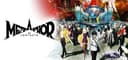
For the better part of two decades, Atlus has been synonymous with the urban supernatural—teenagers in plaid trousers fighting demons in the shadows of Tokyo’s skyscrapers. With Metaphor: ReFantazio (ATLUS/SEGA, released October 10, 2024, $69.99 on Steam), the “Studio Zero” dream team (director Katsura Hashino, designer Shigenori Soejima, and composer Shoji Meguro) has finally broken cover from the Persona shadow. This is a sprawling, ambitious attempt to show what a high-fantasy RPG can look like when a studio stops playing it safe with sequels and predictable tropes.
Set in the United Kingdom of Euchronia, the game discards the comfortable “chosen one” narrative for something far more caustic and relevant: a Royal Tournament triggered by a dead king’s magic. You play as a protagonist from the Elda tribe—a marginalized group viewed with suspicion and vitriol—vying for the throne not through divine right, but by winning the hearts of a fractured populace. It is a political thriller dressed in the robes of an epic quest, and it positions itself as a direct challenge to the genre’s status quo.
The market positioning here is clear. Atlus is no longer content with being the “niche” alternative to Final Fantasy. They are swinging for the heavy-weight title, utilizing every lesson learned from Persona 5’s stylish UI and Shin Megami Tensei’s brutal combat to create a cohesive, epic-scale adventure. By leaning into themes of societal anxiety and institutional racism, Metaphor feels less like a Tolkien-clone and more like a commentary on our own polarized reality, wrapped in some of the most striking art direction to ever grace a screen.
Key features
- The Archetype System: A sophisticated evolution of the “job” system, where characters manifest heroic embodiments of their hearts. With dozens of iterations, it allows for granular party customization without the friction of permanent class locks.
- Press Turn Evolution: The signature turn-based combat returns but integrates real-time action elements, allowing players to dispatch weaker “trash” mobs instantly on the field without entering a separate battle screen.
- The Royal Tournament Calendar: A refined time-management system where every day counts. Players must balance dungeon crawling with “Social Bonds” and building “Royal Virtues” (Courage, Wisdom, Tolerance, etc.) to gain the public’s favor.
Analysis
The Archetype Engine
The brilliance of Metaphor: ReFantazio lies in its Archetype system. Unlike the “Persona” mechanic, which tied power primarily to the protagonist, Archetypes are democratized. Every party member can tap into these heart-manifestations, provided you’ve spent the “MAG” (a secondary currency) to unlock them. This creates a strategic sandbox that is both deep and forgiving. You are building a synergistic team that can be hot-swapped to exploit specific boss weaknesses, not just picking a “Healer” or a “Tank”.
The integration of Synthesis Skills—powerful moves that require two specific Archetypes to be active—adds a layer of tactical planning to every turn. Do you run three “Seekers” for maximum agility, or do you diversify to unlock devastating cross-class combos? The game forces these decisions constantly, and because swapping classes is relatively low-friction, the experimentation loop is addictive rather than exhausting.
The Political Calendar
The “Calendar System” has been an Atlus staple for years, but here it feels significantly more purposeful. In Persona, it often felt like a countdown to the next exam; in Metaphor, it is a race for the crown. Traveling between cities in your “Gauntlet Runner” (a massive, mechanical land-ship) consumes days, forcing you to prioritize which towns to visit and which supporters to cultivate.
This creates a palpable sense of onboarding friction for players who want to see everything, but it’s a necessary friction. It makes the world feel vast and your time feel precious. The “Bonds” you form with allies are political alliances that unlock critical combat passives and new Archetype branches. The writing here is sharp, avoiding the mawkish sentimentality that sometimes plagues JRPGs, focusing instead on how these individuals navigate a world that is actively trying to crush them.
Combat Fluidity & The “Humans”
One of the most significant quality-of-life improvements is the Squad/Overworld combat split. By allowing players to attack and defeat lower-level enemies in real-time on the field, Atlus has effectively designed away the “grind” associated with backtracking through earlier dungeons. It keeps the pacing brisk. When a full “Squad” battle does begin, the Press Turn system still delivers for turn-based combat—rewarding tactical exploitation of weaknesses with extra actions, while punishing mistakes with brutal efficiency.
The enemies themselves—the “Humans”—are a masterstroke of design. These aren’t your typical orcs or goblins; they are grotesque, Bosch-inspired monstrosities that look like they’ve bled out of a surrealist painting. Fighting them is designed to feel unsettling, reinforcing the game’s core theme that the true “monsters” are often those who look most like us.
Visuals & performance
Visually, Metaphor is a triumph of stylistic conviction over raw polygon count. Shigenori Soejima’s character designs are impeccable, but it’s the UI that steals the show. The menus are a riot of “painted” textures and dynamic transitions that make even a simple shop purchase feel like an event. It is arguably the most beautiful interface in gaming history, period.
On the technical side, a stylized 2D-heavy art direction of this scope is light on hardware demands, and the design leans into that: the environments, while sometimes lacking the high-fidelity textures of a Naughty Dog production, compensate with a coherent, vibrant aesthetic that makes Euchronia feel lived-in and ancient. Shoji Meguro’s score, which swaps his usual acid-jazz for monastic chanting and aggressive orchestral swells, is nothing short of transcendent.
Platform nuances
On Steam, the package is built for PC play, supporting a wide range of resolutions and scaling across different hardware configurations, with internal rendering options that allow for extra crispness on capable rigs.
The turn-based nature of the combat and the “daily life” segments are well suited to handheld play, and the game’s native controller support reflects a genre that usually treats PC inputs as an afterthought—the keyboard mapping is surprisingly competent too.
Final verdict
Metaphor: ReFantazio is the rare “prestige” game that actually lives up to its pedigree—it’s the kind of release that earns its place among the highest-rated RPGs of its generation. It is a bold, uncompromising epic that respects the player’s intelligence and time. By successfully merging a deep political narrative with a refined combat engine, Atlus hasn’t just made another great RPG—they’ve laid claim to the throne of the entire genre. We rate it Outstanding, and we recommend it without hesitation.
Reviewed by the Rankeno RPG & Adventure Desk. Scores are out of 10; the overall score is the desk’s editorial judgement, informed by the four sub-scores above. How we review