

Overview
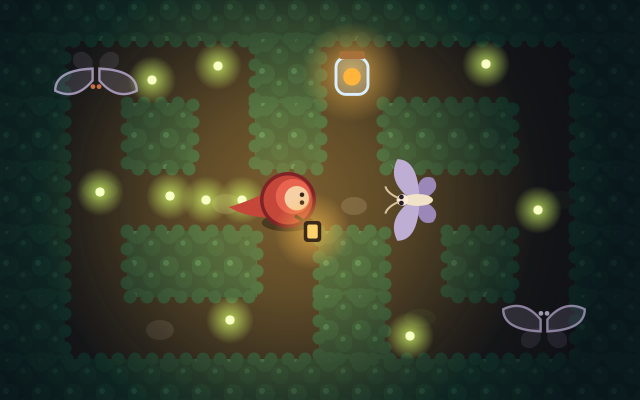
What does a rescue mission look like when it has already failed? Annihilated, developed and published by Death Kumiai, opens on that question. The player is the last survivor of a rescue party sent into a cursed dungeon. The missing adventurers are still down there, physically and mentally broken, and only one of them can be carried out. Everything else in the game hangs off that choice.
Released on Steam on November 9, 2026, the game sits at a crowded intersection: roguelite dungeon crawler, deckbuilder, and anime visual novel. Most hybrids of this kind treat story as connective tissue between runs. Annihilated inverts the ratio. Its script is long, split across four partner routes with multiple endings each, closer to a full-sized visual novel on its own. The turn-based card battling is substantial, but it serves the narrative.
The roguelite label can mislead. Anyone expecting a punishing, run-based score-chaser will find the structure softer than the tag suggests. Anyone who wants a dark character drama with a mechanically interesting battle system attached is the target audience. A demo covering all four partners up to the first boss, with save carry-over, lets players settle the question for themselves.
Key features
- One-of-four rescue premise: Four partner characters, each with a separate story route and multiple endings. Choosing one means leaving three behind.
- Breakable card combat: Weapons and items become limited-use cards that lose durability and eventually shatter.
- Curses: Shattered gear leaves behind a resource that can be spent to undo bad outcomes, turning loss into insurance.
- Equipment theft: Defeating enemies in specific ways lets the player steal their gear, so how a fight ends matters as much as whether it is won.
- Two battle styles: One timing-based, one probability-based, chosen by the player.
- Soft roguelite structure: Dungeon crawling follows roguelite conventions, but death resets only to the current floor.
- Demo with save carry-over: All four partners are playable up to the first boss, and progress transfers to the full game.
Analysis
The Premise as a Mechanic
The central design decision here is structural. Limiting the rescue to one adventurer turns route selection, a staple of visual novels, into the moral weight of the whole game. A typical route-based visual novel asks which character the player likes best. Annihilated asks who gets left in the dungeon. That framing gives the four-route structure a purpose beyond content volume, and it makes replaying feel like revisiting a decision instead of ticking off a checklist.
Multiple endings per route extend this further. Spread across four partners, each route has room for a full arc, and the branching suggests that the rescue itself does not guarantee a good outcome. For a game about damaged people, that is the honest approach.
Combat: Scarcity by Design
The card system is built on attrition. Weapons and items are converted into limited-use cards, each use costs durability, and gear eventually shatters. This solves a familiar deckbuilder problem: the solved deck. In most card battlers, a player finds an engine and repeats it until the credits. Here, the engine wears out. The best card in hand is also a countdown, and every strong play raises the question of whether the fight in front of the player deserves it.
Durability systems often fail because they punish without compensating. Annihilated’s answer is Curses. Shattered gear leaves them behind, and Curses can be spent to undo bad outcomes. The loop is neat: breaking equipment hurts in the moment and pays out as a safety net later. It converts a frustration mechanic into a pacing mechanic, and it fits the theme. In a cursed dungeon, ruin is the currency.
Equipment theft closes the circle. Because gear is consumable, the supply has to come from somewhere, and tying it to defeating enemies in specific ways gives each encounter a secondary objective. Winning is the baseline. Winning the right way restocks the deck. This is the kind of layered incentive that keeps turn-based combat from collapsing into routine.
Two Battle Styles
Offering a timing-based style alongside a probability-based one is a smart accessibility decision, and a telling one. It acknowledges that the audience for a long visual novel and the audience for execution-heavy combat overlap only partly. Players who want to earn outcomes through input precision can do so, and players who prefer to manage odds can treat fights as pure tactics. The risk is balance. Two resolution systems rarely produce identical difficulty curves, and one will likely become the accepted “correct” way to play.
How Roguelite Is It?
Not very, and that is deliberate. Returning the player to the floor where they fell removes the genre’s defining penalty. The benefit is obvious: a story this long cannot afford to have its pacing destroyed by repeated full restarts. The cost is equally clear. Without meaningful run loss, the tension that makes roguelites compelling is thinner, and the durability system has to carry the stakes largely alone. COGconnected’s observation that it plays more like a JRPG holds up against the design. We consider that a fair trade for this particular game, but the roguelite tag sets an expectation the structure does not fully meet.
Visuals & performance
The presentation follows an anime visual novel style, and its defining trait is contrast: cute character art set against grim subject matter. That dissonance is a sound choice. Soft, appealing designs make the damage done to these characters harder to dismiss, where a uniformly bleak palette would let the horror become wallpaper.
The interface has a harder job than most. It must communicate card durability, Curse reserves and theft conditions at a glance, on top of standard deckbuilder information. How well it manages that load determines whether the attrition system reads as tension or as bookkeeping.
On performance, a 2D, turn-based, text-heavy game of this scope should be light on hardware by design. The one area where responsiveness matters is the timing-based battle style, where input latency would be felt directly. The probability-based style avoids the issue entirely.
Platform nuances
Annihilated is a Steam release. Visual novels and card battlers both suit handheld play, so the platform scope is narrow.
- Input: Card selection and menu-driven dungeon crawling map naturally to mouse and keyboard.
- Pricing: $15.29 on Steam. The demo is the practical way to judge value before buying.
- Demo parity: The demo includes all four partners up to the first boss, and its save carries into the full game, so time spent sampling routes is not wasted.
Final verdict
Annihilated works because its systems and its story make the same argument. Gear breaks. People break. What is left over, Curses in one case and a single survivor in the other, is what the player has to work with. That coherence is uncommon in genre hybrids, which more often staple a narrative onto a card game and hope the seams hold.
The compromises are real. The roguelite structure is closer to a framing device than a discipline, and the reading load will filter out a share of the deckbuilder audience. Offering two battle styles is a generous decision that carries balance risk. None of this damages what the game is trying to be: a long, grim, character-led RPG with combat built on scarcity.
We recommend it to story-driven players who accept the light roguelite structure, with the demo as the practical first step. For a game about choosing whom to save, letting players meet all four candidates before buying is both sensible marketing and sensible design.
Reviewed by the Rankeno RPG & Adventure Desk. Scores are out of 10; the overall score is the desk’s editorial judgement, informed by the four sub-scores above. How we review