

Overview
Most “co-op” games are single-player experiences with a second controller bolted on. One person carries. The other tags along, revives the corpse, and pretends they contributed. BOKURA has no interest in that arrangement. This is a game that literally cannot be played alone—not “shouldn’t be,” not “is better with a friend,” but structurally, mechanically impossible without a second human being on a second device, talking in real time.
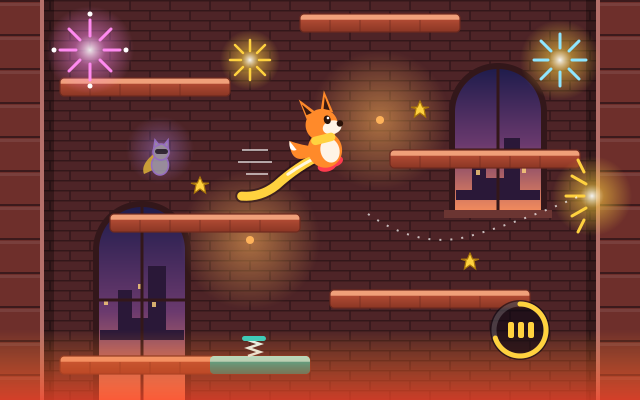
Developed by Kodansha Ltd. and released on August 8, 2023, BOKURA is a side-scrolling puzzle adventure built around a single, audacious idea: the two players are not looking at the same game. The premise is simple storybook fare—two runaway boys wander into a forest, find a dead deer, black out, and wake up with their perceptions of reality torn in half. From there, the concept does the heavy lifting. One player sees a hand-drawn picture-book world soft with animals and pastel whimsy. The other sees a cold industrial hellscape of machines, robots, and rust. Same level. Same puzzle. Completely different information.
The result is a game that positions itself in a rarefied corner of the market alongside titles like It Takes Two and We Were Here, but it’s more austere and more demanding than either. This isn’t a slick AAA co-op spectacle. It’s a scrappy, pixel-art indie with a mean psychological streak and a runtime that respects an evening. The question isn’t whether BOKURA is inventive—it obviously is. The question is whether its purity of vision leaves anyone stranded on the wrong side of the screen.
Key features
- Asymmetrical Dual Perception: The signature hook. Each player sees a different visual reality—one whimsical and animal-filled, the other industrial and mechanical—laid over the same underlying puzzle geometry. Neither view is complete.
- Mandatory Verbal Communication: Because no single screen tells the whole story, players must constantly describe what they see aloud to align symbols, hit switches, and dodge hazards. Talking is the gameplay.
- Two-Device, Online-Only Co-op: No split-screen. No single-player. No local couch mode. Each player needs their own device and their own copy of the world.
- Branching Choices & Multiple Endings: Critical narrative decisions require mutual agreement, bending the story down divergent paths toward several distinct conclusions.
- Retro Aesthetic, Dark Heart: 8-bit-inspired pixel art and a nostalgic soundtrack wrapped around a surprisingly bleak psychological narrative.
Analysis
The Gameplay Loop
Strip BOKURA to its frame and the loop is elegant: observe, describe, coordinate, act. One player reaches an obstacle and sees three symbols on screen. The partner sees three different symbols on theirs. Somewhere in the gap between the two descriptions lies the solution, and the only way to find it is to speak—carefully, precisely, and often repeatedly, because “the thing on the left” means nothing when one player’s left is an industrial nightmare and the other’s is a cartoon rabbit.
This is where BOKURA does something few games attempt. It makes language the controller. Movement is trivial—walk, jump, interact. The actual mechanical complexity lives entirely in the conversation. A locked door isn’t a lock-picking minigame; it’s a negotiation between two people who can’t see each other’s evidence. When it clicks, the payoff isn’t a satisfying animation. It’s the shared “oh—OH” of two brains snapping into sync. That feeling is the entire product, and the design is built to manufacture it.
Where the Design Cuts Deep
The asymmetry isn’t decorative. It reshapes the emotional texture of play. Players develop a private shorthand with their partner—descriptive tics, sense of direction, tolerance for bad guesses. A run through BOKURA is as much a portrait of a relationship as it is a puzzle sequence, which is precisely why the game’s darker narrative turns can land as hard as they do. When the story asks the two boys to make a wrenching choice and demands mutual agreement on it, the friction is real. Two people are, briefly, arguing about ethics over a headset. Few games earn that.
The Cracks in the Mirror
But an idea this rigid comes with a cost, and BOKURA doesn’t fully escape it. The most credible criticism of the design is mechanical imbalance in later stages. The asymmetry that makes the early puzzles sing can curdle into lopsidedness, where one player becomes the active problem-solver and the other is reduced to a live-action information feed, reading symbols off a screen while their partner does the interesting part. Co-op that engages both people equally is the entire promise here. When a puzzle breaks that promise, it doesn’t just feel like a dull stretch—it feels like a betrayal of the game’s own thesis.
Then there’s the onboarding friction of coordination itself. BOKURA assumes two things: a second willing human, and a functioning external voice channel. The game ships with no in-game voice chat. Players are expected to run Discord, or a phone call, or sit in the same room, entirely on their own initiative. For a title whose core loop is verbal communication, outsourcing the voice layer to a third-party app is a genuine design gap. “Works, if you set up the plumbing yourself” is a lower bar than a game this thoughtful should be clearing.
The user experience flow, once past setup, is clean and unhurried. Levels are digestible. The difficulty curve trends upward without cliff-edges, and the branching choices give the back half a narrative propulsion that pure puzzlers often lack. This is a tight, deliberate experience—not a sprawling one—and it’s better for its restraint.
Visuals & performance
The pixel art is doing more work than its retro modesty lets on. The two visual realities function as tonal arguments, not reskins. The picture-book world is warm, rounded, alive. The industrial world is angular, sterile, faintly menacing. The cleverness is that both depict the same hazards—so the animal-world player’s charming pond is the machine-world player’s vat of coolant, and only by comparing notes do players learn which one will kill. It’s skeuomorphism turned into misdirection, and it’s smart.
The nostalgic soundtrack underscores the psychological undertow without oversignaling it. On a technical level, the game is light, unfussy, and undemanding—a 2D game of this scope is easy on hardware, and the fixed-perspective, low-resolution presentation asks little of any device. The performance conversation for BOKURA isn’t about frame rates. It’s about latency and sync—whether both players’ worlds stay aligned in real time. The entire premise depends on it, because a puzzle built on shared truth can’t survive two players seeing desynced states.
Platform nuances
BOKURA spreads across iOS, Android, and Nintendo Switch for a paid $3.99, and the cross-device flexibility is a real strength given the two-screen requirement—one player on a phone, the other on a Switch, is a perfectly valid setup.
- Nintendo Switch: A natural fit for the couch-and-handheld crowd, though remember: no local play and no split-screen means two Switches or a Switch-plus-something. Portability suits the bite-sized level structure well.
- iOS & Android: The touch controls are inoffensive precisely because the mechanical demands are so low—players are mostly reading and talking, not executing tight platforming. Mobile is arguably the most convenient way to be Player Two while a partner plays on a bigger screen. The catch is coordination: juggling a voice call and the game on a single phone is clumsy, which drags the missing in-game voice chat back into the spotlight.
Across all three, the shared friction is identical—players supply the second human and the voice channel themselves. The platform doesn’t change the deal.
Final verdict
BOKURA is a game with one idea, executed with enough conviction that the idea becomes the entire experience—and mostly justifies it. Kodansha didn’t hedge. They built a puzzle adventure that is physically unplayable alone and made the act of talking to another person the central challenge. When it works, nothing else on the market feels quite like it. The dual realities work as a machine for generating trust, frustration, and genuine moments of mutual understanding that most co-op games only gesture at.
It isn’t flawless. The late-game imbalance is a real dent in a design that lives and dies by mutual engagement, and shipping a communication-driven game without built-in voice chat is a puzzling omission that pushes setup friction onto the player. But these are the failings of a game reaching for something specific and occasionally overreaching—not the failings of a game with nothing to say. We rate it a solid Good: recommend it to the right pair of players, and skip it for everyone else. BOKURA has plenty to say. It just needs someone to say it to.
Reviewed by the Rankeno Action Desk. Scores are out of 10; the overall score is the desk’s editorial judgement, informed by the four sub-scores above. How we review