
Overview
The top-down action-adventure never went away. It just got meaner. Independent studios have spent years taking the overworld-and-dungeon grammar of early Zelda and bolting Souls-like conventions onto it: stamina meters, punishing bosses, healing as a finite resource. Tearscape, from NERDS TAKE OVER, belongs squarely to that lineage and makes no attempt to hide it. Its pitch is a Gothic world drawn in Game Boy Color-inspired pixel art, a stamina bar that governs every swing and dodge, and a small stock of healing flasks that turns recovery into a tactical decision instead of a reflex.
What sets its positioning apart is scope. The game asks for focus over a short commitment, not a second job, and that makes its challenge easier to approach. It is a paid release at $14.99, available on Steam, Nintendo Switch, iOS and Android; the store rating is 4.3 out of 5 from six ratings, a sample too small to carry much weight.
The feature list covers the expected bases with achievements, cloud saves and controller support, then adds something less common for the genre: local two-player co-op, which on mobile requires two connected controllers.
Key features
- Stamina-Managed Combat: Strikes and dodges draw from the same meter, so offence and defence compete for one resource and every action carries a cost.
- Rationed Healing Flasks: A limited supply turns each heal into a budgeting decision rather than a panic button.
- Differentiated Weapons: Multiple weapons trade off power, range and speed, letting players shape their approach to each encounter.
- Stat Upgrades: Character stats improve over the course of the adventure, offering a progression path alongside skill.
- Interconnected, Non-Linear Map: Branching paths, shortcuts and secret areas link the world into one knotted whole instead of a string of levels.
- Hidden Dungeons with Dual-Purpose Tools: Each dungeon brings its own enemies, challenges and items, including tools that both expand combat options and unlock previously inaccessible routes.
- Grotesque Bosses: Large, pattern-driven encounters built around timing and strategy.
- Eccentric NPCs: Characters offer guidance, request help or pursue hidden agendas of their own.
- Local Co-op: Two-player couch co-op on supported platforms, with a two-controller requirement on mobile.
Analysis
Combat: Stamina Is the Real Health Bar
The stamina meter is the most consequential design decision in Tearscape, because it binds attack and evasion to a single pool. Swing too greedily and there is nothing left to dodge with; dodge too nervously and the opening to strike closes. This is the core Souls-like bargain, and it translates well to a top-down camera, where the full arena is visible and enemy positioning reads at a glance. The system punishes button-mashing and rewards players who learn an enemy’s rhythm before committing.
The fundamentals are sound on paper, but the design depends on precision. A difficult action game runs on a contract of fairness: players accept death when they can see the mistake that caused it. A combat model built on tight dodges and committed strikes leaves no margin for collision that reads poorly or hits that fail to register cleanly. Precision-dependent design turns any inconsistency into frustration rather than challenge, and this is the area where Tearscape’s ambitions and its execution appear furthest apart.
The Flask Economy
Limiting healing flasks does more than raise difficulty. It changes how the whole world gets read. With recovery scarce, every corridor becomes a cost calculation, and every shortcut gains value because a shorter route through known territory means fewer chances to bleed health on the way back to danger. The interconnected map and the flask limit reinforce each other in a way that feels deliberate, and the pairing gives exploration stakes beyond loot.
Weapons and Growth
The power, range and speed triangle is a classic structure, but it earns its place here through its interaction with stamina. A slow, heavy weapon makes each committed swing a larger gamble; a fast, short-reach weapon demands closer, riskier positioning. Weapon choice becomes a question of temperament as much as damage output.
Stat upgrades serve a second function: they act as a pressure valve. Players who hit a wall can invest in their character rather than grinding their reflexes alone. Given that uneven difficulty is one of the game’s recurring problems, that valve matters, though stats can only soften a spike; they cannot smooth a poorly tuned encounter.
World Structure: Zelda’s Skeleton, Metroidvania’s Locks
The world borrows its skeleton from top-down Zelda, with an overworld threaded by branching paths, shortcuts and secret areas, and its lock-and-key logic from the Metroidvania. Hidden dungeons each introduce their own enemies, challenges and items, and the smartest choice is that their tools pull double duty: they expand combat options and open routes that were previously sealed. Every acquisition pays off twice, once in a fight and once on the map, which keeps the backtracking loop purposeful.
That same loop exposes the game’s most structural weakness. The map screen is vague, and in a non-linear world built on revisiting old areas with new tools, the map is load-bearing infrastructure. A world this interconnected depends on players remembering which sealed door matches which new item; a vague map offloads that bookkeeping onto memory. Combine it with a movement design that leans on sprinting, and backtracking shifts from rediscovery to commute. Neither flaw breaks the design, but both erode the payoff the dual-purpose tools are meant to deliver.
Bosses and the Difficulty Curve
The bosses are the strongest argument for the game: large, grotesque encounters where timing, stamina and flask management converge into their sharpest form. These fights are the reason to play.
The space between them is thinner. The enemy roster is limited, which flattens the stretches between set pieces. More troubling is the difficulty curve. Trap damage is a blunt tool; when it cannot be avoided, it violates the genre’s founding promise that skill can answer every threat. Late-game encounters that overwhelm instead of test suggest tuning that escalates enemy count in place of complexity.
NPCs and Narrative
The eccentric cast follows Souls tradition: characters who guide, ask for help or quietly pursue their own agendas, rewarding players who pay attention. The trade-off is clarity. The story is oblique, and that divides audiences. Players who enjoy assembling a world from fragments will find material to work with; players who want clear motivation and stakes will find a game uninterested in providing them.
Co-op in a Solitary Genre
Local two-player co-op is a meaningful differentiator. The Souls-like genre is built around isolation, and a second player sharing the screen changes the calculus of every encounter. For couples or roommates who want a shared challenge, this feature alone puts Tearscape on a short list. The mobile requirement of two connected controllers raises the barrier considerably, though, confining couch co-op on phones and tablets to households already equipped for it.
Visuals & performance
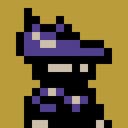
The Game Boy Color-inspired art direction is a smart pairing with Gothic subject matter. Low-resolution pixel art works through suggestion, and grotesque creatures often land harder when the player’s imagination fills in what a few pixels only hint at. The pixel art and music give Tearscape a recognisable face in a crowded field of retro-styled indies.
The constraint has a cost. Low-resolution sprites leave less room to communicate attack wind-ups and hitbox boundaries, and in a game where reading telegraphs decides survival, readability is a functional concern, not an aesthetic one. That tension sits uncomfortably close to the combat’s precision demands. On the interface side, the map screen is the clear weak link, as covered above.
On performance, a 2D pixel-art game of this scope should be light on hardware across every supported platform. Shipping on Steam, Switch, iOS and Android still raises the usual polish risk for a small studio, and the game’s timing-heavy design makes any rough edge more visible than it would be in a slower genre.
Platform nuances
- Steam: The broadest PC footprint and the platform with the deepest review base. Keyboard and mouse or controller both apply.
- Nintendo Switch: The handheld form factor suits a game styled after a handheld era, and physical buttons serve a combat system built on precise dodge timing.
- iOS and Android: Controller support is the stronger path here. A timing-heavy Souls-like asks for tactile feedback, and anyone relying on a touchscreen should expect dodges and strikes to be harder to execute precisely. Local co-op requires two connected controllers, a real hardware hurdle. The store rating is 4.3 out of 5 from six ratings, a very small sample.
- Shared features: Achievements, cloud saves and controller support are part of the package.
Final verdict
Tearscape understands the systems it borrows. The stamina meter, the flask limit, the shortcut-laced map and the dual-purpose dungeon tools all reinforce one another, and that coherence is the game’s best argument. The bosses carry the experience, the art direction gives it identity, and the compact runtime keeps its demands proportionate.
What holds it back is execution at the margins, which in this genre is where trust is won or lost. A combat model built on precise dodges and committed strikes leaves no room for collision that reads poorly. Trap damage chips at the fairness a Souls-like depends on. A weak map and a movement design that leans on sprinting tax the exploration loop the world is built around. A thin enemy roster leaves the stretches between bosses flatter than they should be. None of these sink the game, but together they separate a good genre hybrid from a great one.
We rate it a cautious recommendation for players who already enjoy the Souls-like formula and want it compressed into a retro top-down shell, especially those with a co-op partner on the couch. Newcomers to the genre and anyone with little patience for difficulty spikes should weigh the problems carefully before committing.
Reviewed by the Rankeno RPG & Adventure Desk. Scores are out of 10; the overall score is the desk’s editorial judgement, informed by the four sub-scores above. How we review