

Overview
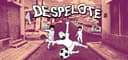
When we talk about “sports games,” the industry usually points toward the annual, iterative juggernauts defined by licensing deals and microtransactions. Despelote exists on the exact opposite end of that spectrum. Developed by Julián Cordero and Sebastián Valbuena and published by Panic, this isn’t a game about winning the World Cup; it’s a game about what the World Cup feels like to an eight-year-old standing on a sidewalk in Quito, Ecuador.
Set in 2001—the historic year Ecuador first qualified for the FIFA World Cup—Despelote places the player in the shoes of young Julián. The premise is simple: there’s a soccer ball, and there’s a city. While most adventure games rely on dialogue trees or inventory management, Despelote leans into a physics-based soccer system as its primary mode of interaction. Players dribble through plazas, pass to strangers, and kick the ball at statues, windows, or laundry.
This gimmick works. The act of kicking the ball is the “interact” button. It triggers reactions from the carefully recreated urban environment, sparking narrative vignettes that flesh out a city gripped by collective anticipation. Published by Panic—a company that has built a reputation for supporting singular, high-concept indies like Firewatch and Untitled Goose Game—Despelote fits neatly into a portfolio of games that value “place” above all else. It is a meditative, first-person exploration of national identity, seen through the low-angle perspective of a child who understands the world through the rhythm of a bouncing ball.
Key features
- Tactile Physics Engine: A first-person soccer system designed to make dribbling, passing, and shooting feel messy, unpredictable, and satisfyingly physical.
- Diorama Aesthetic: A striking visual blend of 3D photo-scanned environments and high-contrast, 2D hand-drawn characters, creating a “living sketchbook” effect.
- Hyper-Local Soundscape: Authentic location recordings from Quito and voice acting by the developers’ own friends and family, providing a level of texture that stock assets could never replicate.
Analysis
The core strength of Despelote lies in its rejection of traditional sporting goals. In any other game, a soccer ball is a tool for scoring. Here, it’s a conversational device. Kicking the ball at a group of neighbors isn’t about starting a match; it’s an invitation to react. The physics engine isn’t tuned for professional precision; it’s tuned for the clumsy, exuberant energy of a kid in a park. The ball catches on uneven pavement, ricochets off concrete walls, and can get stuck in places it shouldn’t. This “friction” is intentional. It grounds the player in the space.
The Gameplay Loop of Memory
Most “slice-of-life” games suffer from a lack of mechanical purpose, often devolving into “walking simulators.” Despelote solves this by giving the player a constant, secondary task: don’t lose the ball. As the streets of Quito unfold, the ball becomes an extension of the player’s presence—idly juggling while listening to a conversation about the local economy or the upcoming match against Uruguay. It mimics the way children occupy their bodies while the “adult” world happens around them.
The narrative doesn’t hit anyone over the head with exposition. Instead, it’s tucked away in the corners of the map. A ball kicked into a fruit stall might prompt a grumpy but nostalgic lecture from the vendor, or a hidden courtyard might hold a radio blasting the play-by-play of a qualifying match. The environmental storytelling is exceptional, capturing a specific moment in Latin American history—the transition to the US dollar, the political instability, and the singular, unifying hope provided by the national team.
Interface and Intention
The UI is almost non-existent, which is a blessing. The game trusts the player to explore. The interaction logic is consistent: if you see it, you can probably kick something at it. This simplicity allows the player to focus on the rhythmic complexity of the world. The Spanish voice acting is left untranslated in many instances where it functions as background noise, enhancing the feeling of being a child who understands the vibe of a conversation without necessarily grasping every political nuance.
If there is a critique to be made, it’s that the experience is brief. However, criticizing Despelote for its length is like criticizing a short story for not being a sprawling novel. Its brevity ensures that the atmosphere never curdles into repetition. Every street corner feels handcrafted, and every interaction feels placed with surgical intent.
Visuals & performance
Visually, Despelote is one of the more original titles in recent memory. The decision to use real-world photography as the basis for 3D textures gives the city a gritty, “lived-in” authenticity. This is contrasted sharply by the characters, who appear as shaky, high-contrast 2D sketches. It’s a brilliant artistic choice that mirrors the way memory works: the places stay solid and textured, but the people become stylized, expressive ghosts in the mind’s eye. A game of this modest visual scope is light on hardware demands, prioritizing aesthetic cohesion over raw polygon counts.
Platform nuances
On Steam, the mouse and keyboard setup is built for “aim” precision, making some of the more specific environmental interactions easier to trigger. The Nintendo Switch version, though, feels like the spiritual home for this title. A handheld format suits the game’s “slice-of-life” soul, lending an intimacy that fits its subject. The physics-based movement is designed to feel a bit “loose” on analog sticks, but that jankiness actually contributes to the childhood realism.
Final verdict
Despelote is a triumph of specificity. By focusing on a single city, a single year, and a single ball, it touches on something far more universal than a generic “global” story ever could. It’s a poignant reminder that the most significant moments of a life often happen in the background of the game being played. At $14.99, it’s a brief, beautiful, and tactile journey that earns a firm recommendation—worth a spot on any hard drive, even if only to remember what it felt like to be eight years old with nothing but a ball and a whole city to explore.
Reviewed by the Rankeno Action Desk. Scores are out of 10; the overall score is the desk’s editorial judgement, informed by the four sub-scores above. How we review